



As space exploration stretches toward the Moon, Mars, and the vast reaches beyond, humanity and the cosmos are growing ever closer. Yet the rapid surge in satellite launches worldwide raises serious concerns about their long-term consequences for Earth’s fragile environment. In search of a solution, Japan has taken a pioneering step: launching the world’s first satellite built with traditional craftsmanship and natural materials.
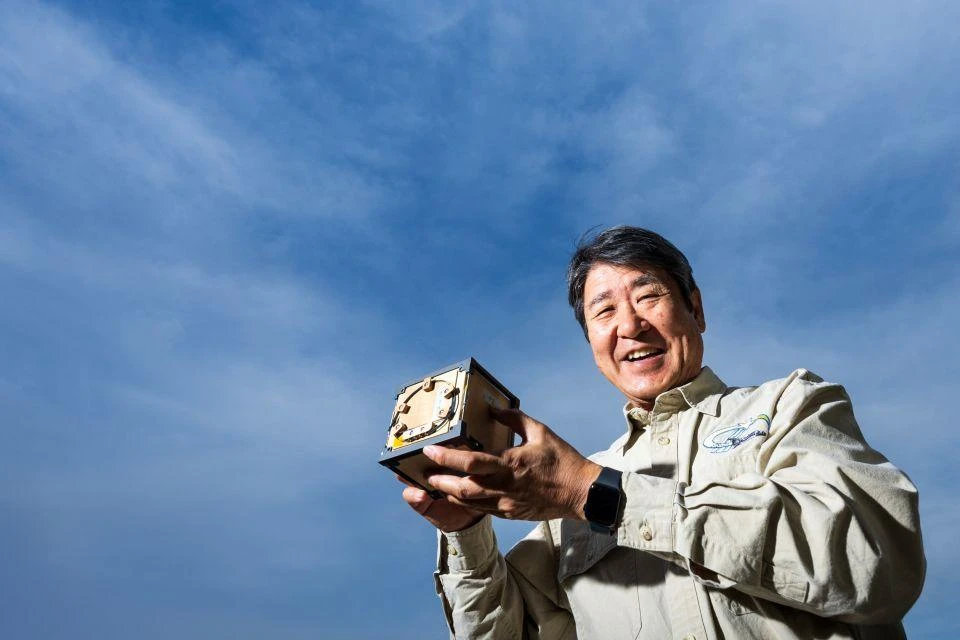
Artificial satellites, once they have completed their mission, are directed from Earth to reenter the atmosphere, where they burn up. However, because they are typically made of aluminum alloys and other metals, they do not burn completely. Instead, they leave behind microscopic particles known as alumina—oxidized metal residue—that linger in the atmosphere. These particles can persist for as long as 40 years. Astronaut DOI Takao, currently a researcher at Kyoto University and a visiting professor at Ryukoku University, describes the problem this poses: “With projections of 10,000 to 100,000 satellite launches every year, the accumulation of these alumina particles could exert a substantial negative impact on the climate and on aviation infrastructure.”
In response to these concerns, Kyoto University, in collaboration with a major Japanese home builder, is spearheading the development of the world’s first wooden satellite, “LignoSat.” Leading the project is Doi, who in 1997 flew on the Space Shuttle Columbia and became the first Japanese astronaut to perform extravehicular activities. In 2008, he completed his second shuttle flight, making him a veteran of two space missions. Drawing on his exceptional firsthand experience and knowledge, he now devotes himself to advancing the new field of “human spaceology,” dedicated to establishing a new frontier for human survival in space.
The spark for Doi’s interest in exploring the potential of wood as a substitute for conventional aluminum alloy in satellites came when he became a professor at Kyoto University and began frequenting the shrines and temples surrounding the campus in his spare time. The ancient capital of Kyoto is home to numerous religious structures that have survived for over 1,000 years amid harsh natural conditions—rain, wind, humidity, insect damage. Observing their wooden construction, Doi came to appreciate the remarkable durability of the material. “If wood can endure on Earth for such an extraordinary span of time, then in the vacuum of space—free from moisture and insects—it might well last 10,000 years,” he reasoned. If satellites were constructed from wood, their reentry and combustion in the atmosphere would produce nothing but water vapor, thereby minimizing any adverse impact on Earth’s environment. This led him to ponder whether the knowledge and trust that the properties of wood have inspired in Japan since ancient times could be applied to cutting-edge space engineering.
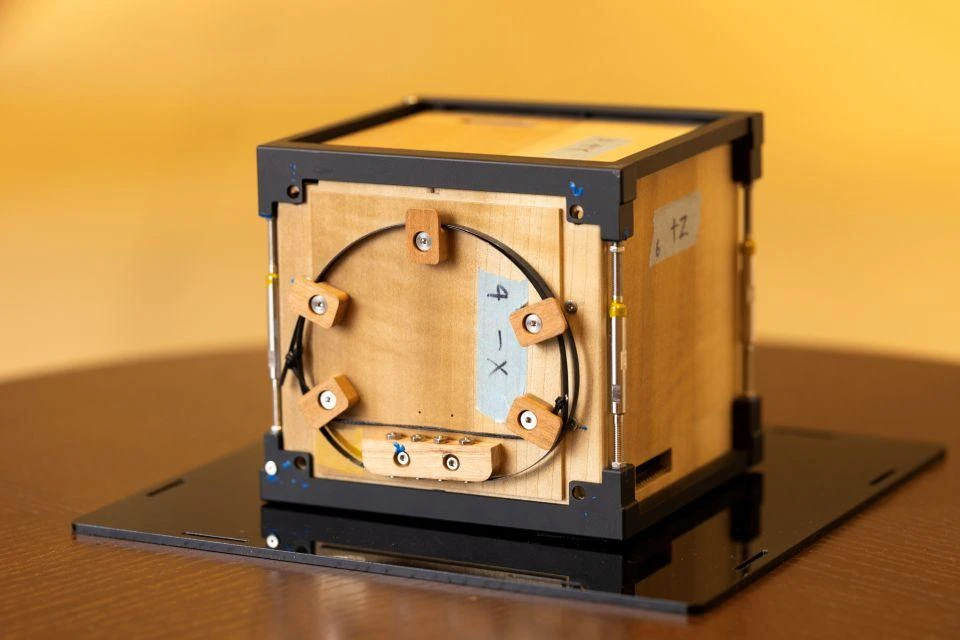
Industry-academia collaboration to develop a wooden satellite began in 2020. Through vacuum resistance and other tests, it was determined that honoki, the Japanese magnolia, was the optimal wood for this purpose. Honoki is lightweight, with minimal shrinkage, and has long been employed for crafting the scabbards or sheaths of Japanese swords. In the vacuum of space, there is no moisture to degrade wood. However, during the mere 90 minutes it takes for a satellite to orbit Earth, the alternation between “daytime” sunlight exposure and “nighttime” in the planet’s shadow subjects the craft to extreme temperature swings ranging from -100°C to +100°C. For this reason, using nails or screws poses the risk of cracking due to the difference in thermal expansion rates between wood and metal.
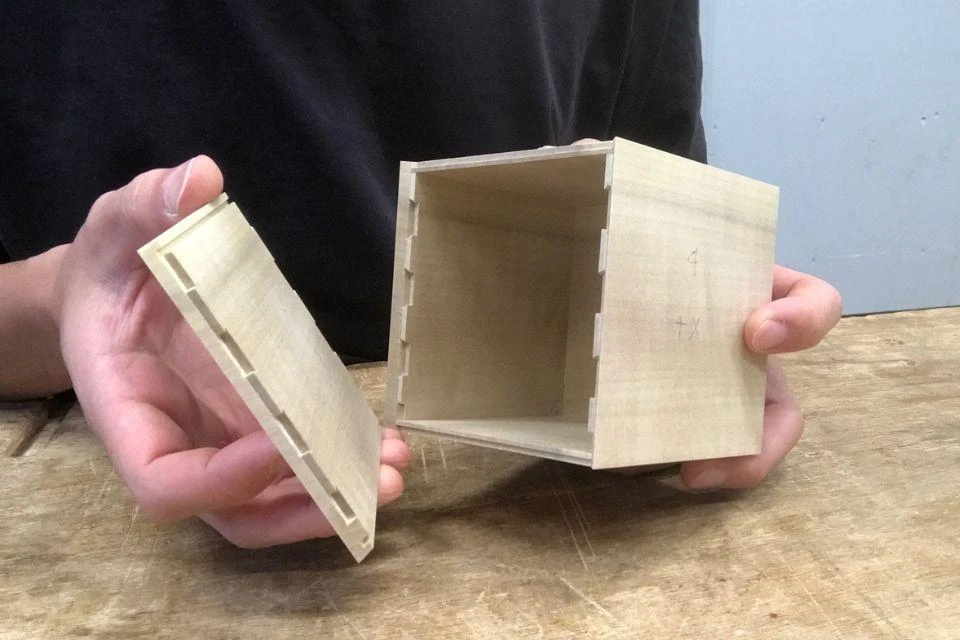
Accordingly, the project adopted the traditional Japanese woodworking technique known as tomegata kakushi arikumi-tsugi—interlocking dovetail joints that rely on precisely fitted wooden pieces to maintain structural integrity without fasteners. Skilled artisans from a woodworking shop of long standing were enlisted to handcraft the prototype of the satellite.
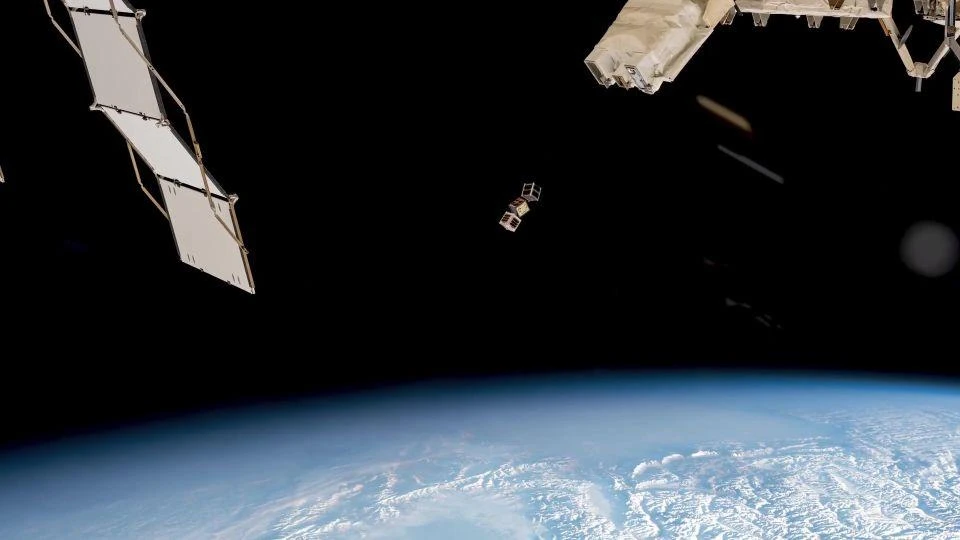
LignoSat underwent a rigorous two-year safety review by the Japan Aerospace Exploration Agency and NASA before receiving approval. In November 2024, the first unit was launched from Kennedy Space Center in the United States, transported to the International Space Station, and successfully released into space. After orbiting Earth for four months, it completed its mission, conclusively demonstrating the feasibility of operating a wooden satellite in the vacuum of space.
“While the trouble we had establishing reliable communication with the ground has yet to be resolved, we achieved our primary objective: to determine whether a wooden satellite can indeed operate in the vacuum of space,” explains Doi. The suspected causes of the communication failure involve software and a malfunction in the antenna deployment mechanism; these have been subjected to repeated testing and analysis. At present, improvements addressing these problems are underway for the second unit, LignoSat-1R, with the aim of ensuring successful ground communication. The next launch is slated for FY2027. Looking further ahead, the third version of the satellite, LignoSat-2, will feature a flat communication antenna stored inside the craft. Applications under consideration include LignoSat’s use in a disaster-resilient satellite network capable of providing direct communication from space in the event that land-based radio towers are toppled by natural disasters.
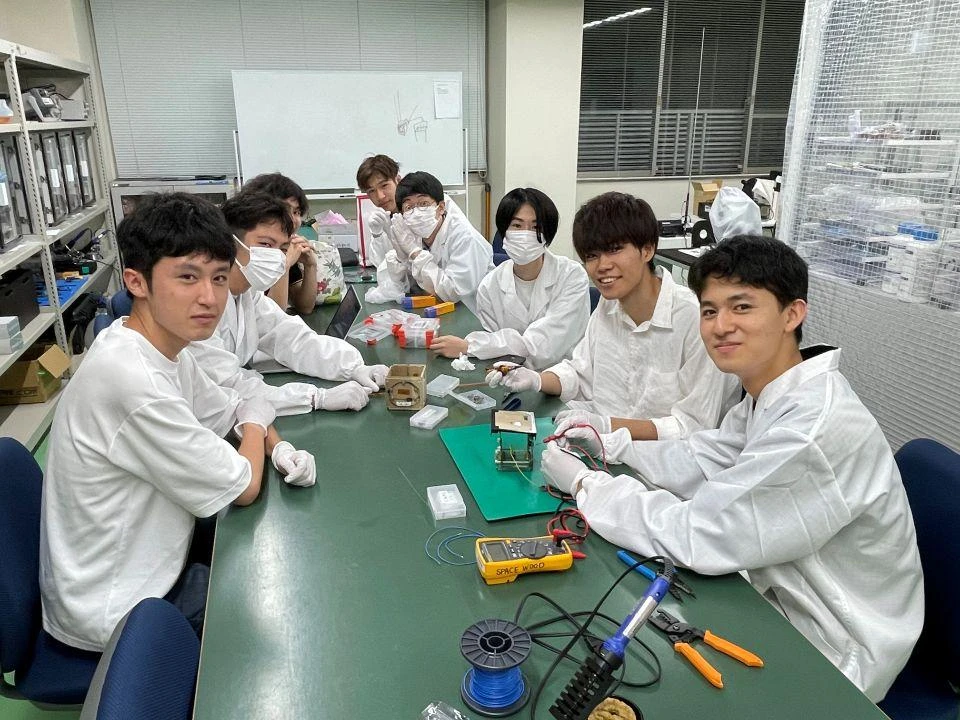
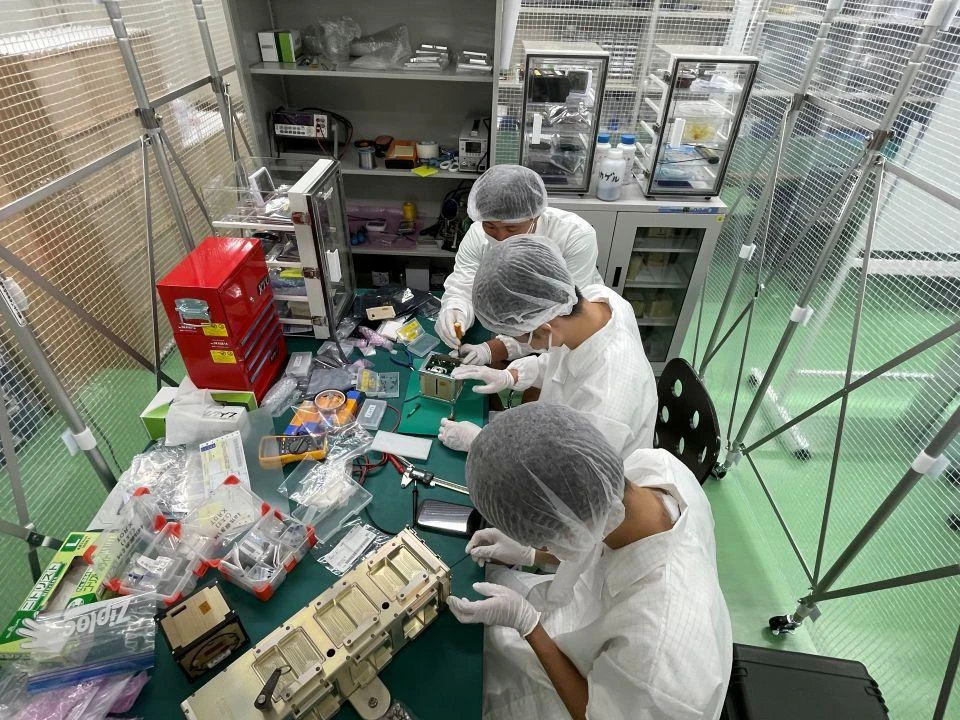
The development of wooden satellites is driven not only by concern for Earth’s environment, but also by visions of a future in which human beings will settle on the Moon or Mars. If the durability and functionality of wooden satellites can be proven in the vacuum of space, the next logical step might be cultivating trees on the Moon or Mars and using their timber for construction. “I am pursuing research in what we call ‘human spaceology’ to help humanity establish a sustainable social foundation in outer space,” says Doi. “The development of the wooden satellite represents the very first step in that endeavor.” Experiments are already underway to grow trees in low-pressure environments, and it has been confirmed that photosynthesis—and thus oxygen production—remains possible even under conditions resembling those on Mars. “Japan, which has long nurtured a culture of working with wood and living in harmony with nature, is surely capable of bringing its own distinctive outlook to the field of space development,” he continues. “Rather than engaging in international competition, I hope to contribute to humanity’s joint exploration of space through international cooperation.”


