



Hydrogen is in the spotlight as a source of clean energy that emits no CO2 when burned. However, traditional hydrogen production methods, such as electrolysis of water or extraction from natural gas and other fossil fuels, have environmental impacts of their own, and sometimes entail significant equipment costs. Now, a startup in Takaoka, Toyama Prefecture, has developed a new hydrogen-making process that produces the gas from discarded aluminum without any CO2 emissions at the manufacturing stage. What’s more, later stages in the process simultaneously generate high-value-added resources. The result is a “two birds with one stone” technology that could contribute to the creation of a carbon-free society.
As countries around the world seek ways to achieve carbon neutrality, hydrogen has attracted notice as a leading potential source of carbon-free energy. The International Energy Agency estimates that by 2050, demand for hydrogen will reach 430 million tons—five times the 2022 figure. Compared to traditional energy sources, the costs of manufacturing, transporting, and storing hydrogen are extremely high, but despite these challenges, many countries are working toward practical deployment of the process.
Enter Toyama-based Alhytec Inc., which aims to help bring about a decarbonized society via a low-cost technique for manufacturing hydrogen from discarded aluminum. The idea was the brainchild of Alhytec’s founder, the late MIZUKI Nobuaki, after he saw large amounts of discarded aluminum being put to no meaningful use in his previous work at a transportation company.
Aluminum is thought to have a high recycling rate, but this is only true of aluminum cans (with a rate of around 99.8%). Mizuki was troubled by the common practice of incinerating or burying the vast majority of drink and snack packaging, pill sheets and so on that include a thin layer of aluminum foil on paper or plastic. YAMAMURA Kenji, head of Alhytec’s Sales Planning Department and Global Business Development Office, spoke to us about Mizuki’s vision.

“Mizuki was a businessman who worked in an office, had a humanities background, and knew almost nothing of chemistry, but choosing Toyama Prefecture as the company’s base was a smart move that made our breakthrough possible,” says Yamamura. “The prefecture has large and small hydroelectric plants of all sizes fed by extensive water resources. The stable source of electrical power they provide, combined with the technologies developed by Takaoka’s casting industry, make this home to some of Japan’s leading aluminum-related industries. Mizuki enlisted the help of those companies as well as universities in the prefecture to form a framework for industry-academic collaboration. He also worked with a university overseas, eventually perfecting three types of equipment for producing hydrogen from discarded aluminum.”
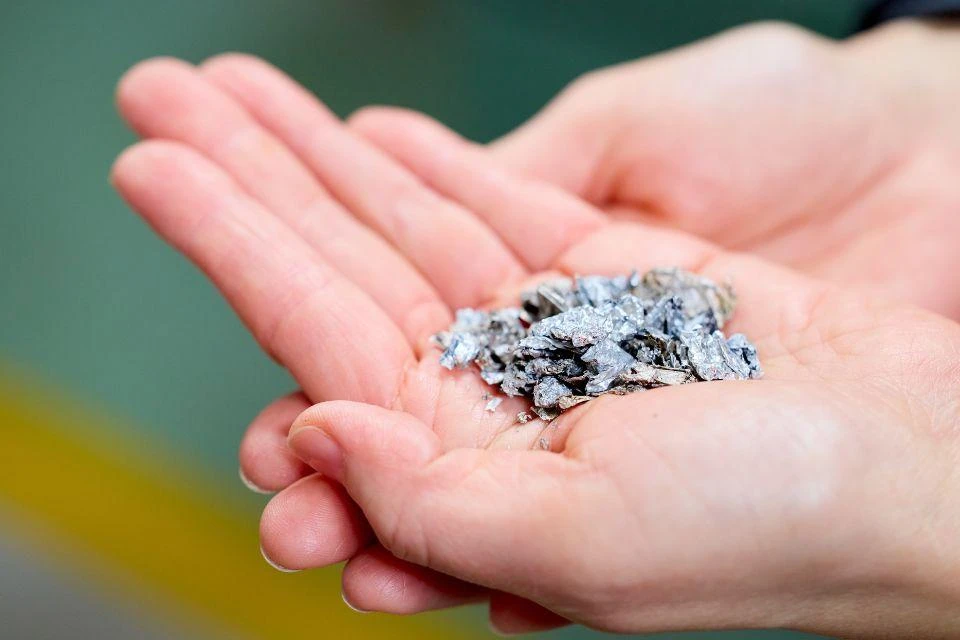
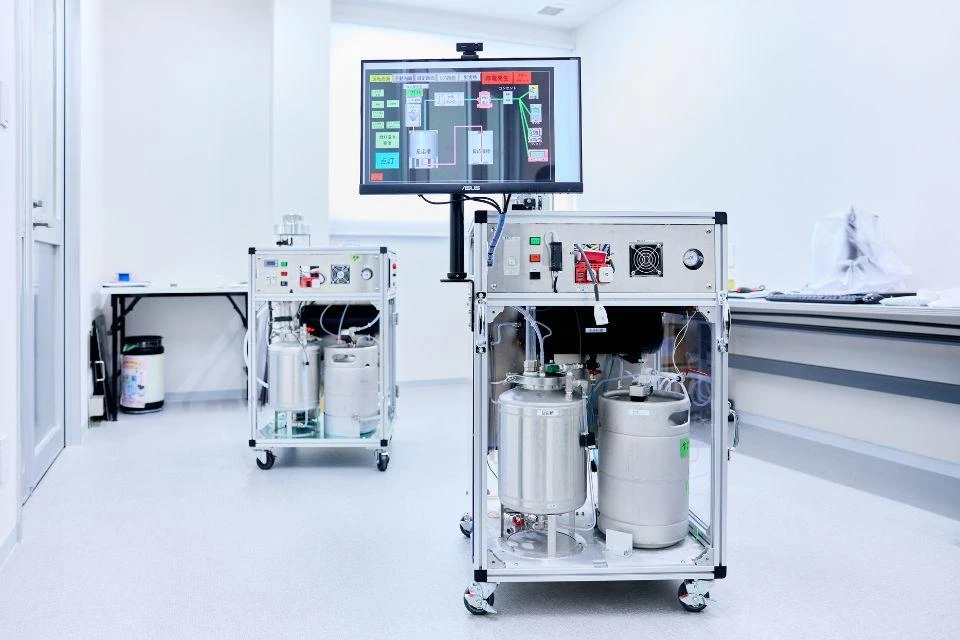
First comes the “pulper-type separator,” which processes aluminum-lined containers, using water to separate pulp from the aluminum and plastic. The recovered pulp is used to make toilet paper and other products. Next is the “dry-distillation-type aluminum recovery device,” which uses heat treatment at around 600°C to break down and remove any plastic attached to the separated aluminum. Burnable gas generated during this process is reused as a heat source, reducing fuel costs. The final piece of equipment is the “hydrogen manufacturing device,” which utilizes the 95% pure aluminum produced by the earlier stages of the process as its fuel. Immersing the aluminum in a special sodium hydroxide-based solution generates hydrogen with zero CO2 emissions. Nor are energy sources like electricity or heat needed. Even more impressively, the process yields a high-value-added byproduct that matches the hydrogen in desirability.
“That byproduct is aluminum hydroxide,” says Yamamura. “A kilogram of discarded aluminum can generate about 0.11 kg of hydrogen—enough to power a fuel cell vehicle for some 20 kilometers—but it also produces roughly 2.9 kg of aluminum hydroxide at the same time. Interest in and demand for aluminum hydroxide is rising because it has a wide variety of uses, among them coagulants for eliminating impurities in water, fire retardants used in curtains and construction wallpaper, and artificial marble, which is popular for residential furnishings. If a business model can be developed for the profitable use of aluminum hydroxide, we could promote our hydrogen and aluminum hydroxide manufacturing business even more widely for its green technology and sustainability.”
Yamamura also discussed the construction of a global hydrogen supply chain.
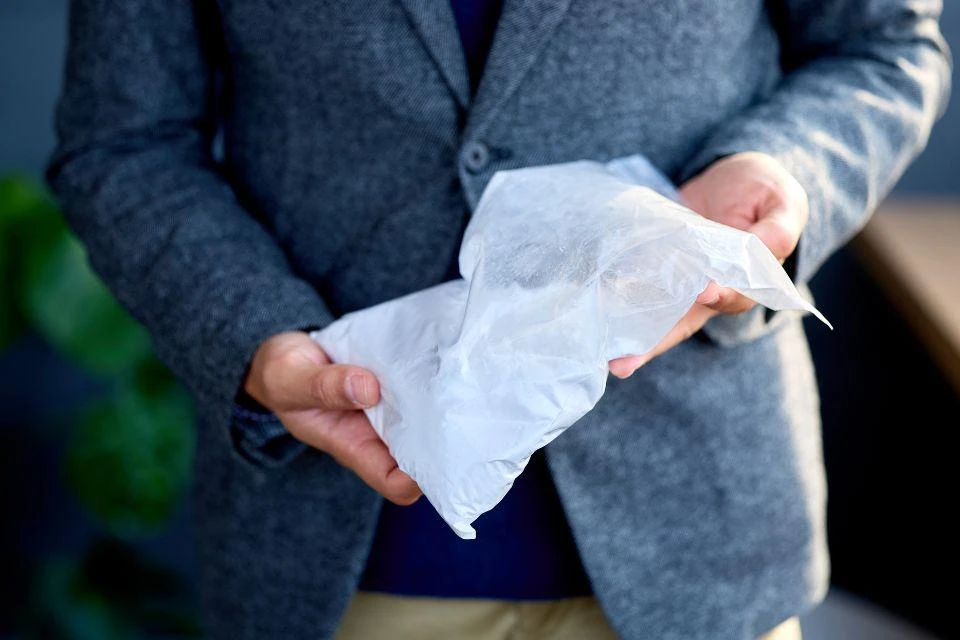
“We have sent proposals for cooperation to the United Arab Emirates, where the world’s largest aluminum manufacturers are based, offering a vision in which not hydrogen itself, but aluminum chips and aluminum hydroxide, which are much easier to transport, are shipped between there and Japan,” he says. “Specifically, we would import aluminum chips from the United Arab Emirates and use them to manufacture and supply hydrogen. The aluminum hydroxide generated during the manufacturing process would also be sent to the United Arab Emirates to be turned back into aluminum.”
Hydrogen, which is a gas at standard temperature and pressure, must be liquefied for transport by ship. This requires infrastructure that can ship and store the liquid at the extremely low temperature of -253°C. If Alhytec’s vision is achieved, hydrogen can be shipped in a form other than liquid hydrogen, adding a new option for diversification of the existing hydrogen supply chain.
Demand for aluminum is expected to grow in a range of fields, including the automobile industry, where making cars lighter can improve the fuel efficiency of gasoline-powered vehicles and expand the driving range of EVs. Alhytec’s unique technology looks set to attract even more attention in the years to come.


