



In Africa, economic development is proceeding rapidly but unevenly. South of the Sahara Desert, more than 400 million people lack access to safe water—but one Japanese tech startup based in the East African country of Uganda is working to resolve this issue. How are they using digital technology to reinvent water supply?
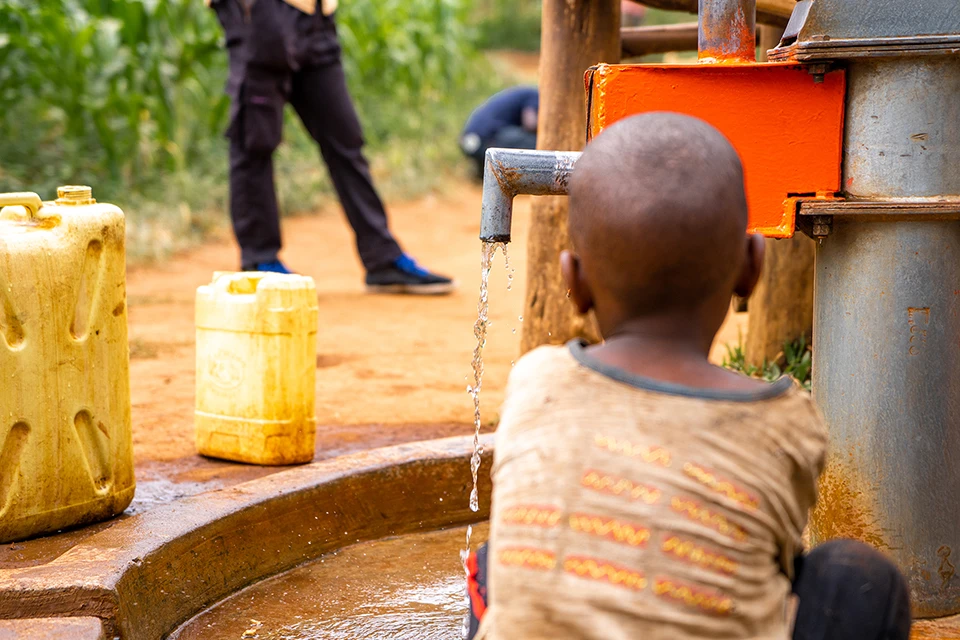
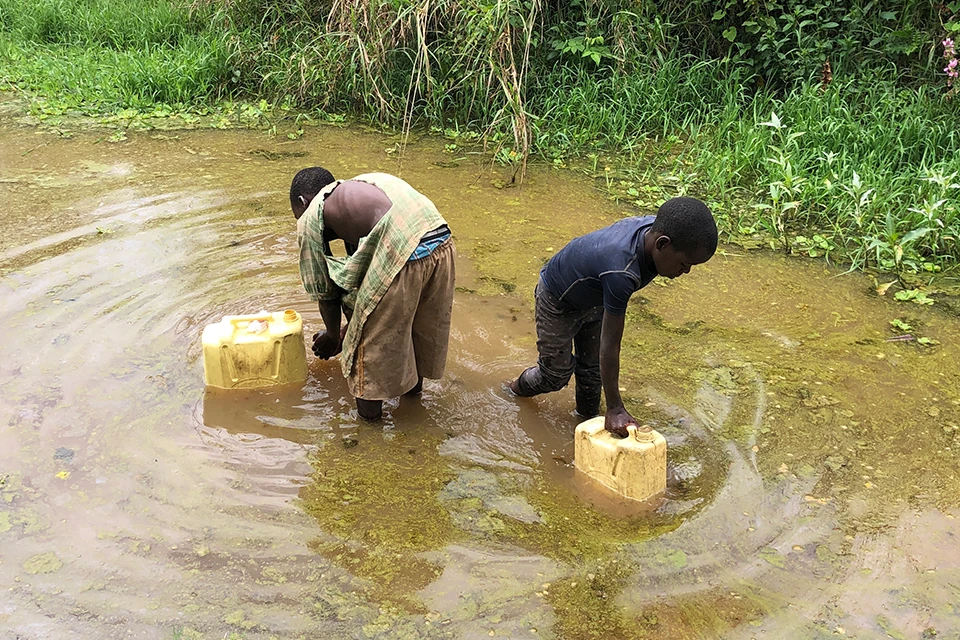
In Uganda, water infrastructure has historically been developed with support from the government or international aid organizations. People in rural areas use communal hand-pumped wells, while urban residents use shared faucets fed by pipes. Although government assistance is available for putting this infrastructure in place, maintenance is left to local residents. Administrative committees with representatives from each neighborhood collect water fees to pay for maintenance and repairs, but this system has many problems. Charging the same flat fee to all households, regardless of how much water they use, can arouse resentment over perceived unfairness. Many residents refuse to pay at all. Lack of transparency around how collected fees are used can also sow distrust. All this can make it impossible to cover the cost of repairs, which results in inoperable wells and faucets simply left to deteriorate.
In Uganda, water infrastructure has historically been developed with support from the government or international aid organizations. People in rural areas use communal hand-pumped wells, while urban residents use shared faucets fed by pipes. Although government assistance is available for putting this infrastructure in place, maintenance is left to local residents. Administrative committees with representatives from each neighborhood collect water fees to pay for maintenance and repairs, but this system has many problems. Charging the same flat fee to all households, regardless of how much water they use, can arouse resentment over perceived unfairness. Many residents refuse to pay at all. Lack of transparency around how collected fees are used can also sow distrust. All this can make it impossible to cover the cost of repairs, which results in inoperable wells and faucets simply left to deteriorate.
Sunda Technology Global Co., Ltd. aims to address these issues through digital technology. The manufacturer, with offices in Uganda and Kyoto, has developed a prepaid water metering and fee collection system, which it calls SUNDA, that can be attached to existing hand-pumped wells and communal faucets. The system is built on mobile payments, which are widely used in Uganda. Each household is assigned an ID which users charge with money from a phone or other device. They then tap their ID tag on the SUNDA device to access water. The appropriate fee for the amount of water taken is automatically deducted from the ID’s available balance.
Adopting this system ensures fair fee collection proportionate to the amount of water used, which makes it easier to secure the needed funds for ongoing maintenance and repairs. “This is something that users in areas that previously struggled with fee collection greatly appreciate,” says TSUBOI Aya, CEO of Sunda Technology Global and co-developer of the system. “Residents are delighted to have funds for immediate repair in the event of hand pump malfunction.” Installing SUNDA also makes it possible to access communal faucets at any time of day or night, unlike the previous situation in which many were only open during the day when an administrator was present. Residents who work long hours are particularly grateful to be able to access water after returning home late at night, says Tsuboi.
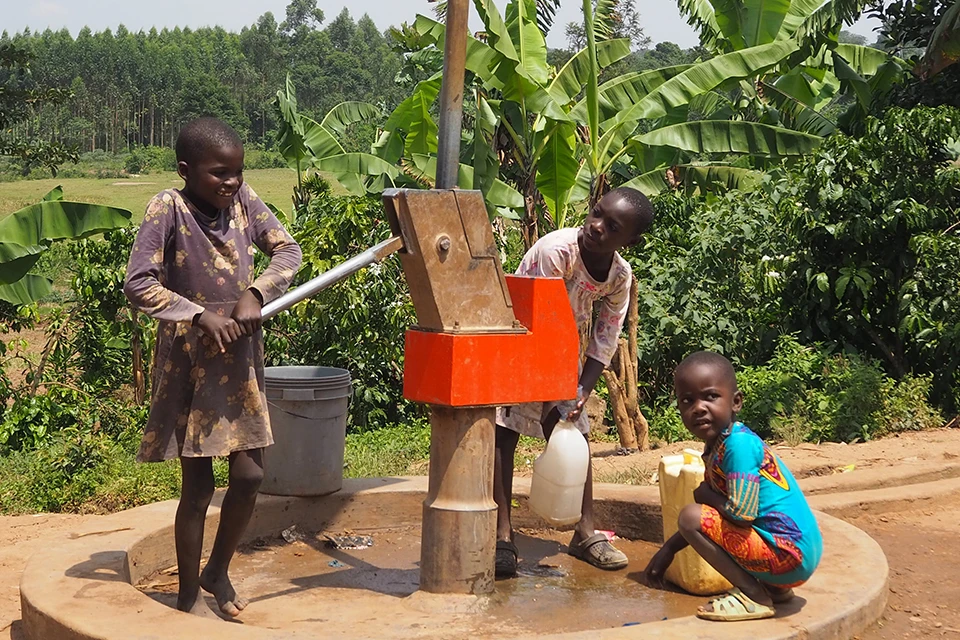
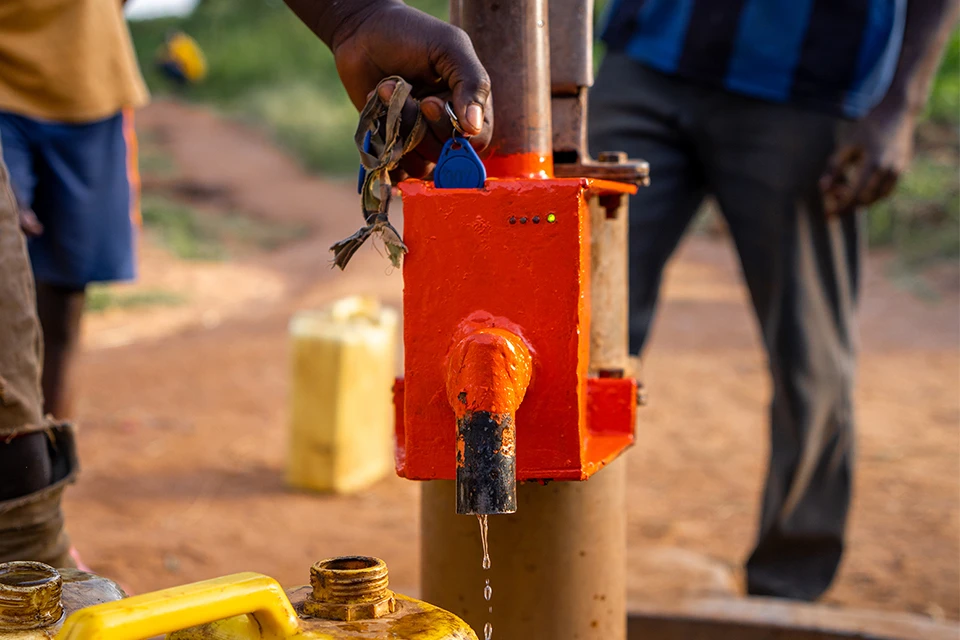
Sunda Technology Global was founded in 2020 with the goal of solving the water problems that Tsuboi witnessed on the ground in 2018 during her work in Uganda as a Japan International Cooperation Agency volunteer. Initial product development efforts alongside Ugandan engineers struggled to address malfunctioning water valves and other issues. Tsuboi contacted technicians in Kyoto to ask for assistance, and they have been part of the development team in the years since. “We bring technicians from Kyoto’s independent local factories to Uganda, have them meet directly with residents and engineers, and pursue product development together based on an ever-deepening mutual understanding,” says Tsuboi. “Tapping into Japan’s expertise in manufacturing technology, which is renowned worldwide for its high quality, enabled us to develop a system that met the needs on the ground.” The final version of SUNDA for hand-pumped wells is now complete, and the mass-produced version of the product for communal faucets is slated for development with their Kyoto collaborators.
Around 300 such systems are now deployed in Uganda. However, there are 60 to 70 thousand hand-pumped wells in Uganda alone, and around 700 thousand across Africa. Because the device can be installed on existing hand pumps and communal faucets, Sunda Technology Global aims to continue to pursue new installations with the end goal of pan-African coverage. While constructing operational systems and manufacturing infrastructure for this purpose, in the future, the company also intends to address social issues other than water access—for example, by applying its strengths in manufacturing to the agricultural domain.
“Our ultimate goal is for local people to have access to the services they need, when they need them, without waiting for external assistance,” says Tsuboi. “Until that is achieved, we will continue offering support that combines the best of local and Japanese manufacturing technology.”
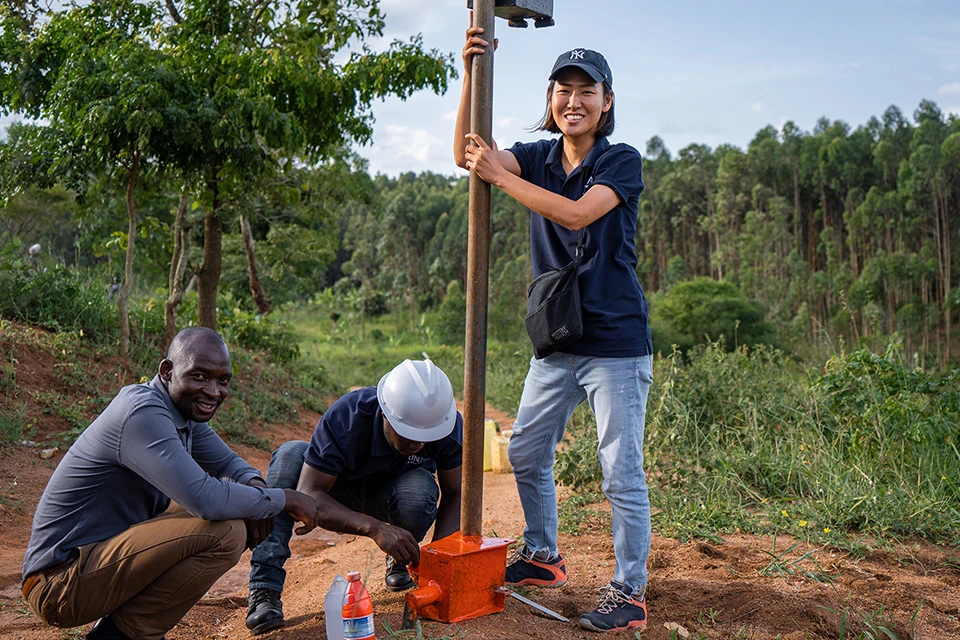
TSUBOI Aya, CEO of Sunda Technology Global Co., Ltd. Together with some fifteen staff, including local founding members, she is striving to remedy Uganda’s water problems.


