The Metropolitan Expressway is a network of 327 kilometers of limited-access highway in and around downtown Tokyo. One unique feature of this system is Ohashi Junction, an interchange where an underground tunnel and an elevated highway are connected by a set of ramps that rise more than 70 meters in a two-loop spiral. Ohashi Junction is also home to Ohashi Village Forest, a green space recreating the local natural habitat—complete with babbling brook, flourishing rice paddy, and some 460 species of flora and fauna. Why was a space like this created atop a towering testament to Japan’s civil engineering prowess?
Concerns over the global acceleration of climate change and biodiversity loss have brought the practices of urban development to a critical turning point. One solution to the issues developers face is “green infrastructure,” which utilizes the innate capabilities of nature to support society. Attracting interest of late is a “nature-positive” approach of not merely conserving nature but actively restoring it. As the world strives to achieve the goals of the 30 by 30 movement, which envisages designating 30% of both the land and the sea for protection by 2030, urban examples of green infrastructure are in the spotlight.
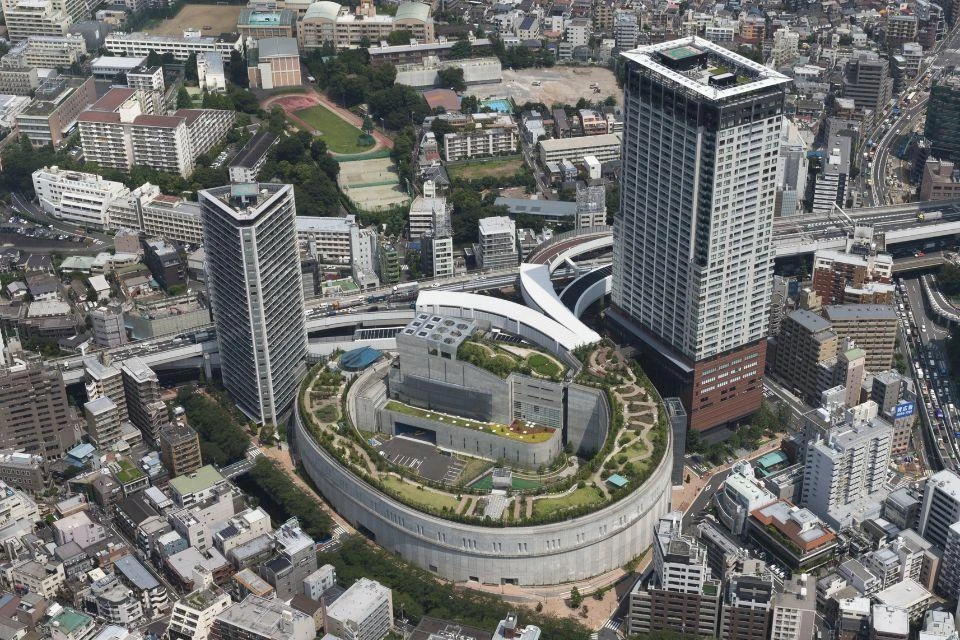
Creating large-scale structures as part of urban development also raises the risk of dividing local communities and ecosystems. Ohashi Village Forest is one attempt to break through this impasse by going beyond the conventional notions of civil engineering. The “forest” is situated roughly 30 meters above ground on the roof of Ohashi Junction, close by the bustling transport hub and business district of Shibuya, where commercial establishments and other attractions draw domestic and international sightseers in great numbers. Located in Tokyo’s Meguro City, Ohashi Junction is a massive structure that houses the ramps linking the Metropolitan Expressway’s elevated No. 3 Shibuya Route to the Central Circular Route, which passes below through the Yamate Tunnel. It also contains the Ohashi Ventilation Station, a crucial air source for the junction and the tunnel.
The reason for creating a “forest in the sky” here can be found in the junction’s distinctive shape. In a city where land is at a premium, a set of spiral ramps was required to connect the Yamate Tunnel, 35 meters underground, with the overhead No. 3 Route, which is 35 meters above ground. The ramps rise in two loops, each 400 meters long. To reduce exhaust and noise pollution, the structure was enclosed by walls and a roof.
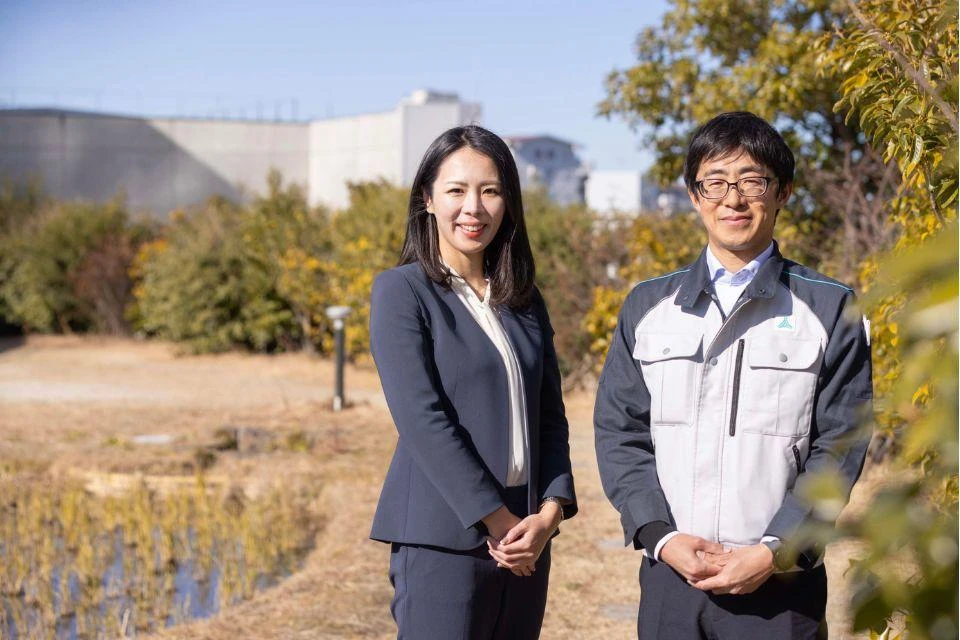
“The challenges for the construction team were how to avoid physically or visually dividing the neighborhood with this gigantic structure, and how to minimize its impact on the environment,” says FUSHIYA Kazuaki, who manages Ohashi Village Forest as part of his surveying and environment responsibilities at Metropolitan Expressway Co., Ltd. “Our planning called for what we refer to as ‘three greens’—first, using creeping fig, an evergreen vine, to provide a green cover for the outer wall; second, building a park on top of the junction; and third, placing Ohashi Village Forest on the roof of the ventilation station.”
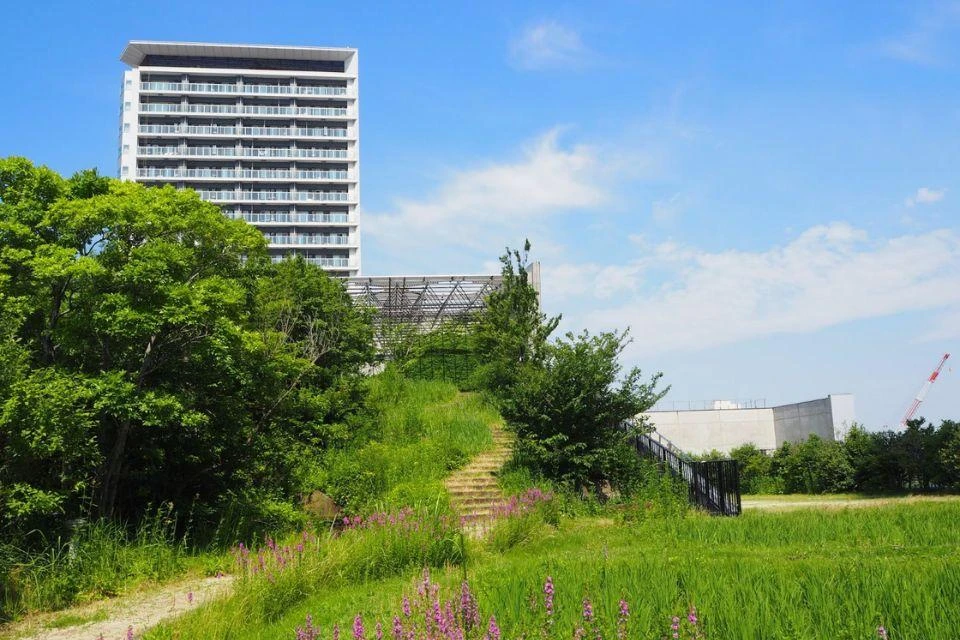
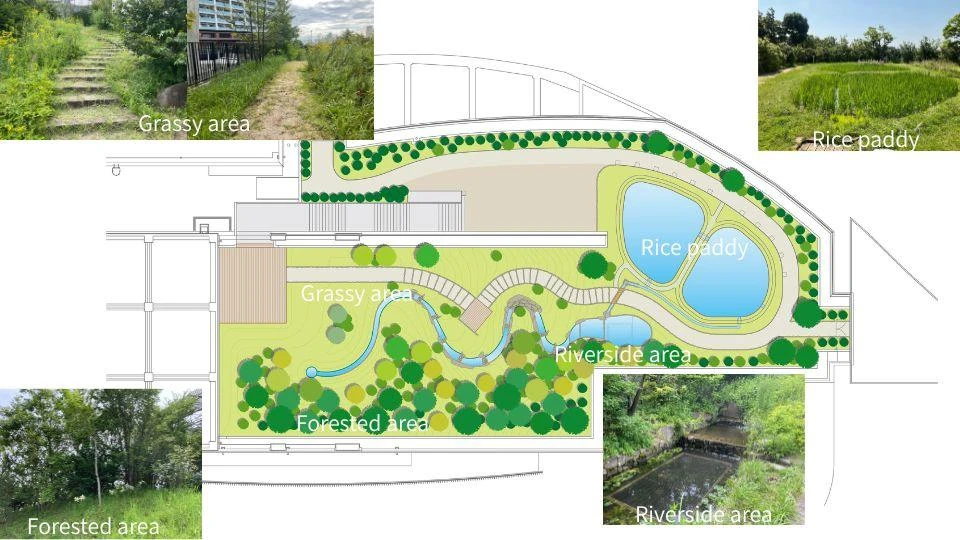
The concept of Ohashi Village Forest was inspired by the nearby Meguro River. The forest essentially recreates the landscape of the area as it existed in the early twentieth century—a modern revival of the ancient Japanese concept of satoyama, natural spaces near human settlements that are lightly managed to provide sustainable resources. To recreate the original scenery as closely as possible, developers procured seedlings exclusively from the larger Kanto region that Meguro is part of. The design includes a rice paddy, groves of trees, grassy areas, and even a stream. The water used to maintain this natural environment consists entirely of rainwater collected on-site, stored in underground tanks and pumped to the surface as necessary. Purification without chlorine ensures that it is safe for the flora and fauna, not to mention the rice paddy.
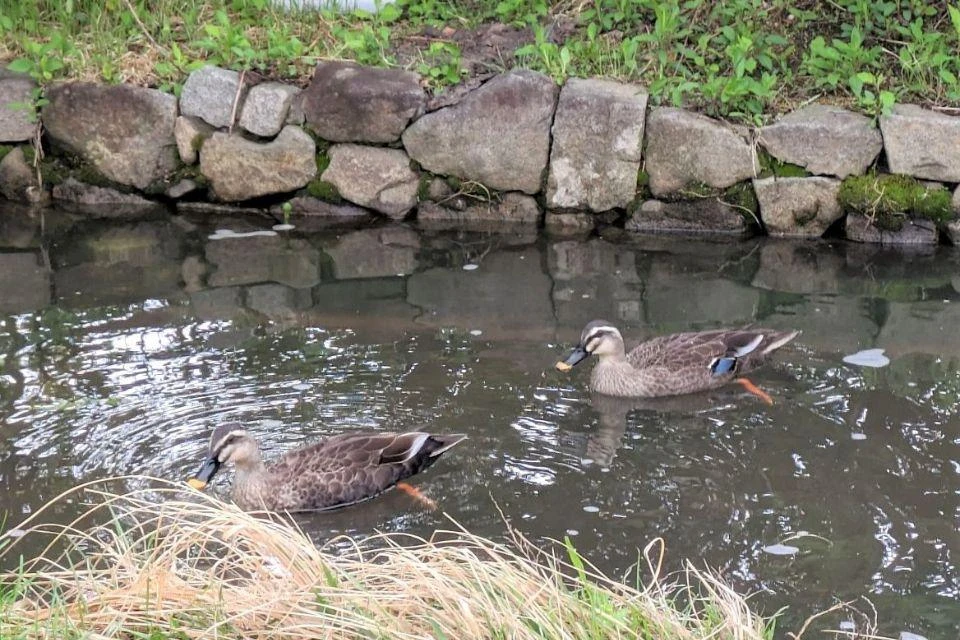
This year, 2026, marks the fifteenth anniversary of Ohashi Village Forest’s opening, and the improvement in its biodiversity is readily apparent. Ongoing maintenance includes the removal of invasive species, pruning to keep trees in their natural shape, and the strict avoidance of agrochemicals in rice production. These efforts have dramatically increased the number of species observed in the park. Approximate counts from surveys showed 80 animal species in FY2011, growing to 240 in FY2024. Similarly, the 130 plant species observed in FY2016 had risen to 220 species in FY2024. By the end of 2025, a total of roughly 460 species of flora and fauna had been observed.
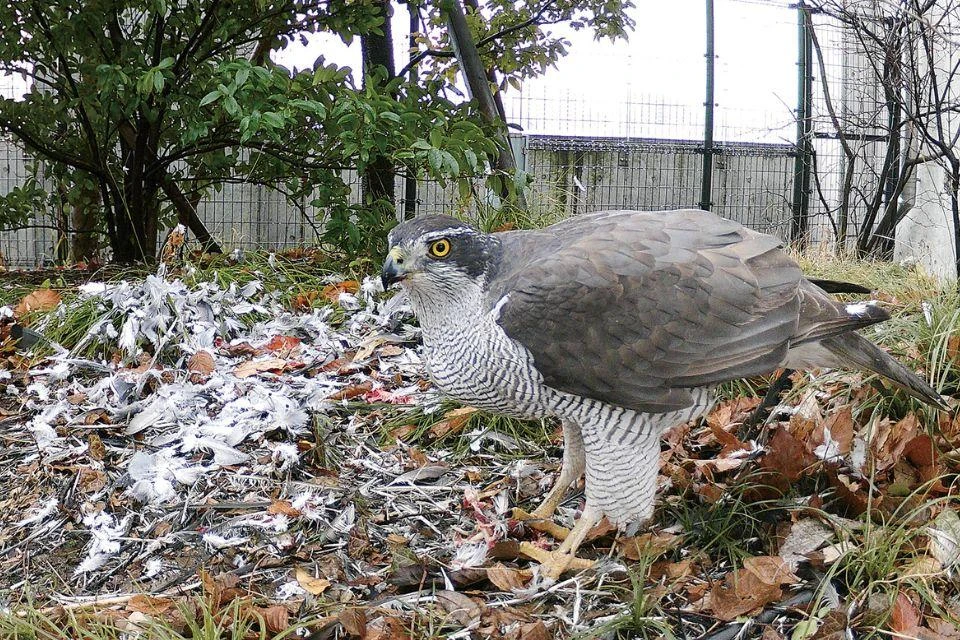
“In 2019, goshawks started visiting and hunting in the forest,” says Fushiya. “The presence of these rare birds of prey, who sit at the top of the ecological pyramid, indicates that Ohashi Village Forest is starting to function as a node in central Tokyo’s ecological network.”
During the design of Ohashi Village Forest, thought was given not only to its structural design but also to its role in the local community, as KATO Chihiro, sustainability coordinator for Metropolitan Expressway Co., explains:
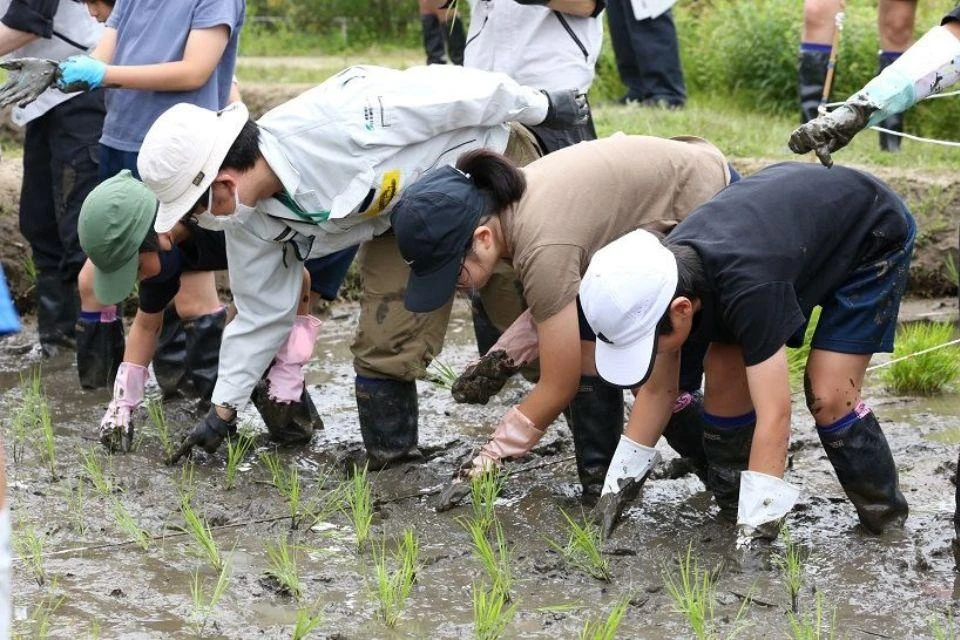
“Since the forest was completed, it’s served as a venue for annual rice growing experiences for local elementary schoolers. They do everything from transplanting the seedlings to harvesting and even threshing the rice, giving them multiple opportunities to come into contact with nature. This activity has forged links with the local community, and we believe it contributes to environmental education for the next generation.”
Thanks to these initiatives combining biodiversity protection with local participation, Ohashi Village Forest was recognized as a Nationally Certified Sustainably Managed Natural Site (Nature Coexistence Site) by Japan’s Ministry of the Environment in March 2024. In August of the same year, it was added as an “Other Effective area-based Conservation Measure” (OECM) to the registry managed by the UN Environment Programme World Conservation Monitoring Center (UNEP-WCMC). And in December 2024, it received the Minister of Land, Infrastructure, Transport and Tourism’s Prize at the fifth Green Infrastructure Awards. All of these achievements show how highly the project is regarded by external observers.
From March to September 2027, Japan will host International Horticultural Expo 2027 in Yokohama. The social implementation of green infrastructure has been cited as one of the key themes of the exposition, and the event is expected to further energize a movement already gathering pace toward increasing green infrastructure in urban areas. The Ohashi Village Forest experiment, which has brought life to the roof of a concrete highway structure and successfully nurtured it for fifteen years, is sure to provide an important guidepost to the urban planning of the future.