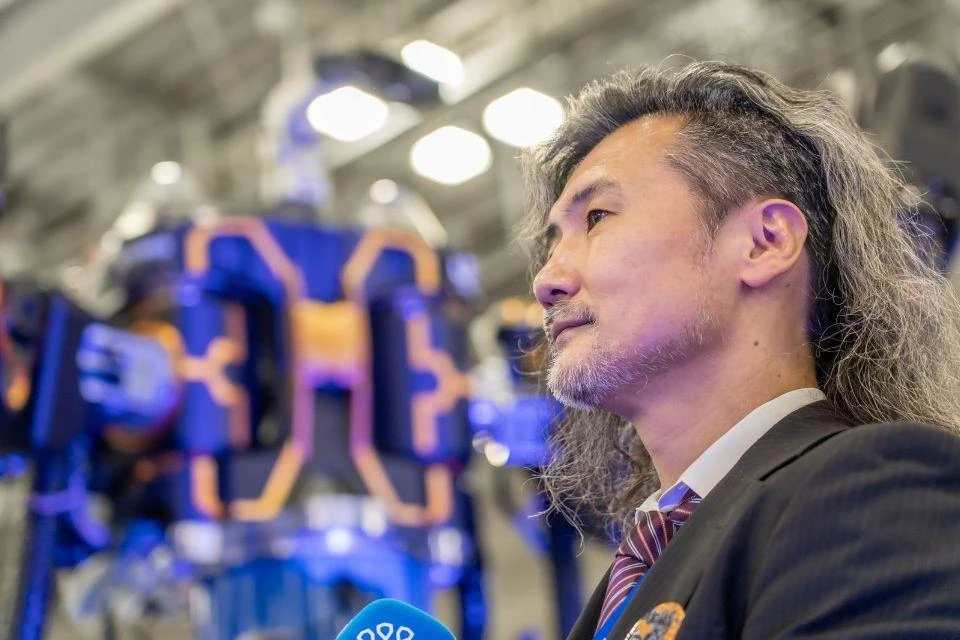
Images of the devastation wrought by the Great East Japan Earthquake and Tsunami of March 11, 2011 left one robotics researcher wrestling with an urgent question: Why were humans still entering hazardous sites during disaster response and recovery? Spurred by this line of thought, the researcher was inspired to develop robots capable of freeing humans from the dangerous, grueling tasks still required at many worksites. A new relationship between robots and humanity, currently being explored in Fukushima as it continues to recover from the disaster, is just over the horizon.
The Great East Japan Earthquake and Tsunami of 2011 proved to be a turning point in the career of robot researcher Dr. KANAOKA. Alongside his horror at the devastation, he was shocked to be confronted by the painful reality that, despite considerable work in his field on disaster response robots, virtually no robots were active in the disaster-stricken areas. “For a robotics researcher, this could only be called a defeat,” he says. The need to solve this problem struck him as so urgent that in 2015 he pivoted his company, JINKI-ITTAI, Inc., toward doing just that.
“The strategy we chose was to create robots that would be used in a range of worksites under everyday conditions, becoming just another part of daily life,” says Kanaoka, who is president of the company. “This is because we’d learned that even robots specifically developed for disaster response would not actually see use in disaster settings unless they were already being used as everyday equipment.” In order to introduce more robots into typical work situations, his company set its sights on hazardous and grueling tasks that traditionally require human effort in fields such as infrastructure maintenance and construction, and began working on robot replacements.
What the company calls its “Secret Base” is in Kusatsu, Shiga Prefecture, but it also has a “Fukushima Base” in Minamisoma, a city particularly hard-hit by the disaster. Minamisoma is a hub for robotics-related industries, and with support from these local companies, JINKI-ITTAI has produced several prototypes of different kinds of “general-purpose anthropomorphic heavy machinery.”
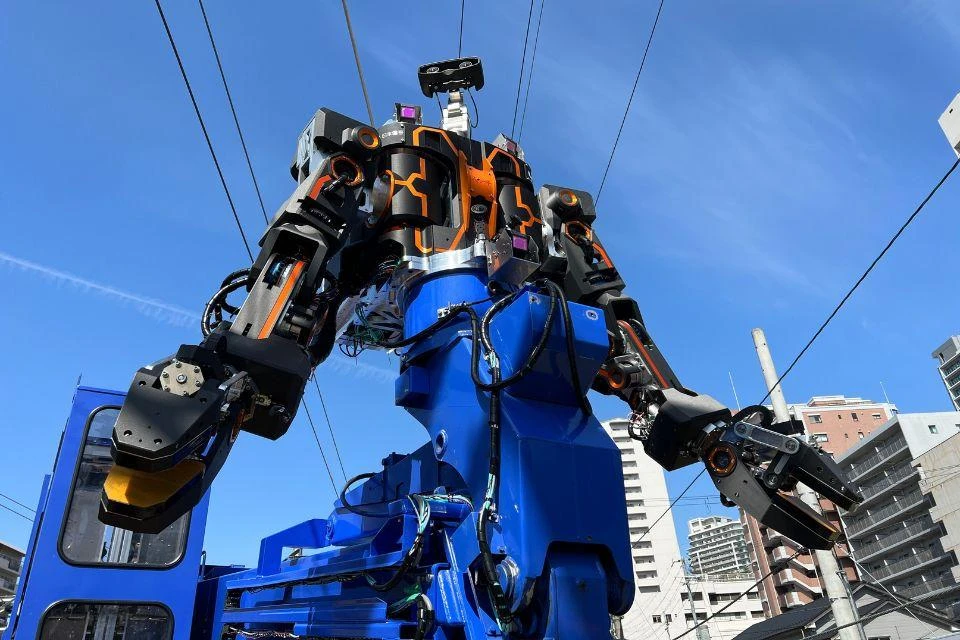
The first fruit of those efforts was the Multiple Handling Vehicle, an anthropomorphic robot deployed in 2024 to perform maintenance on railroad facilities. The road to creating this product required cooperation by three entities: Kanaoka’s company, the rail company, and the transportation infrastructure manufacturer.
Railroad maintenance involves any number of hazardous tasks. Traversing scaffolding to work in high places, repainting structures that support overhead wiring, and cutting down nearby trees that interfere with transportation carry risks ranging from falling to electric shock. JINKI-ITTAI’s solution allows workers to perform these tasks from a safe location, remotely operating a robot mounted on the end of a crane.
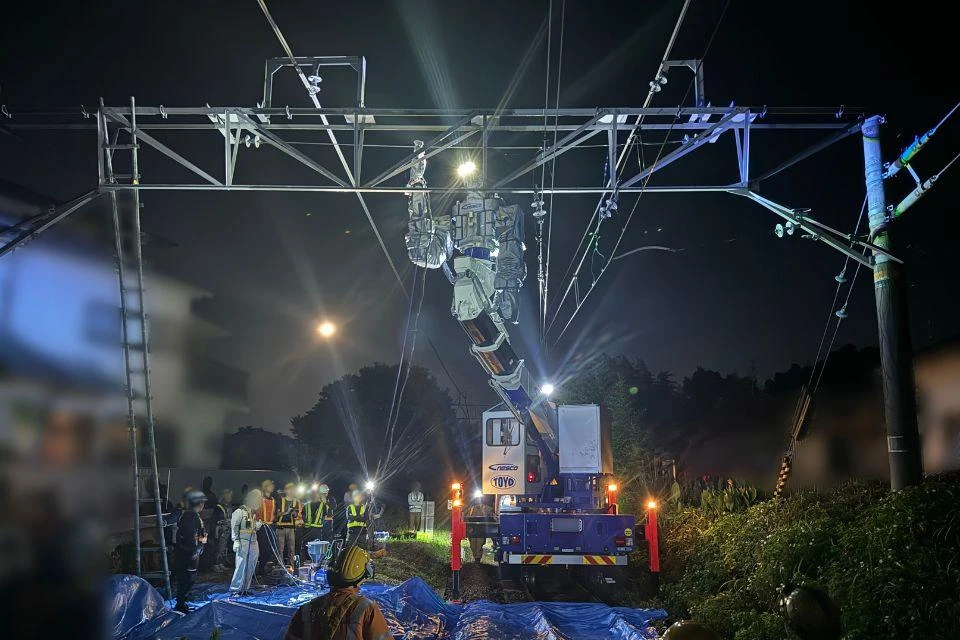
Rather than reproducing movements programmed in advance, the robot performs fine-grained tasks under real-time human control. This is an approach seldom seen in global robotics.
The core of the technology is the “power-amplifying bilateral control” developed over many years of in-house research by Kanaoka’s company. Small nudges of the control sticks by the human operator are amplified to substantial force exerted by the robot, and sensations received by the robot from its environment are fed back to the operator as intuitive haptic sensations, making the force easier for humans to interpret. This bilateral architecture makes it possible for operators to handle the robot as if it were an extension of their own body. “A robot is one kind of physical conversion filter between a human and the environment, and how to design that conversion is the essence of the question,” says Kanaoka. This design philosophy has enabled the company to create robots that are heavy machines yet capable of fine-detail work.
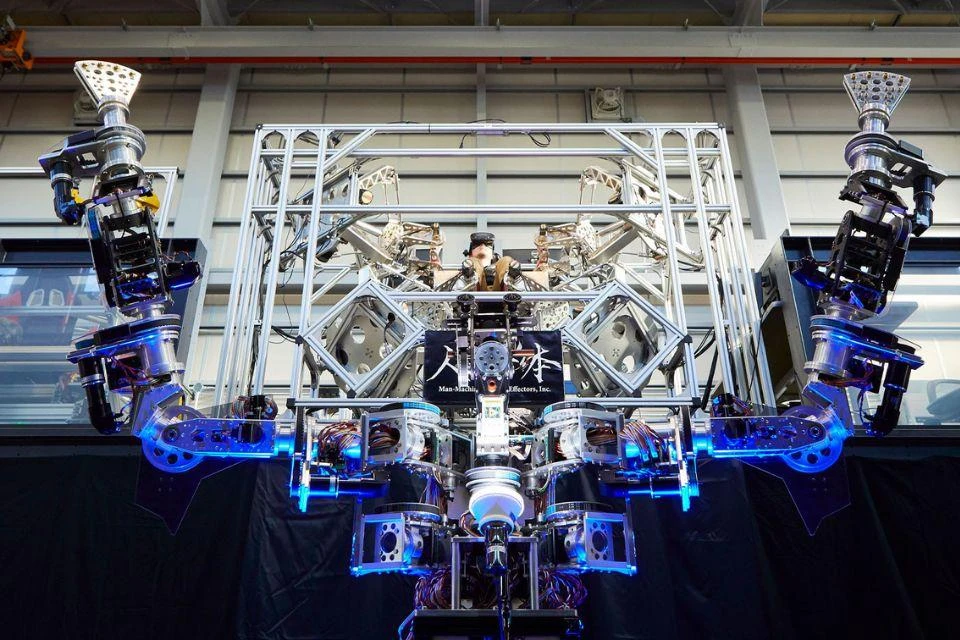
The company is currently pursuing development of other robots as well, with a range of corporate partners.
One example is a prototype robot developed to attach the steel brackets that provide seismic reinforcement for expressway bridges and other infrastructure. These brackets, which can weigh a ton or more, are traditionally hoisted aloft using cranes or chains and then bolted into place by high-elevation workers—tough, hazardous, and time-consuming work. If the “public works robot” currently being developed in collaboration with a construction company proves capable, this would not only improve safety by allowing the brackets to be attached via remote operation, but would also allow sub-millimeter-level accuracy processes to be performed by a single piece of equipment, cutting installation time by more than 75%.
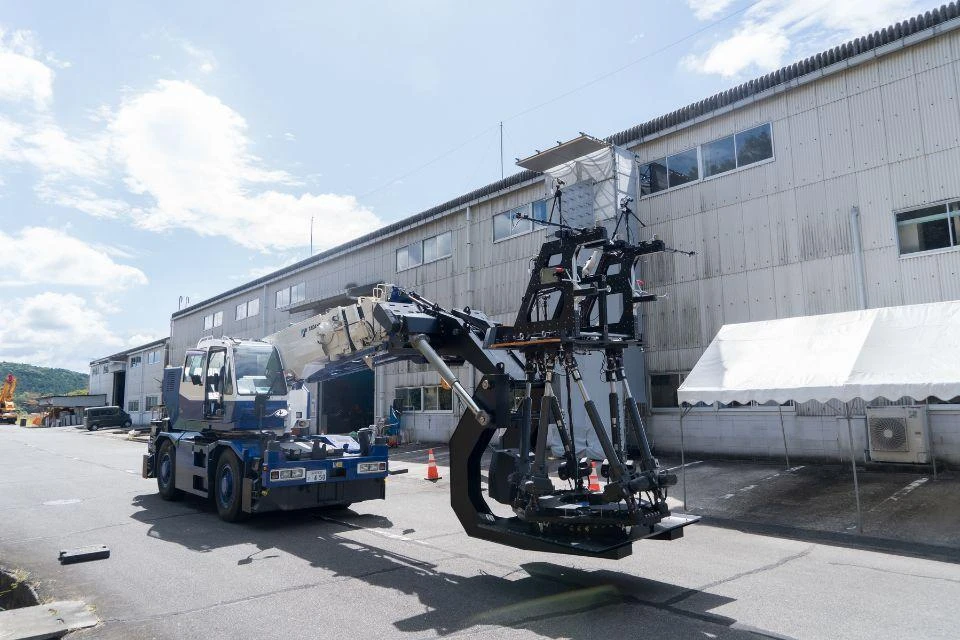
“For now, we want to focus on expanding the fields in which robots can be used,” says Kanaoka. “Disaster response—which spurred our corporate pivot—is sure to be included on that growing list in time.”
If the widespread implementation of robots goes smoothly, it will eventually be necessary to cultivate robot operators as human capital. Kanaoka has his eye on this future.
JINKI-ITTAI is currently exploring the possibility of creating a “robot operation academy” in Minamisoma, where it has its Fukushima Base. The idea calls for the establishment of a large test field on land that was devastated by the earthquake and tsunami. Here, systematic training in safe robot operation could be performed. “We want to create a facility that attracts aspiring robot operators from all over the world, who will learn and then return to their workplaces,” says Kanaoka. Here in Fukushima, the land that inspired his company’s new direction, a new step toward full-scale implementation of robots looks set to be taken.