



Illegal waste dumping and other forms of improper disposal have exacerbated the flow of litter into nature, negatively impacting environments and landscapes in many parts of the world. A portion of this dumped waste travels through rivers and other waterways into the oceans, polluting them and inflicting profound damage on marine ecosystems. Concern over this issue has inspired a Japanese startup to launch pioneering initiatives that leverage cutting-edge AI technologies and social networking platforms as tools for addressing the global litter crisis.
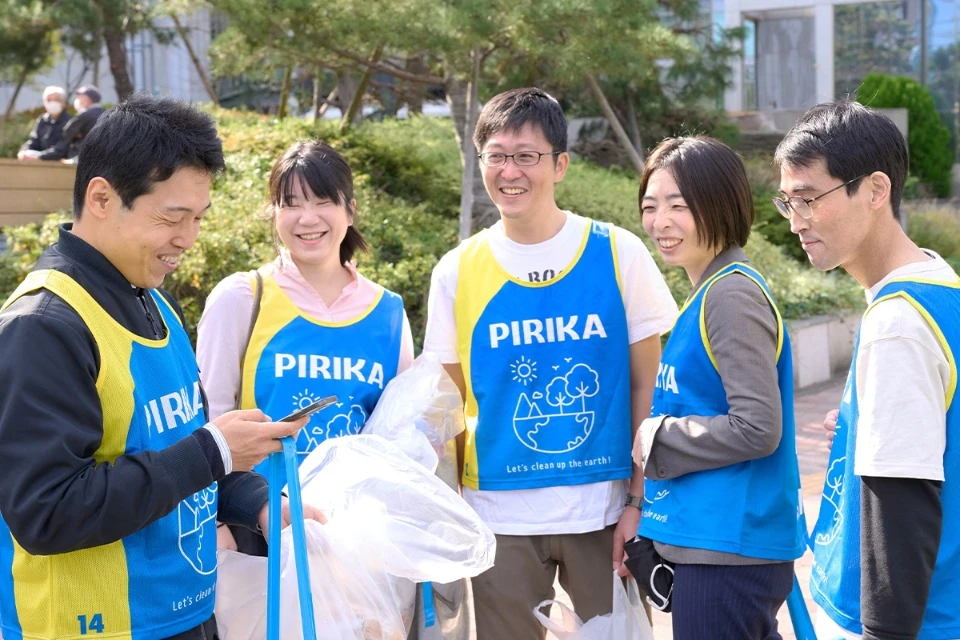
Even as society-wide efforts to promote reuse and other waste-reduction strategies continue to spread, litter carelessly discarded on streets and in public spaces remains a persistent problem. Pirika, Inc., a startup born in a research laboratory at Kyoto University, is harnessing the power of science and technology to tackle this global environmental issue head-on.
Founded in 2011 with the aim of helping solve the problem of litter flowing into the natural environment, the company developed a litter-picking social networking app named Pirika. With this dedicated app, users take photos of the litter they collect and record the amount and location. All of this information is then centrally compiled on a web platform. By making litter-picking activities visible, the system clearly indicates where and how much litter is being collected. When this data is shared with companies and local governments, it enables more efficient waste collection and management. Another major strength lies in the platform’s use of SNS features: users can easily connect with one another, encouraging others to join and steadily expanding the circle of people engaged in cleanup activities. To date, the Pirika app has been used in 136 countries and regions around the world, with a cumulative total of 440 million pieces of litter collected (as of February 18, 2026).
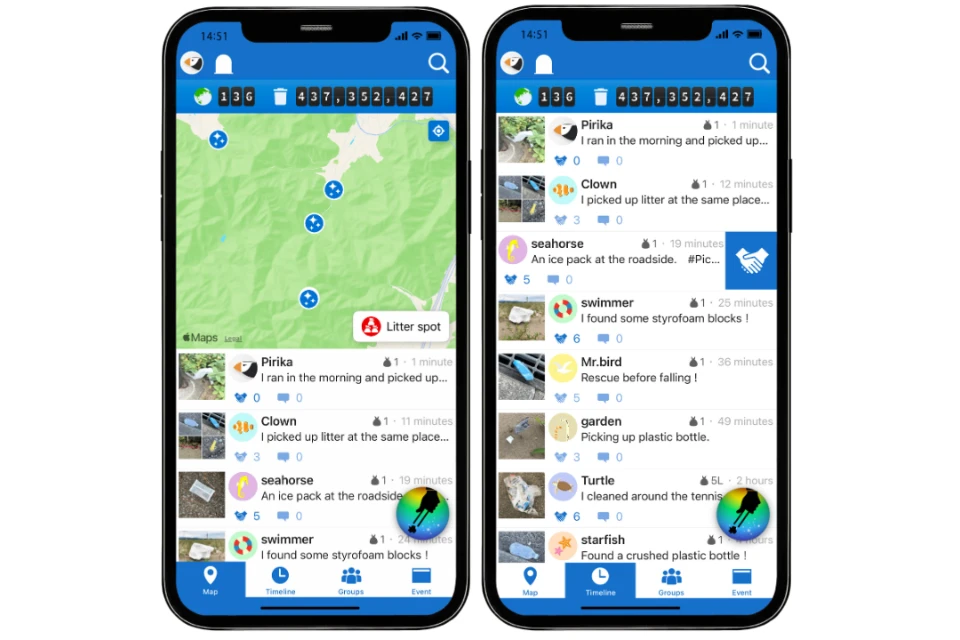
The Pirika platform offers two distinct services: “Pirika for Governments” and “Pirika for Businesses and Organizations.” The former service enables local governments to display cleanup events and other initiatives directly on a dedicated web page, encouraging active participation by residents in community beautification efforts. Moreover, because the litter collected during these activities is visualized on a distribution map, the knowledge gained can be directly applied to planning and improving future cleanup efforts.
The latter service, on the other hand, compiles the results of litter-picking activities for a specific group, allowing companies and organizations to publicly showcase their social contribution achievements. A group-exclusive timeline where members can share activity reports facilitates steady expansion of the circle of people engaged in litter-picking together.
“To solve the problem of litter flowing into the natural environment, it is essential to quantitatively grasp both the volumes and types of litter produced and collected, as well as to reduce the amount of litter generated in the first place while increasing the amount collected,” says KOJIMA Fujio, representative director of Pirika, Inc. During his student days, Kojima embarked on a round-the-globe journey that made him keenly aware that litter is a challenge shared by the entire world. Together with fellow graduate students at his university laboratory, he devoted himself to developing the Pirika app, culminating in the creation of the company.
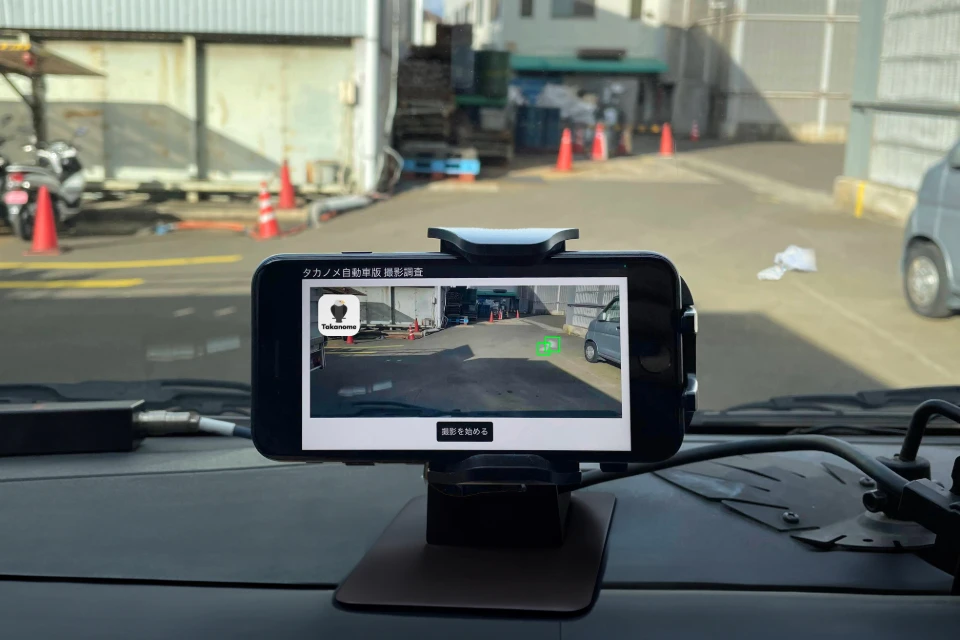
The next project the company developed was Takanome (meaning “hawk-eye”), a service designed to survey the distribution of litter scattered on streets and roads. Using a dedicated smartphone, users capture video footage while moving along the road; proprietary AI then analyzes the footage to identify and quantify the types and amounts of litter, mapping the results and displaying them as survey data. The smartphone can be mounted on a moving vehicle, but surveys can also be conducted on foot in areas inaccessible to cars. This approach makes it possible to obtain both a geographical view of litter distribution and precise quantitative data—information that can be directly applied to measuring the effectiveness of cleanup efforts and proposing targeted improvements. “The major advantage is that there is no need to deploy special survey vehicles. Simply attaching a smartphone to vehicles already in daily use—logistics trucks, garbage collection trucks, taxis, buses—allows for continuous, routine monitoring,” explains Kojima.
Since 2024, Pirika, Inc. has been collaborating with the Japan International Cooperation Agency (JICA) on demonstration experiments using Takanome in Peru, where waste management remains a significant challenge. Although regular garbage collection is carried out in the capital city of Lima, the sheer volume of waste generated far exceeds collection capacity, leaving large amounts uncollected. Illegal waste dumping further compounds the problem. To address this issue, Takanome devices have been installed on municipal patrol vehicles as well as cars belonging to local taxi companies. These systems continuously survey the volume and distribution of litter, generating detailed maps of their findings. The resulting data is being used to optimize garbage collection routes and allocate resources more efficiently. The company aims to apply this methodology and steadily accumulate demonstration data with it, not only in Peru but also in other locations worldwide.
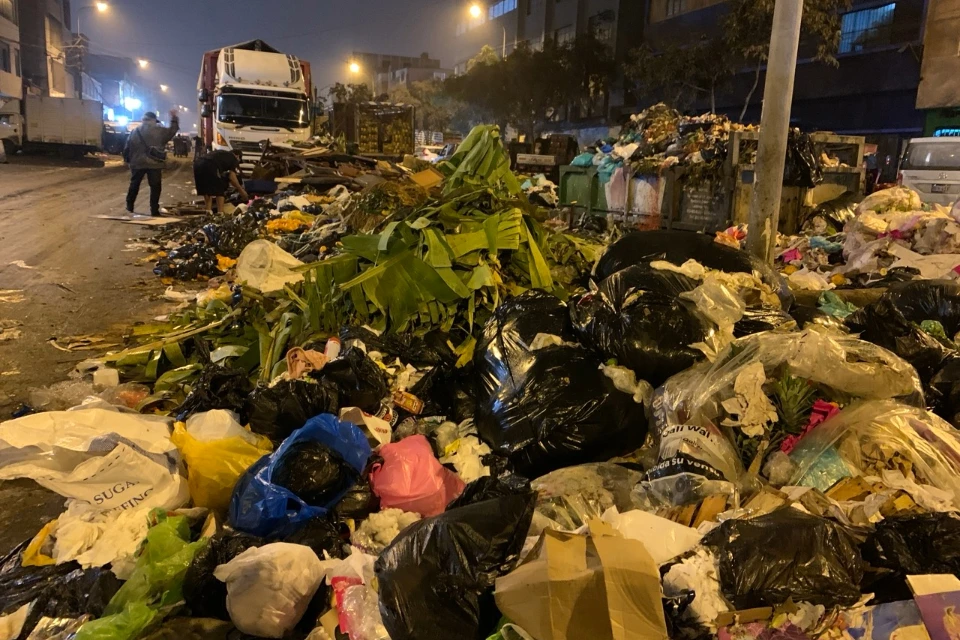
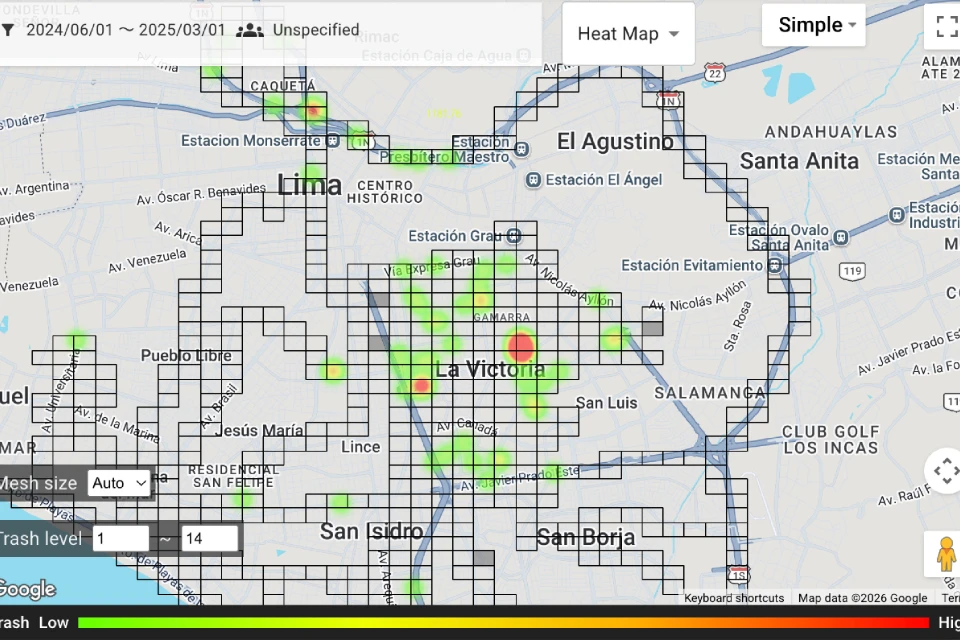
(Bottom) A heatmap generated using Takanome visualizes the volume and distribution of litter. Areas with higher amounts of litter are displayed in red.
“I want to make Japan a showcase we can be proud of on the global stage when it comes to solving the litter problem,” says Kojima. “I hope people from around the world will come to Japan, experience firsthand how clean this country is, and—if they feel inspired to achieve the same degree of cleanliness in their own countries—turn to Pirika as a tool to help make that happen.” By linking individual actions and making the state of society visible, Kojima and his colleagues aim to transcend national borders and cultures as they support the global movement toward a cleaner society.


