



Cacao husks discarded during the chocolate-making process yield innovative new building materials, while fruit peels are transformed into lifestyle goods that add spice to the day . . . These are just some of the ways that a groundbreaking technology promises to make better use of underutilized resources, particularly food waste. The Japan-based startup that developed this technology describes the process as one that “recreates” materials as new products utilizing their original qualities.
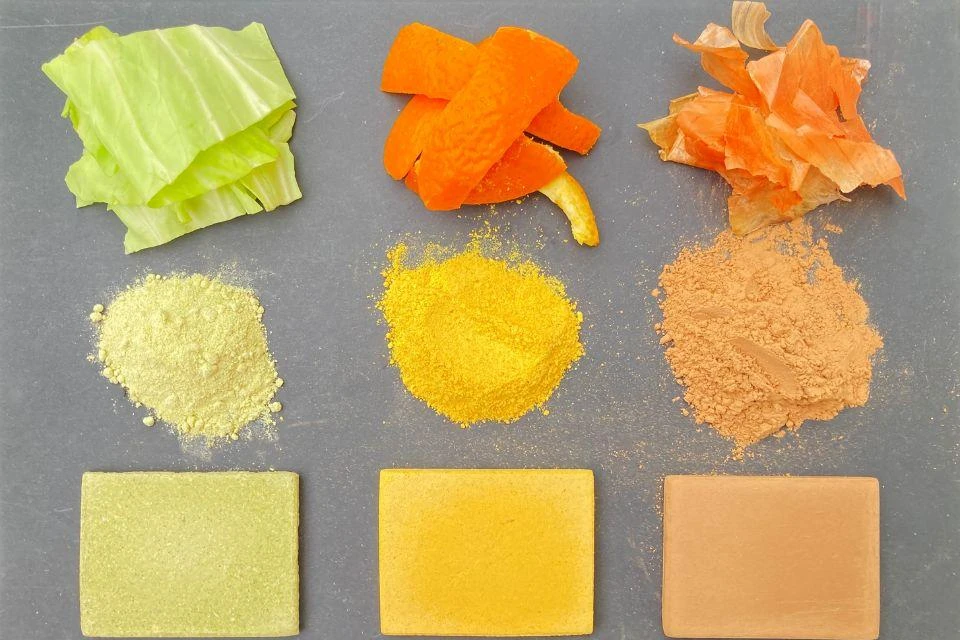
The vast amounts of food waste generated every day pose a challenge to the entire world. One intriguing solution has emerged from a research group in Japan. Founded in 2021 as a University of Tokyo spinoff, fabula Inc. embraces a vision of “creating inspiration from waste,” transforming discarded materials, notably food waste, into entirely new materials or products through a simple technology.
The starting point of this project lay in the problem of achieving sustainability with construction materials. Concrete may be indispensable to modern society, but the depletion of sand—one of its primary ingredients—has emerged as a pressing global concern. Moreover, the production and transportation of cement alone is estimated to account for roughly 5 to 8% of the world’s total CO₂ emissions, making the reduction of its environmental impact an urgent priority for the industry.
As a materials researcher, MACHIDA Kota, CEO of fabula Inc., confronted the intertwined crises of resource scarcity and environmental burden head-on by seeking sustainable alternatives to sand and cement in building materials. In the course of his research, he discovered a method of transforming the enormous volumes of food waste that are constantly generated, yet remain largely underutilized, into sturdy new materials.
The core of this technology is its ability to mold organic waste by applying heat and pressure adjusted to the unique characteristics of each type of waste. With the right amount of heat, the natural sugars within the material soften and flow, filling the space between fibers and binding them together without the need for any chemical adhesives. This chemistry-free approach enables molding that preserves and highlights the inherent texture and character of the original raw ingredients. That makes it possible to create a remarkably varied range of products tailored to different purposes—interior materials, furniture components, small miscellaneous goods—in a way that sometimes retains the pleasant aroma of the original ingredients.
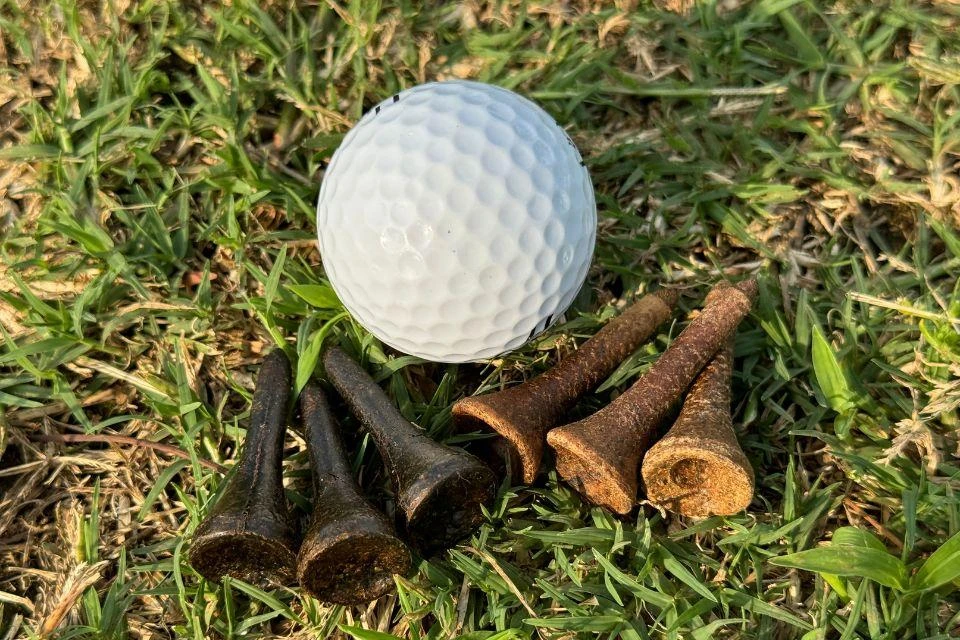
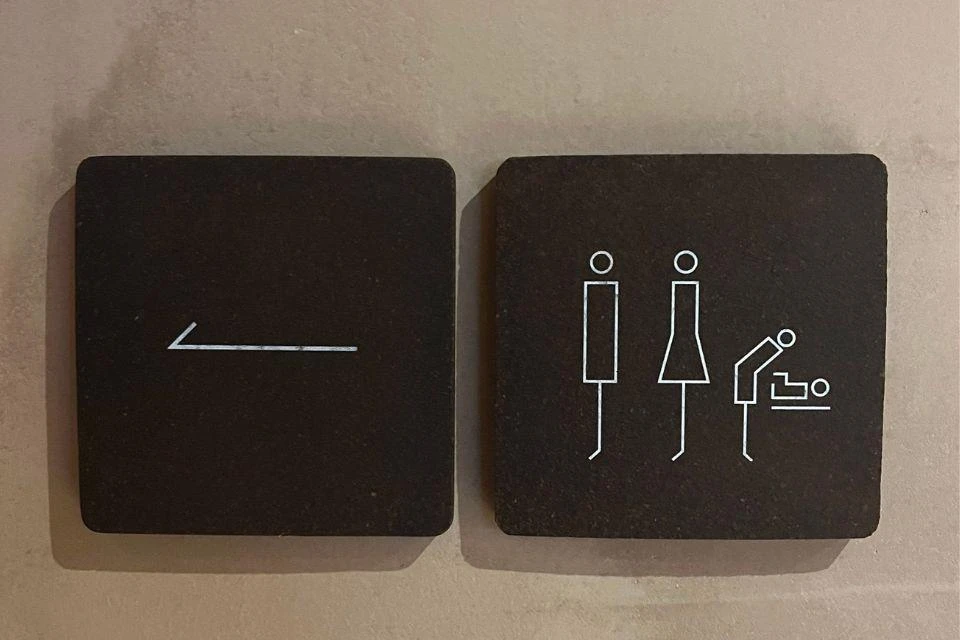
Right: Signs made from food and other waste. From small accessories to decorative elements for interiors, the same technology can create a diverse range of products depending on how the material is shaped. © HORIGUCHI COFFEE
An emblematic example of fabula’s work made its debut at Expo 2025 Osaka, Kansai, Japan. Cacao husks—the thin outer skins of cacao beans removed during chocolate production, supplied by major food manufacturer Meiji Co., Ltd.—were reshaped into sturdy components for indoor benches at the venue. What had long been treated as mere waste was transformed into practical furniture. This one example amply demonstrated that fabula’s technology can dramatically expand the possibilities for waste utilization.
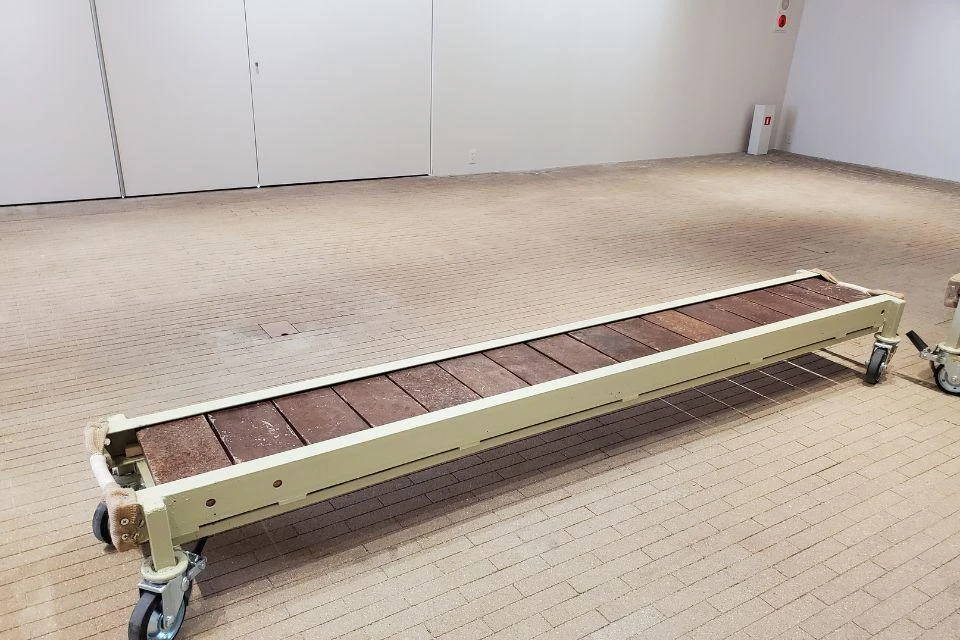
One of the actual benches placed in a facility at Expo 2025 Osaka, Kansai, Japan. The seat surface is made of fabula material created from cacao husks. © Meiji
Machida describes fabula’s ultimate objectives in these words: “It is not enough just to think about how we can reduce the massive volumes of waste being produced. What truly matters is ensuring that such waste is naturally woven back into the fabric of economic activity. We don’t want products chosen just because they are ‘good for the environment.’ We want to create a reality in which they are used simply because people like them.”
This stance also distances itself from the “awareness-dependent” approach that has long hampered conventional environmental technologies—the tendency to rely on moral persuasion or guilt to drive green initiatives. Consciously avoiding self-labeling as an “eco-friendly company,” fabula prioritizes the creation of genuine value as a part of ordinary business activities.
That approach draws deeply from the Japanese cultural sensibility of mottainai—an aversion to wastefulness and a desire to use everything to the fullest. The company seeks to make these everyday instincts the foundation of a viable industry.
In practice, fabula’s technology is remarkably adaptable to different waste streams. It can accommodate an impressively broad palette of materials: food residues, flower stems, bark, sawdust, and more. “The technique itself is not especially complex—and precisely because of that simplicity, it can handle a wide variety of materials and yield an equally diverse range of finished products. If someone is troubled by some kind of waste, I want us to be the first place they turn to—something like an open platform for upcycling discarded matter,” Machida says.
Moreover, the fact that fabula’s “recreated” material contains no adhesives whatsoever and is composed of 100% food-derived components points toward possibilities that extend well beyond the realm of materials alone. One such area is its potential contribution to the optimization of logistics.
“Powdered seasonings and similar substances, when transported in their usual form, are essentially moving a great deal of air along with the product itself,” explains Machida. “If we can use our technology to temporarily solidify them and dramatically increase their density, the amount that can be carried in a single truck could increase exponentially.” The process is neatly reversible: the material is compacted just before shipment, then—right at the point of use—simply shaved or crumbled back into its original powdered state. Such an approach opens one compelling pathway toward decarbonizing logistics by significantly reducing the number of transport trips required for the same volume of payload.
Furthermore, in the domain of space development—where payload mass is governed by unforgiving limits—this technology of “compacting for transport” and the dual-purpose notion of materials that also serve as sustenance emerges as an eminently viable strategy for extreme environments.
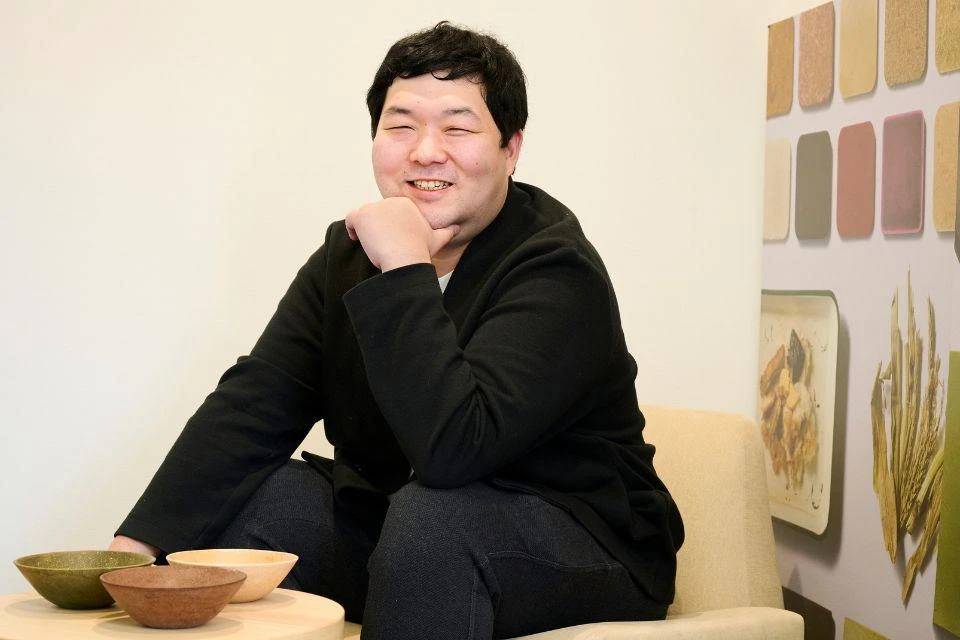
MACHIDA Kota, CEO of fabula Inc., sits in front of a tableware set made entirely from discarded food waste.
At fabula, the long-term vision foresees a day when it can produce materials suitable for constructing roads and buildings. For the present, however, the company is directing its full attention to giving new value to things that society currently regards as expendable, and ushering them back into the currents of daily life.
This flexibility carries profound significance for regions around the world, each grappling with its own distinct landscape of waste. The types and volumes of discarded matter vary from country to country, city to city—yet the core technique, relying solely on controlled heat and pressure, adapts with ease to such diversity. Confronting the inevitable generation of waste that accompanies every process of creating goods, fabula demonstrates the feasibility of a different path: taking what must emerge as byproduct and reshaping it into objects people genuinely want. It’s an achievement that offers a glimpse of a future in which sustainability is an ever-expanding, naturally unfolding reality.


