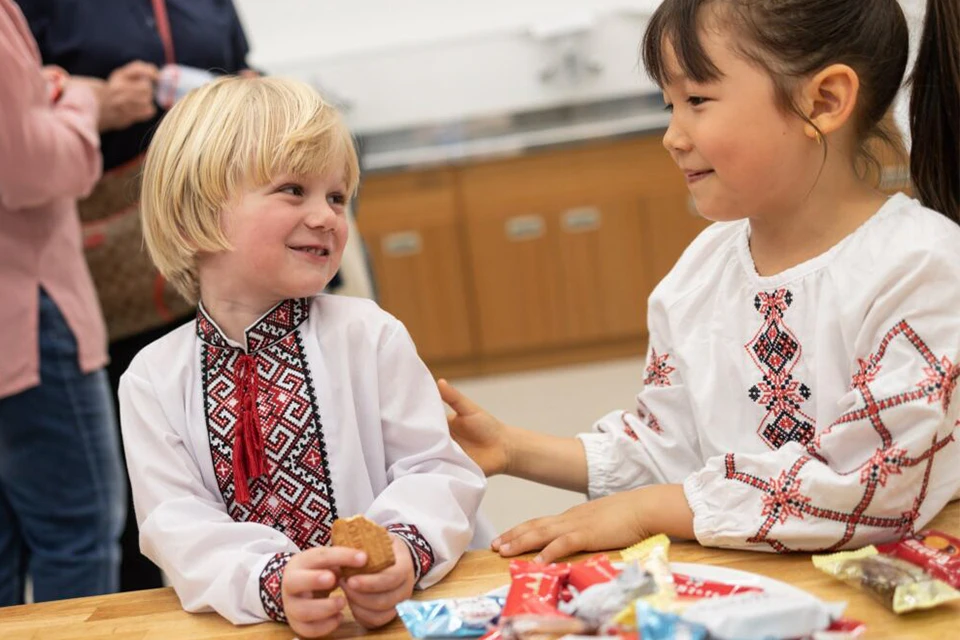
The Association of Friendship Ukraine-Japan NPO Kraiany shares Ukrainian culture in Japan in a variety of creative ways. Challenging circumstances after the advent of war led the group to expand its role in response, but its chairperson remains stalwart, saying, “We continue to dedicate ourselves to the promotion of Ukraine-Japan relations as well as to initiatives to build a brighter future for Ukraine.” We spoke to her in more detail about Kraiany’s activities.
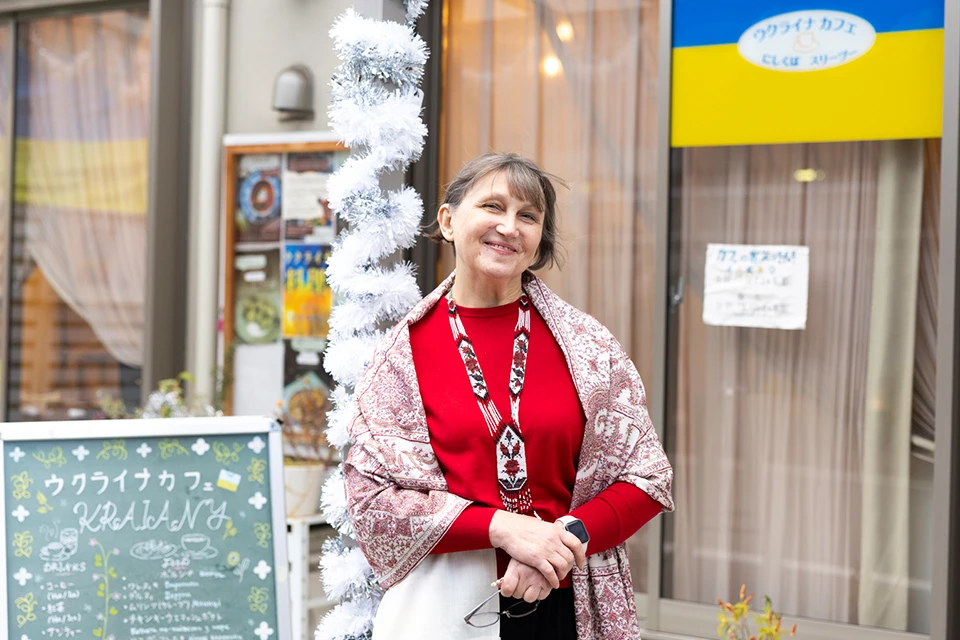
As its name indicates, the Association of Friendship Ukraine-Japan NPO Kraiany is dedicated to promoting warm relations between Ukraine and Japan. Drawing its membership from the Ukrainian community in Japan, the group has operated informally since 2000, receiving its NPO certification in 2021. Kraiany hosts workshops, art exhibitions, and other events to support its mission of sharing Ukrainian culture in Japan. It also runs Sunday School Dzherelze, which provides opportunities for Ukrainians in Japan to affirm their identity.
In 2014, Russia illegally “annexed” the Crimean Peninsula. Wanting to help compatriots in this challenging situation, Kraiany expanded its activities beyond the cultural sphere and began offering direct support. By the end of 2025, Kraiany’s fundraising efforts had enabled it to send around 160 million yen to Ukraine. These funds have helped buy food, equip medical facilities, procure vehicles for evacuation, and rebuild destroyed homes. By expanding its role, Kraiany transformed itself into an organization capable of contributing significantly to Ukraine’s reconstruction even from a base in Japan.
One focus for Kraiany has been ensuring safe educational environments for children in Ukraine, which means installing bomb shelters in schools. “Online instruction with no in-person attendance is possible, but there are undeniable concerns over the quality of such an education,” says Natalya Kovalova, chairperson of Kraiany. “We think that students benefit in many ways from seeing their teachers and classmates in person and studying together, including cultivation of a sense of unity, improved concentration, and experiential learning. The children of Ukraine are precious; the future of our homeland rests on their shoulders. Accordingly, we place special emphasis on securing the learning spaces they need.”
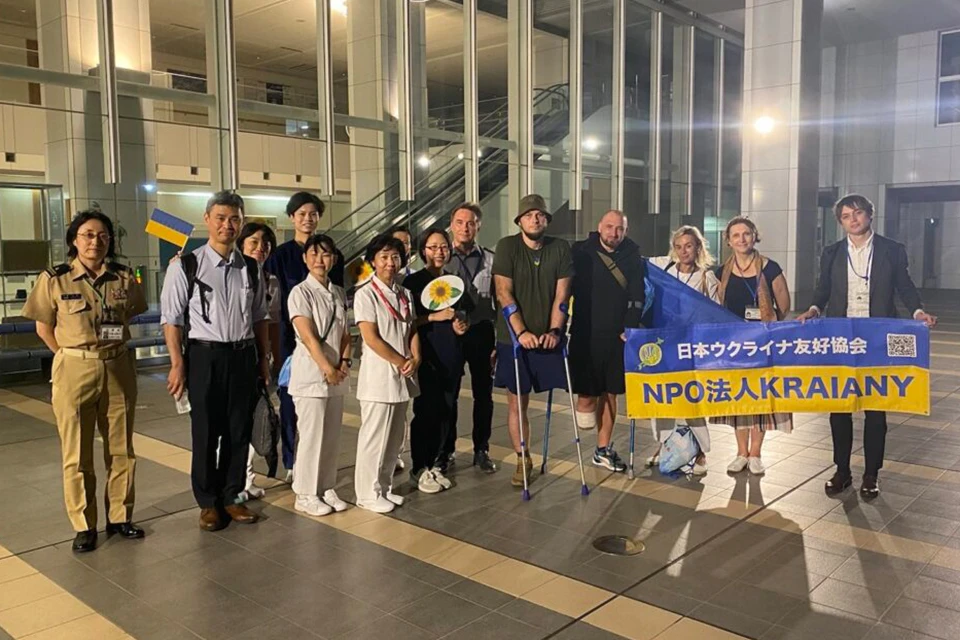
Kraiany also helps to settle and support Ukrainian refugees in Japan. Working with the refugee assistance group Pathways Japan, the organization had provided support to more than a hundred exchange students from Ukraine by the end of 2024. Also, with the cooperation of three Tokyo-area hospitals under the jurisdiction of the Self-Defense Forces, it is offering wounded soldiers arriving from Ukraine support with physical therapy, assistance obtaining prosthetics, and psychological care. In April 2023, the NPO opened a Ukrainian cafe, also called Kraiany, in suburban Tokyo as a way to offer gainful employment to refugees. The cafe serves classic Ukrainian cuisine and holds frequent cultural events such as traditional Ukrainian craft workshops, cooking lessons, and storytelling with kamishibai “paper plays,” acting as a nexus for exchange between Ukrainian and Japanese people.
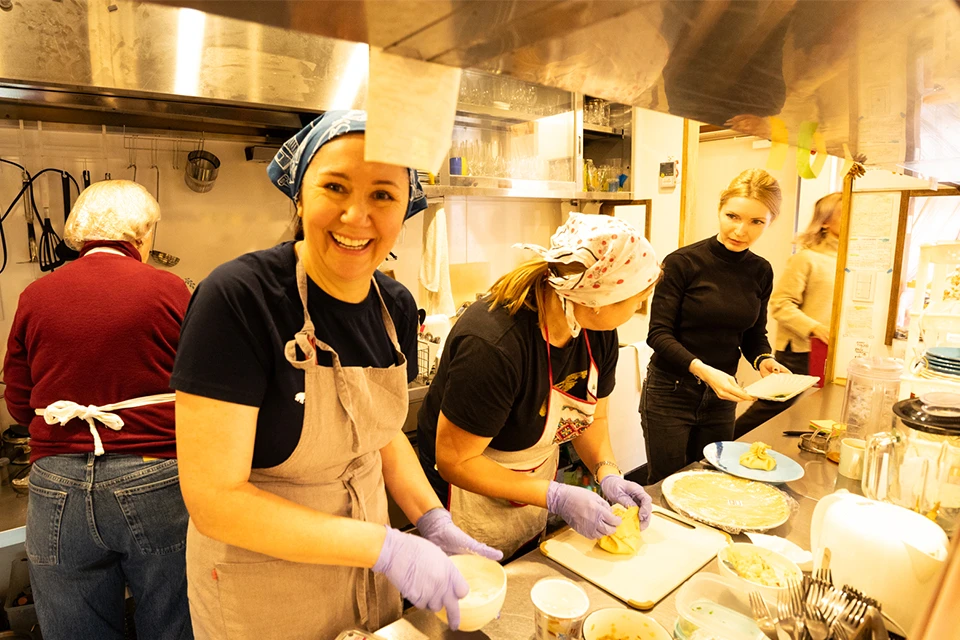
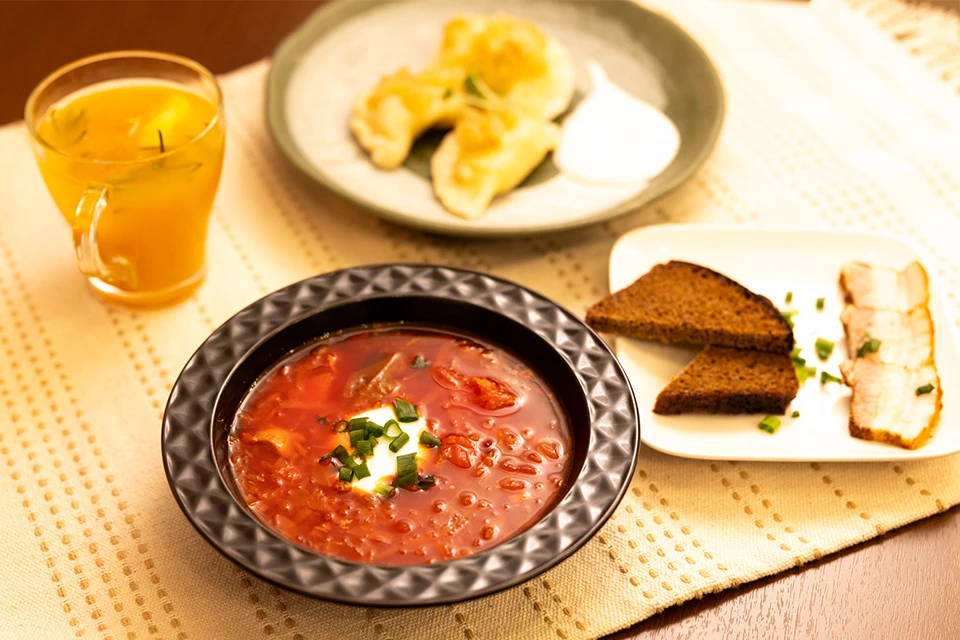
The Ukrainian cafe Kraiany employs around ten refugees who live in the greater Tokyo area. One of its specialties, the beet soup known as borscht (right foreground), is a traditional Ukrainian dish.
Sunday School Dzherelze, which Kraiany has operated since 2009, also plays an important role. Primarily intended for children of Ukrainian descent living in Japan, the school offers lessons not only in the Ukrainian language but also the country’s unique culture, including its holidays, crafts, and theater. In September 2021, a group led by Ukrainian residents helping to run Dzherelze founded the DuKaChi art studio. The studio is home to Japan’s only Ukrainian chorus, and uses the performing arts, including traditional songs and dances, as a medium for sharing the appeal of Ukraine’s richly varied culture. DuKaChi now participates in some 20 events a year at the invitation of municipalities and private organizations across Japan. There are reports of child refugees from Ukraine who were brought back from despair after DuKaChi’s artistry introduced them to the magic of self-expression.
Kovalova is enthusiastic about Kraiany’s achievements as well as its plans for the future. “More attention is being paid to the war in Ukraine these days, but we want people to learn more about the positive side of Ukrainian culture, too—by enjoying a Ukrainian meal or cultural experience at the cafe, for example, or attending a performance by DuKaChi. Our hope is that people will share these experiences with those around them and keep Ukraine in their thoughts. This will help remind everyone that Ukraine’s current situation is not ‘someone else’s problem’—and we believe it can inspire a renewed determination to preserve human civilization.”