



Much of Japan’s central Chubu region experiences heavy snowfall in winter, so the flowers and festive events of spring bring special joy to the people who live there. While cherry blossoms are an iconic symbol of the season, spring in Chubu offers much more—ranging from the vivid contrast of flowers and fresh greenery in the highlands to long-celebrated traditional events that herald the arrival of a new season.
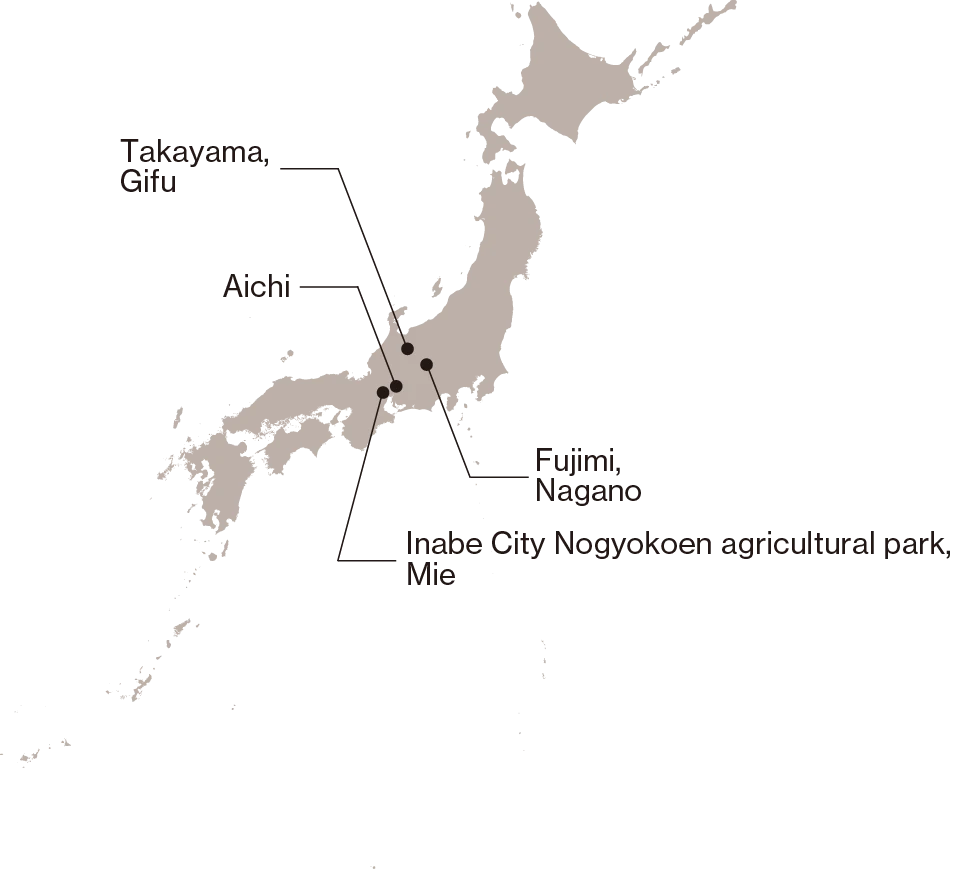
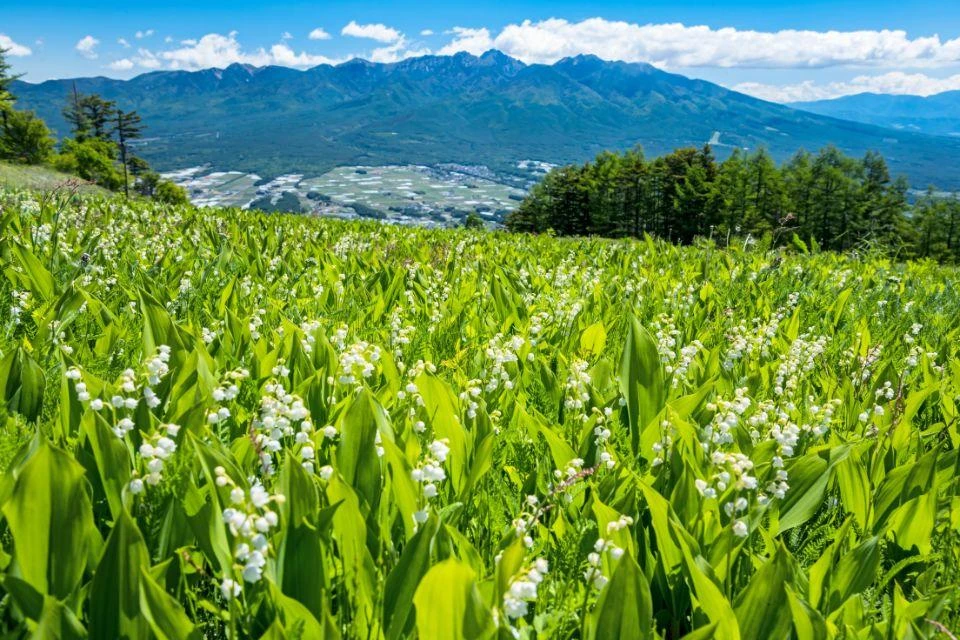
1.2 Million Lilies of the Valley Bloom in Mountain Meadows
In the highlands of Fujimi, Nagano Prefecture, the “1.2 Million Lily-of-the-Valley Festival” takes place at Fujimi Panorama Resort between late May and mid-June. A gondola carries you up to an altitude of 1,780 meters, where you’ll find a wonderland of dainty lilies-of-the-valley (suzuran) blooming across the mountaintop meadows. First to welcome you is an expanse of 200,000 European lily-of-the-valley flowers with their distinctive round petals. A 10-minute walk brings you to another vast carpet of 1 million smaller Japanese suzuran, for a total of 1.2 million flowers. Besides the lilies, visitors can enjoy a variety of mountain wildflowers in red and magenta, along with rare species of plants. A short walk to the 1,955-meter summit brings you to a stunning panorama of Mt. Fuji, Mt. Yatsugatake, and other peaks.
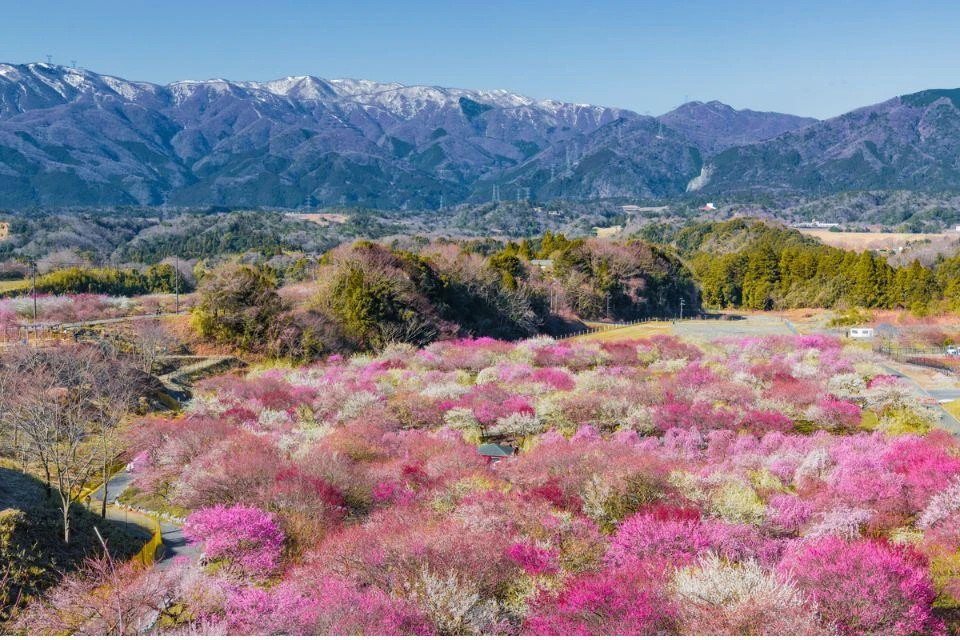
Plum Blossoms Announce the Coming of Spring
Plum blossoms have long been adored in Japan as one the timeless symbols of spring’s arrival. They earn frequent mention in the Man’yoshu, Japan’s oldest collection of traditional waka poetry, compiled during the seventh and eighth centuries. The Plum Grove Park that forms part of the Inabe City Nogyokoen agricultural park in Mie Prefecture hosts the Inabe Plum Festival from late February to mid-March every year, attracting visitors from near and far. Some 2,000 plum trees of 50 different varieties bloom across 38 hectares, filling the air with their distinctively sweet, refreshing scent. The park’s observation deck offers spectacular views overlooking the entire plum grove. Depending on the weather, you can also enjoy the sublime contrast between the expanse of plum blossoms and the snow-covered Suzuka Mountains in the distance.
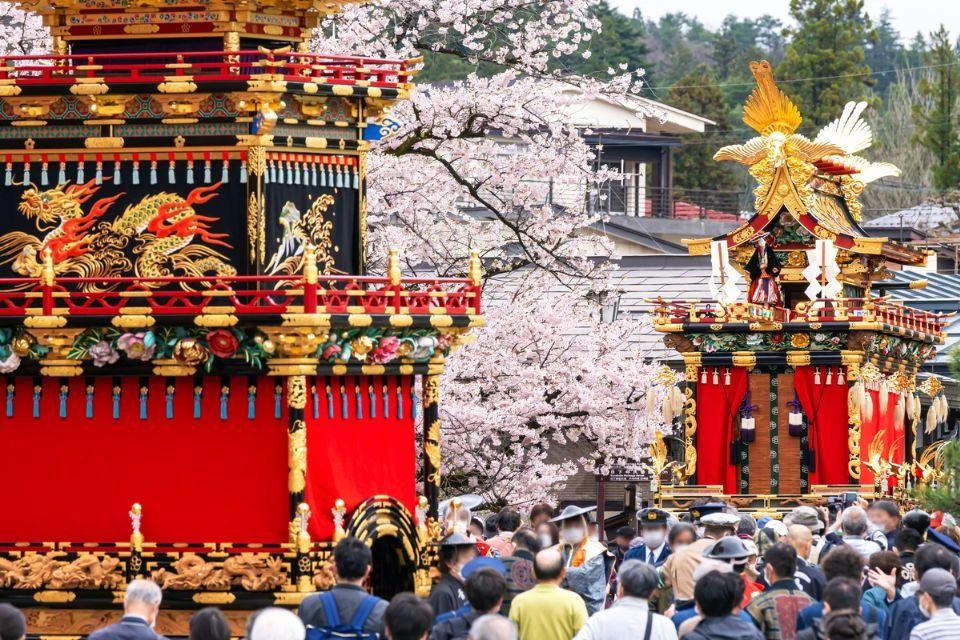
Dancing Puppets and Resplendent Floats
The Takayama Festival in Takayama City, Gifu Prefecture, is designated as both a National Important Intangible Folk Cultural Property and a UNESCO Intangible Cultural Heritage. It takes place twice a year, in spring and autumn; the spring festival runs for two days in mid-April. Held by Hida Sannogu Hie Shrine, the festival boasts over 300 years of history. Gorgeously decorated floats parade through the town, staging performances with traditional karakuri marionettes as an offering to the deities. Operated by skilled puppeteers, the karakuri dances bring the festival’s excitement to its peak. As the sun sets, over a hundred paper lanterns illuminate the floats, adding light and color to the spring evening.
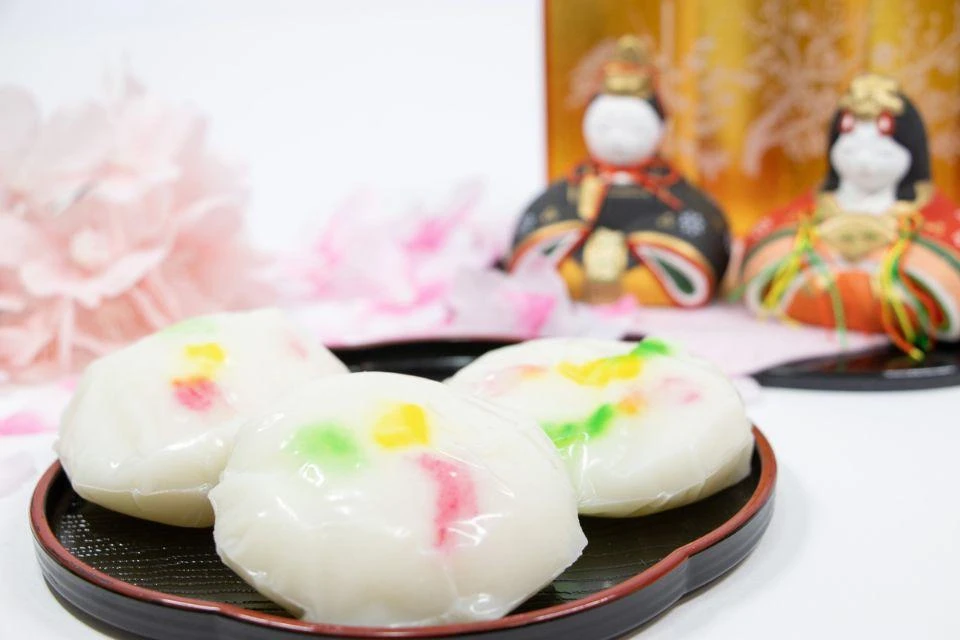
Celebrate the Healthy Growth of Girls with Colorful Confections
Aichi Prefecture is known for a traditional confection called oshimon (or okoshimon in some areas). Made by kneading rice flour with hot water, then shaping and coloring it, oshimon are customarily made as an offering to the dolls displayed during Hinamatsuri, the “Girls' Festival” held every March 3. The sweets are molded into a variety of auspicious motifs, such as sea bream and folding fans, that celebrate the healthy growth of young girls. After the offering, the oshimon are eaten fresh while still soft. But even when they harden, they can still be grilled and enjoyed with a dip of soy sauce and sugar. Communities and schools often hold oshimon-making events at festival time, and children in particular enjoy shaping the sweets in different molds and coloring them.


