



Changes in the ocean environment and limitations on marine resources are bringing existing approaches to aquaculture into question. Land-based aquaculture is expected to play a role, but barriers to entry have been high. Now, a new option has emerged: a recirculating aquaculture system (RAS) available in a compact, energy-efficient, and easy-to-use package that can be installed by anyone, anywhere. This new endeavor has the potential to redraw the global seafood production map.
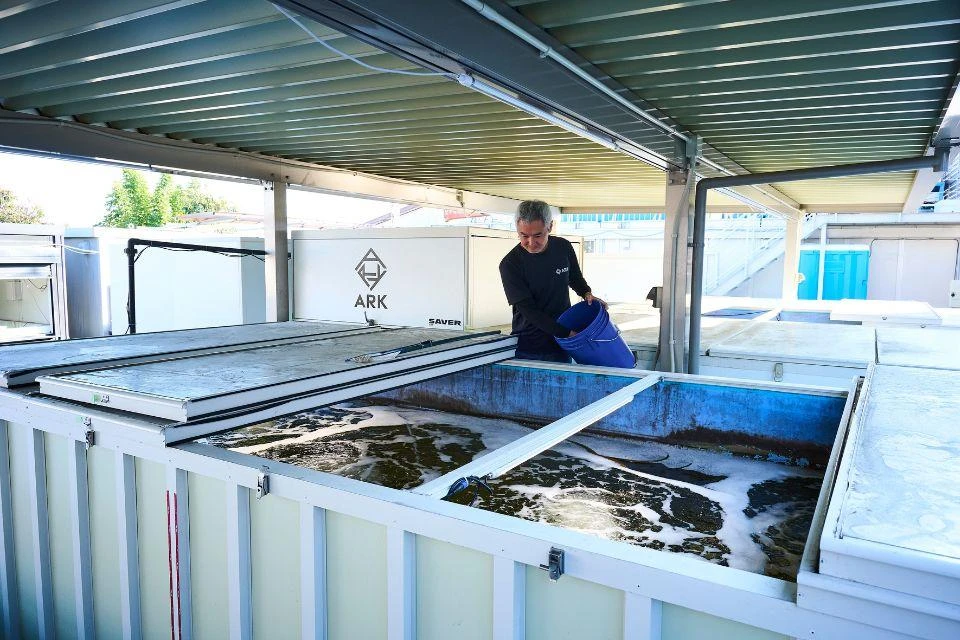
In the past, land-based aquaculture systems—particularly recirculating aquaculture systems (RAS), which circulate and reuse the same water—generally required massive setup and running costs along with specialized technical knowledge. Despite the significant benefits of reduced environmental impact, the barriers to entry were simply too high for individuals and smaller operators.
Japan-based Ark Inc. has responded by taking the opposite approach. In line with its corporate motto of “making land-based aquaculture universal,” the company seeks to change aquaculture from a special technology to social infrastructure in which anyone can participate. That goal finds concrete expression in a land-based aquaculture system it calls Ark Zero.
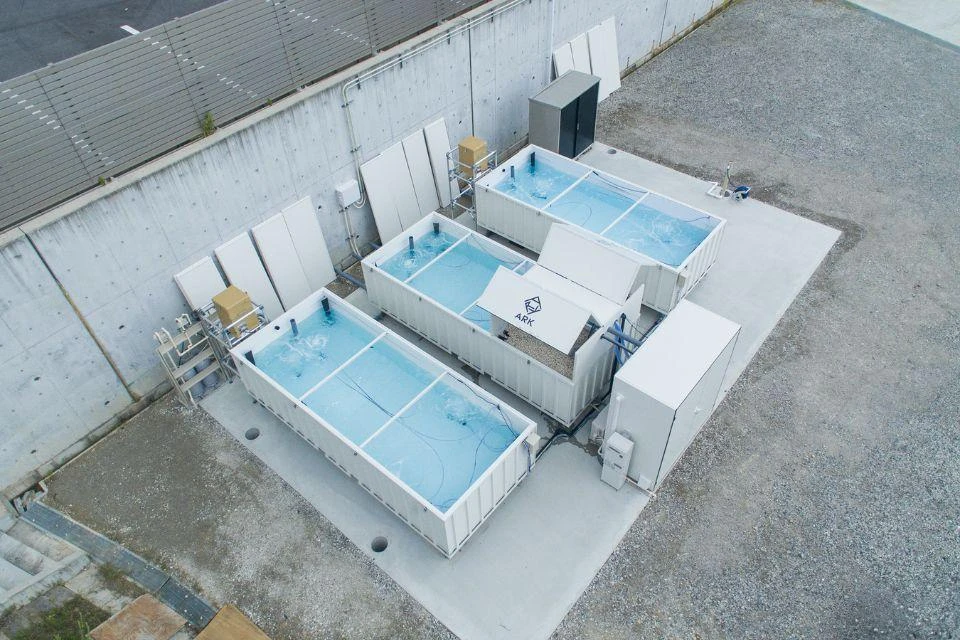
Ark’s creation was partly driven by the limitations of ocean aquaculture personally experienced on-site by company co-founder, director and CEO KURIHARA Yosuke, whose previous job involved participating in a project in Europe to enhance aquaculture through digital technology. “Demand for fish continues to grow, but the parts of the ocean that can be used for aquaculture are limited,” says Kurihara. “I sensed how difficult it would be to expand further without breaking that dependence on the sea.” A new, entirely land-based option was essential to ensure a stable supply of marine products while protecting the ocean. This idea was Ark’s point of departure.
Ark Zero was developed by Ark around a RAS using 100% artificial seawater. Because the RAS filters and reuses its water rather than discarding it, the total amount of water required for aquaculture is lower. This self-contained design both minimizes the impact on the surrounding environment and makes it possible to manage water temperature and quality inside Ark Zero for stable fish cultivation.
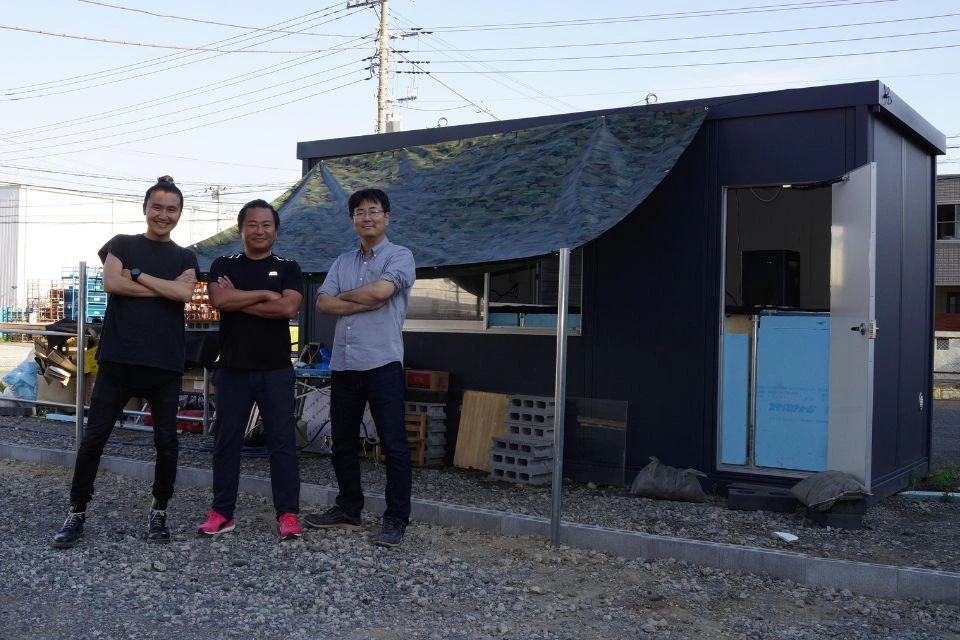
For aquaculture carried out in a large facility, which is the norm in land-based aquaculture, the need to build facilities and set up infrastructure requires an initial investment that is often in the tens of billions of yen. Ark Zero, however, has a compact, integrated design that includes a filtering tank and other essential equipment, so large-scale construction work is unnecessary. Furthermore, the number of connected water tanks can be adjusted to suit the installation environment and budget, so it is possible to start small with the bare minimum configuration. Ark Zero is also flexible enough for installation even in restricted spaces, such as former warehouse lots or idle facilities, so there is no need to secure large sites.
Ark also tackled operating costs, which are a major burden for land-based aquaculture. The system’s main unit has an aluminum frame and highly insulated, airtight construction. Preventing outside air from getting in maximizes thermal efficiency, which reduces the energy costs needed to maintain constant water temperatures to roughly 10% of those of other models. Ark Zero also contains systems for remotely monitoring and managing water quality and environmental data, reducing staffing needs.

Another aspect Ark focused on was fish species selection. They target species that are suited to land-based aquaculture and to easy establishment of an aquaculture business by companies that buy an Ark Zero. Ark supplies not only water tanks but a full package of operational methods, including aquaculture procedures for suitable fish species. It also works with its clients to help them set up their business. One species attracting particular attention is grouper, which is consumed in food cultures around the world. Grouper swim very little and are easy to raise in high-density populations, making them a good fit for the small-footprint Ark Zero.
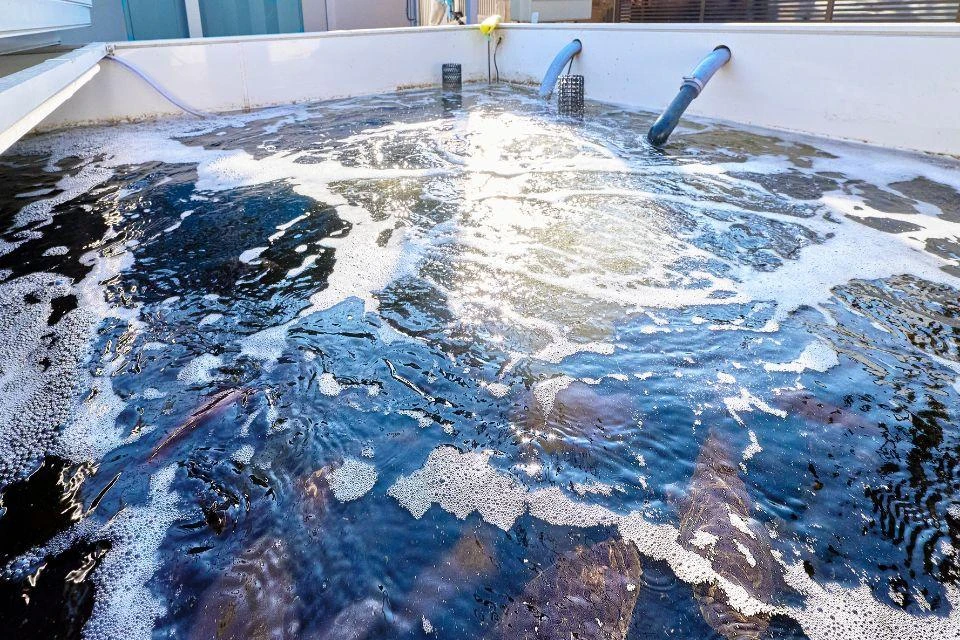
Ark Zero facilities are now being deployed across Japan, with a diversity of players getting involved in land-based aquaculture: universities using the system for research purposes, corporations starting new business ventures, and groups coordinating with local governments on regional revitalization. One business with no previous aquaculture experience established a regional brand by cultivating prawns and high-value-added fish species.
The model has also aroused interest overseas. According to Kurihara, countries in the Middle East, where food self-sufficiency rates are generally low, are particularly intrigued. “In the Middle East, grouper is a highly popular fish, considered a delicious luxury, and there is a lot of momentum toward developing land-based aquaculture to meet demand for it.” In deserts and other areas where water resources are precious, Ark’s system, which recirculates water instead of requiring that it be changed, could be a powerful means of ensuring food security.
Ark has also obtained approval for London’s first land-based aquaculture facility, where trial cultivation of shrimp has been underway since December 2025. “We run a sushi restaurant in London, and we see this vertically integrated business model, in which marine products are raised in London and consumed in the same city, as an enormously important initiative,” says Kurihara. “The success of this model is now attracting interest from other European countries.”
Ark sees a future in which people cultivate marine products in regions around the world while letting the ocean rest. Ark Zero, as the infrastructure for this vision, is ready to provide land-based support for the global food supply.


