



Water is at the center of many challenges faced around the world. Aging infrastructure or disaster-related damage can interfere with water supplies, chemical substances can cause water pollution, and—particularly in the global south—rising populations can face water shortages and struggle to access enough sanitary water for their needs. Now, however, an entirely new technology from Japan hints at the possibility of a new approach to water infrastructure that could resolve all of these problems at once.
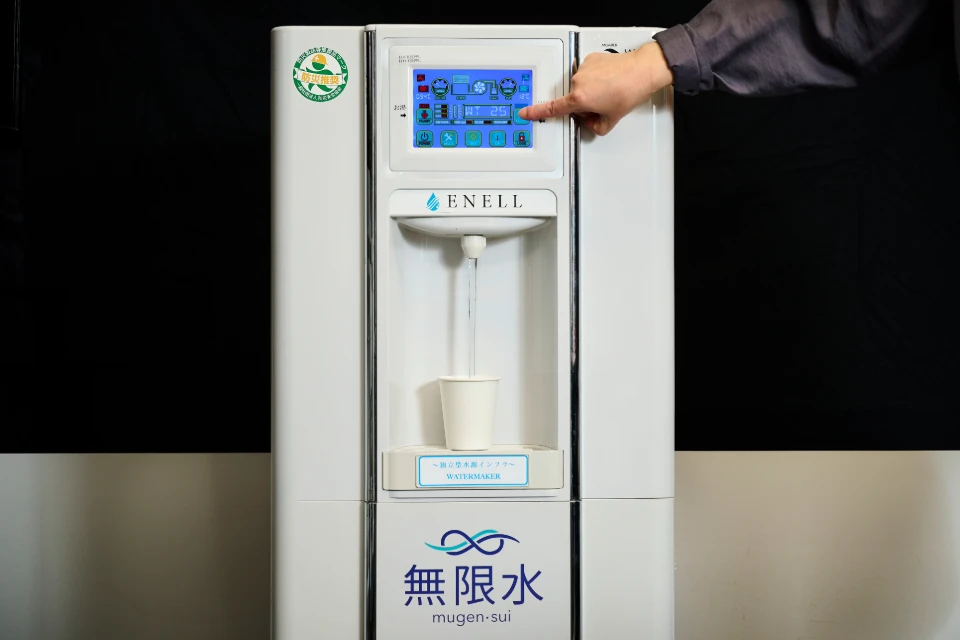
Water is essential to human life, but countless people around the world lack reliable access to safe water for a range of reasons. Shortages caused by drought play their part, but there are many other factors, among them sanitation issues with the water that is available and difficulties ensuring water supply to depopulated areas and islands.
Even in Japan, which is considered a relatively fortunate country in terms of water availability, challenges around water are becoming apparent. Aging water infrastructure is the cause of some 20,000 leaks and other damaging incidents every year, and at the current pace it will take more than 150 years before that infrastructure is fully replaced.
Enell Inc. was founded with the goal of fundamentally rethinking the very concept of water supply in light of these circumstances in Japan and around the world. “Since ancient times, water has been ‘carried,’” says Enell CEO AKASHI Taro. “When people wanted to use water somewhere, they had to find a way to move it from its source to that location. We propose taking water infrastructure itself off-grid and bringing the age of water-carrying to an end.”
To support this goal, Enell developed distributed off-grid micro-water sources that can create potable water wherever they are situated. Unlike traditional systems that collect water from an existing source and then purify it in bulk, Enell’s system can run in a self-contained operation on the scale of a single building or facility, securing water and processing it into a sanitary state. The core of the system is a technology suite that filters unsanitary water to the point of zero impurities and then stores it in a sterile state for extended periods, as well as a technology for generating water from the very air.
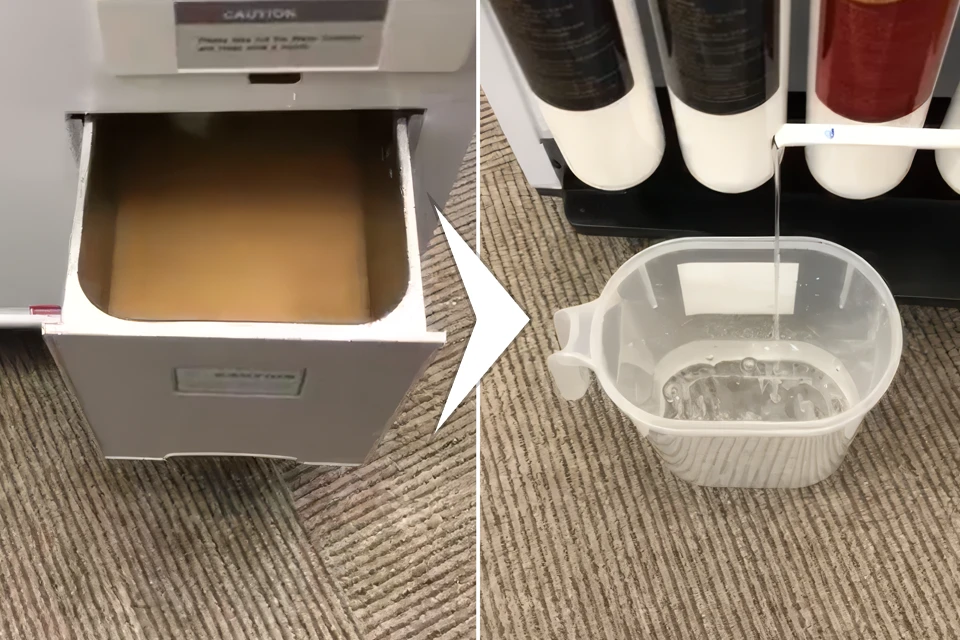
Creating water from air might sound like magic, but as Akashi explains, it’s just science: “When you take a can of cold soda outside on a summer day, water droplets form on its surface, right? We simply optimized the efficiency of that phenomenon.” Enell’s largest product can create up to 5 metric tons of water per day, while even its smallest offering can create around 33 liters from the air daily. Along with its water-generating technology, Enell’s products utilize reverse osmosis membrane technology, which uses reverse osmosis membranes to eliminate virtually all impurities from unsanitary water with no waste effluent; sterilization technology, which uses electricity rather than chlorine or ultraviolet light; and long-term sterile storage technology, which can keep water in a sterile state even when in contact with air. This combination of four technologies is what makes it possible to establish a stable water supply even in areas with no existing water infrastructure.
Enell’s system also impresses on the energy efficiency front. The smallest Enell product requires just 30 Wh to convert unpurified river water and store it long-term in a sterile state. If it is run all day, it can convert around 600 liters of river and rain water into drinking water. These low energy needs mean that it can be used in disaster-struck areas and other regions where energy is restricted. In Japan, it has already been used to make drinking water and support daily life in regions where the water supply was interrupted by earthquakes.
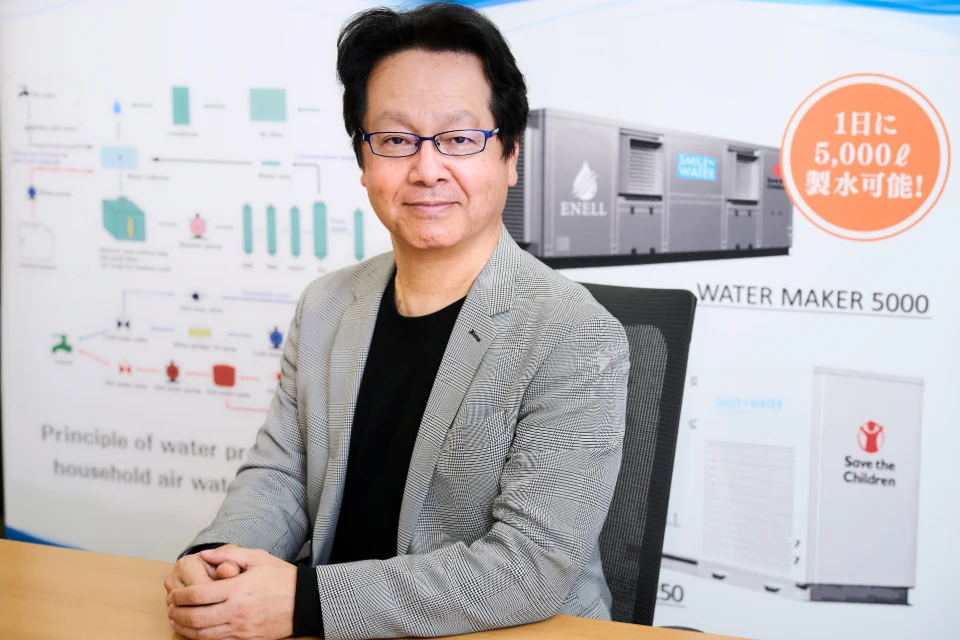
Enell’s technology is already being adopted across Japan for a variety of purposes: supporting disaster preparedness and business continuity planning initiatives, providing factories and offices with the water they need, and ensuring a supply of water for islands and underpopulated areas. Built-in systems in homes and other buildings are being considered as a way to eliminate reliance on water supply infrastructure.
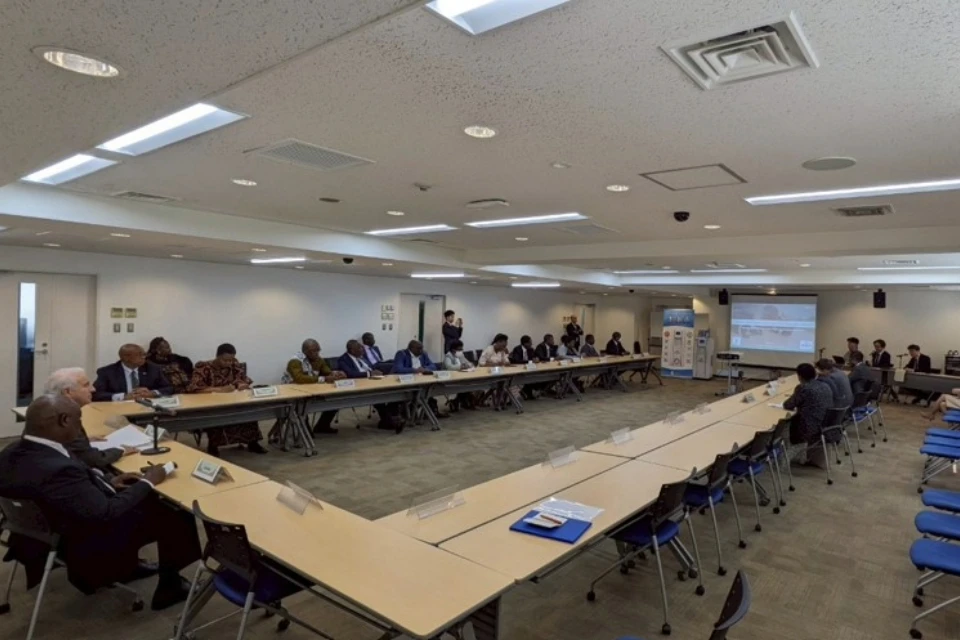
Inquiries from overseas are frequent. Enell has adopted a distinctive model for overseas expansion: along with direct export of finished products, the company signs licensing agreements with local organizations, sharing manufacturing know-how that allows those organizations to create viable businesses themselves. Water infrastructure needs and budgets vary greatly depending on country and region, which is precisely why Akashi wants to provide combinations of technology that match what recipients require, instead of fixed packages. “Our overseas partners take the lead,” Akashi says. “We support them from the wings.” Interest has been expressed by countries dealing with issues such as inadequate water supply, poor water quality, and communicable disease outbreaks due to unsanitary water. Enell is responding by moving forward on concrete collaboration with countries in Africa, Asia, and elsewhere.
The world’s water problems will not be solved overnight, but one key to a better future is taking the first step beyond the preconceived notion that water is a resource that must be carried from afar. Enell is showing the world that this is possible.


