The shipping industry supports global logistics in sectors ranging from energy resources to food. Now, however, it faces a major turning point as intensifying international competition is compounded by calls for decarbonization. As one solution, Japan is focusing on hydrogen as a clean energy source and the development of a new generation of hydrogen-fueled ships through public-private collaboration.
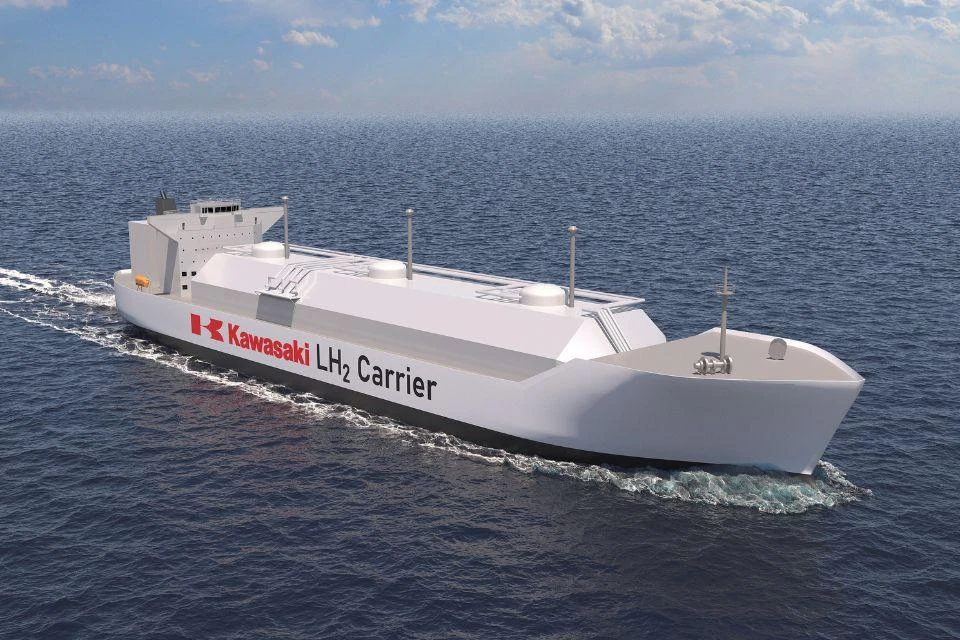
International shipping accounts for 2.1% of all global greenhouse gas emissions. To remedy this problem, the International Maritime Organization (IMO) has set a target of net-zero greenhouse gas emissions in the international shipping sector by around 2050. Decarbonization of shipping has become a global imperative, and Japan is doing its part by supporting the development of a new generation of ships.
To support research, development, and implementation by companies committed to decarbonization goals, the Japanese government established the Green Innovation (GI) Fund under the auspices of a national agency, the New Energy and Industrial Technology Development Organization (NEDO). In 2021, NEDO launched a GI Fund project known as the Next-Generation Ship Development project with the aim of achieving carbon neutrality in the shipping sector. The project seeks to wean the shipping industry off its traditional reliance on heavy oil by pioneering the development of ships that use hydrogen, which is heralded as “the ultimate clean energy source.”
Under the coordination of NEDO, three manufacturers with proven track records in ship engines—Kawasaki Heavy Industries, Ltd., Yanmar Power Solutions, Ltd., and Japan Engine Corporation—have formed a consortium dedicated to hydrogen-fueled ship R&D for practical implementation.
Hydrogen holds as much as 2.7 times more energy per unit mass than gasoline, and generates no carbon dioxide (CO2) when burned. Among the fuels under consideration for the next generation of ships—liquefied natural gas (LNG), ammonia, and methanol—ammonia is also known as a carbon-free fuel. However, there are concerns about the nitrogen oxides (NOx) emitted by its combustion, which are a cause of acid rain.
Hydrogen also comes with challenges. Because of its wide flammability range and low minimum ignition energy, it requires advanced fuel control technology. Moreover, the large volume of the gas means that liquefaction and large-scale storage are essential for its use on ships. This requires cooling the hydrogen to an extremely low temperature of minus 253 degrees Celsius, yielding a volume about 4.5 times that of heavy fuel oil.
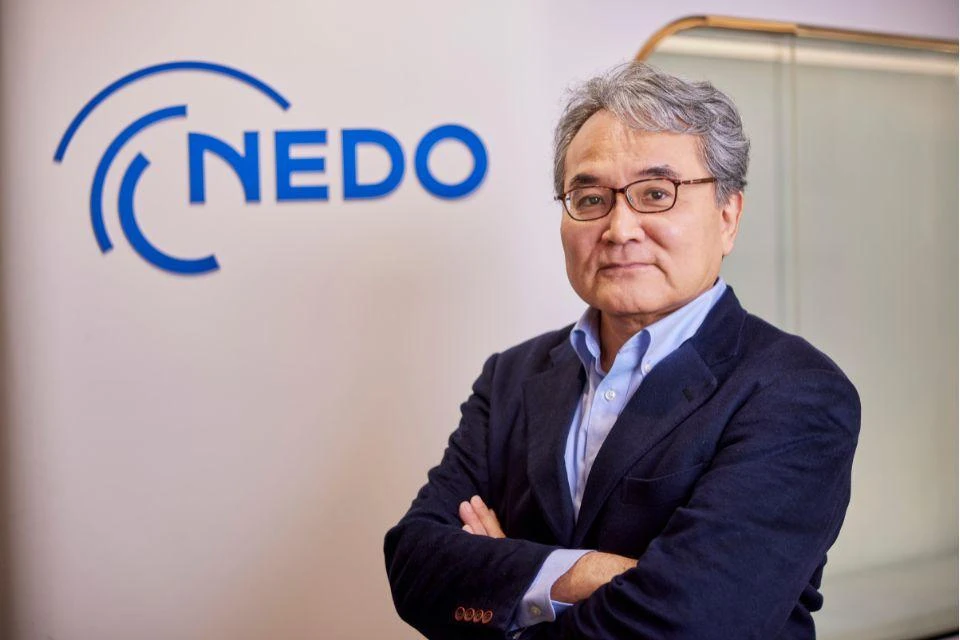
To address these challenges, the three corporations collaborating on the NEDO project are leveraging their respective areas of expertise in R&D. “This project is very special because companies that would typically compete are working together,” says KAWAKITA Chiharu, project manager of the GI Fund Project for Next-Generation Ship Development, NEDO. “It is precisely because we share the larger objective of achieving a hydrogen-based society, which will impact the future of the shipping industry, that we were able to shift from competition to collaboration. The younger engineers on our team are particularly enthusiastic about taking on this challenge, a global first.”
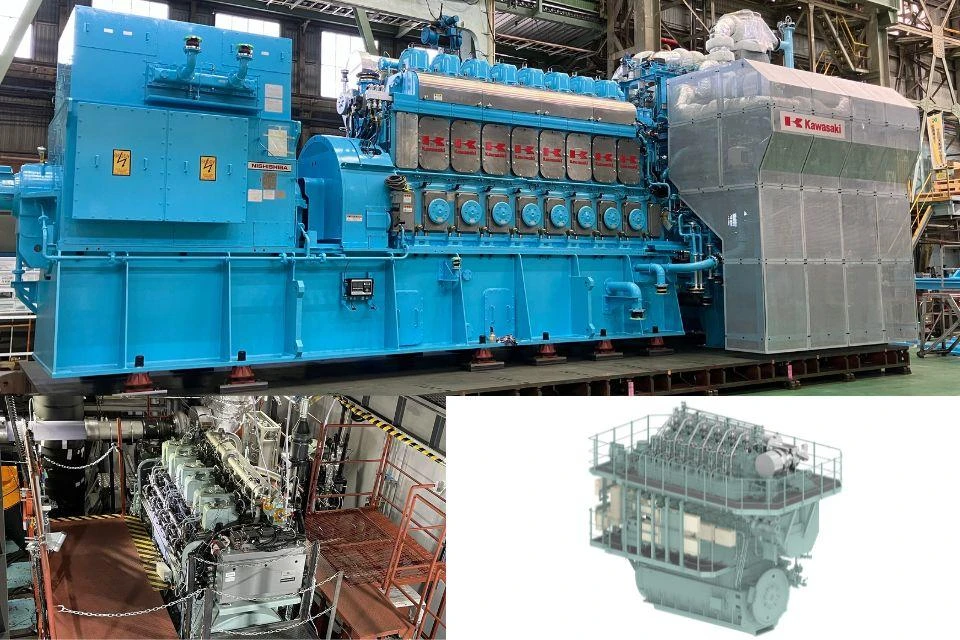
The utilization of hydrogen as a fuel necessitates the development of three key components: the hydrogen fuel engine, the hydrogen fuel tank, and the supply system connecting them.
For the engine, the project is in the process of perfecting advanced combustion control and fuel injection technologies to properly regulate hydrogen fuel, which is highly flammable. Meanwhile, measures to prevent leakage of the minute hydrogen molecules are being developed for the tank and supply system. Efforts are also underway to eliminate the risk of damage to metal components due to hydrogen absorption, which can make them brittle.
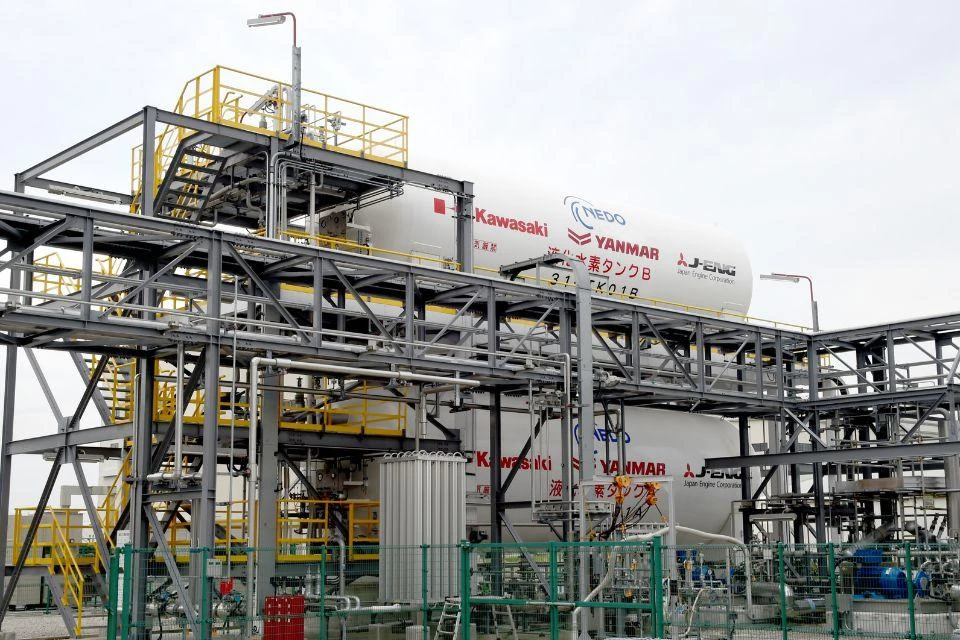
To test these innovative technologies, a liquefied hydrogen fuel supply system was built and installed at Japan Engine Corporation’s facility in Hyogo Prefecture in 2025. The fate of the entire project could be said to depend on the success of this system, the first in the world to be developed for land-based testing.
This makes it possible for the three consortium members to conduct land trials for the engines they have respectively developed for maritime use, running them on hydrogen supplied from the system via steel pipes. These demonstration trials are currently going smoothly, and plans call for the completion by 2030 of testing of three hydrogen-fueled ships equipped with three different hydrogen fuel engines.
“To enable ships equipped with hydrogen fuel engines to travel the world’s oceans, ‘hydrogen stations’ will be needed at ports around the world to supply hydrogen fuel,” says Kawakita. “Besides ship development, we are working on building infrastructure for the hydrogen supply chain.”
The development of hydrogen-powered ships holds significant promise as a major step toward decarbonization of the shipping sector. The world awaits the launch of Japan’s pioneering hydrogen-fueled ships.