



Every year, 8 million metric tons of coffee beans are consumed worldwide. Japan alone accounts for 400,000 of those tons.* Brewing all this coffee produces a lot of coffee grounds—virtually all of which are discarded as waste. However, one young entrepreneur from Japan has developed an unprecedented circular system that reuses coffee grounds as fuel to roast more beans.
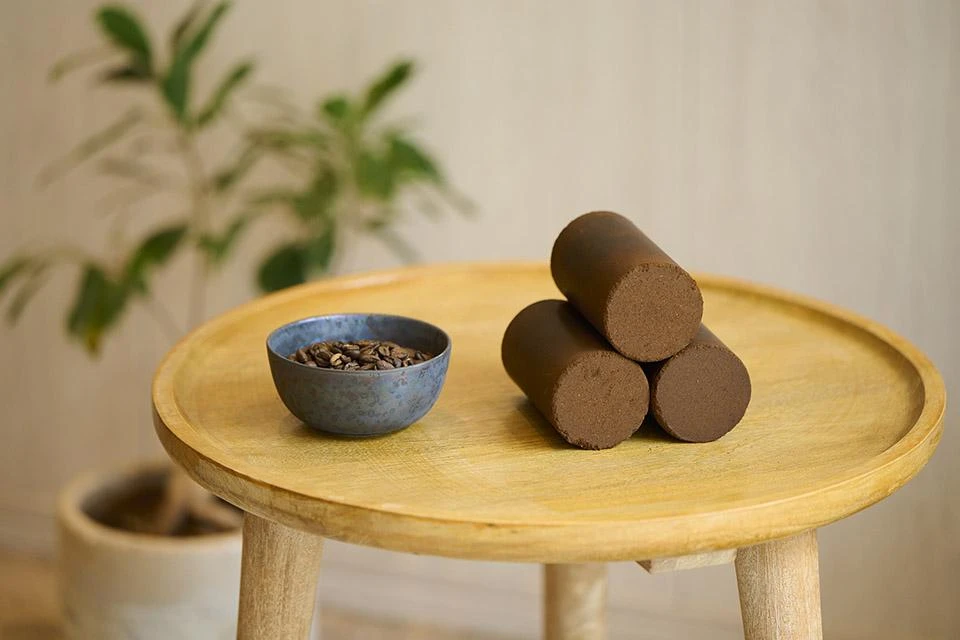
The rise of corporate coffee shop chains and the spread of self-service coffee machines at convenience stores have made coffee a part of daily life in Japan. Most of the coffee grounds produced by the brewing process, however, are discarded, with only a fraction used in animal feed or fertilizer. Could some way be found to tap the vast quantities of coffee grounds produced daily as unused resources, and put them to effective use? Circulative Coffee Roaster Atarao answers this question in the affirmative.
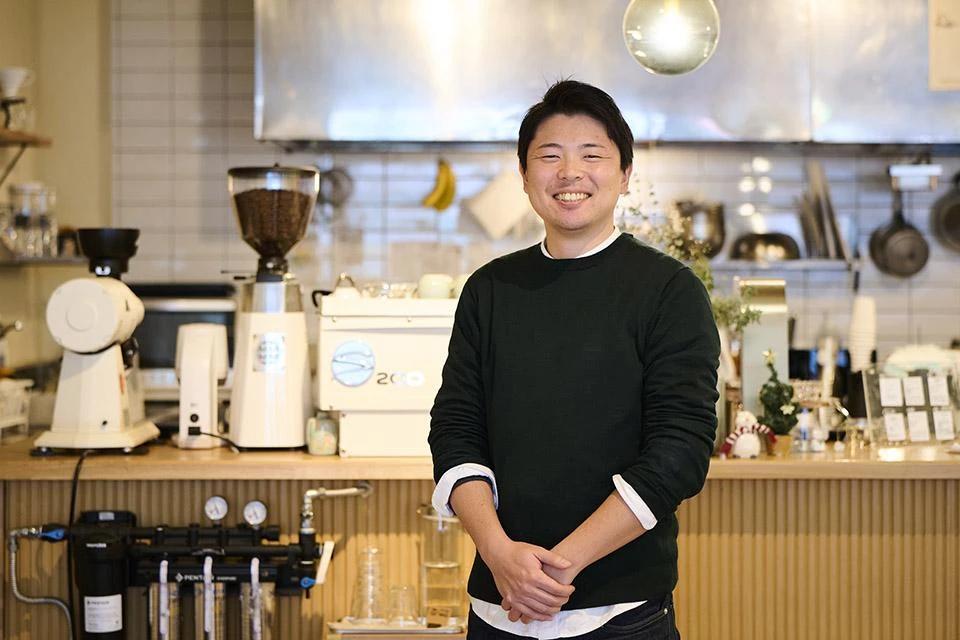
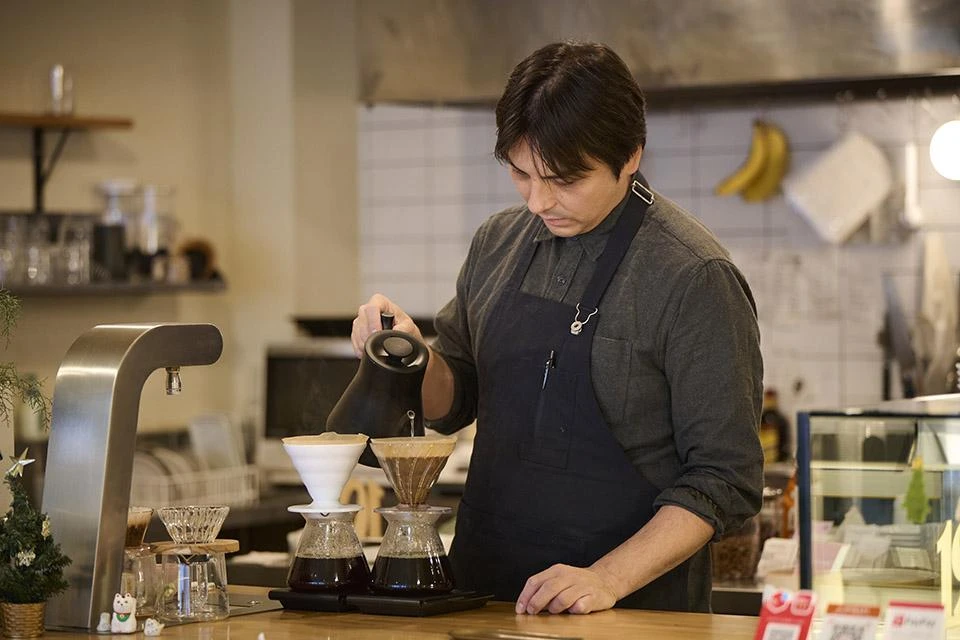
A roastery established jointly by Atarao head AOKI Nozomu and YAMAMOTO Kei of Cove Coffee Roasters employs a unique process to reuse 100% of coffee grounds as fuel for roasting more beans.
Past reasons for the minimal reuse of coffee grounds have included the challenges of storing the grounds, which retain a great deal of moisture after the brewing process and are prone to mold, and the cost of collecting and transporting them, since they are high in volume and heavy. Even when these issues were overcome, the options for reusing grounds were extremely limited, providing little motivation for change.
At Atarao, coffee grounds are dried, packed into cylindrical vessels, and then heated and compressed to shape them into solid pellets. These pellets are then burned in a custom-designed high-efficiency bean roaster. The model is circular upcycling, with coffee grounds produced from the brewing process used to roast new batches of beans. Pressing the grounds into solid cylinders reduces their volume, making storage and transport easier. Also, because the pellets are not held together with glue, the burning process does not release any harmful substances.
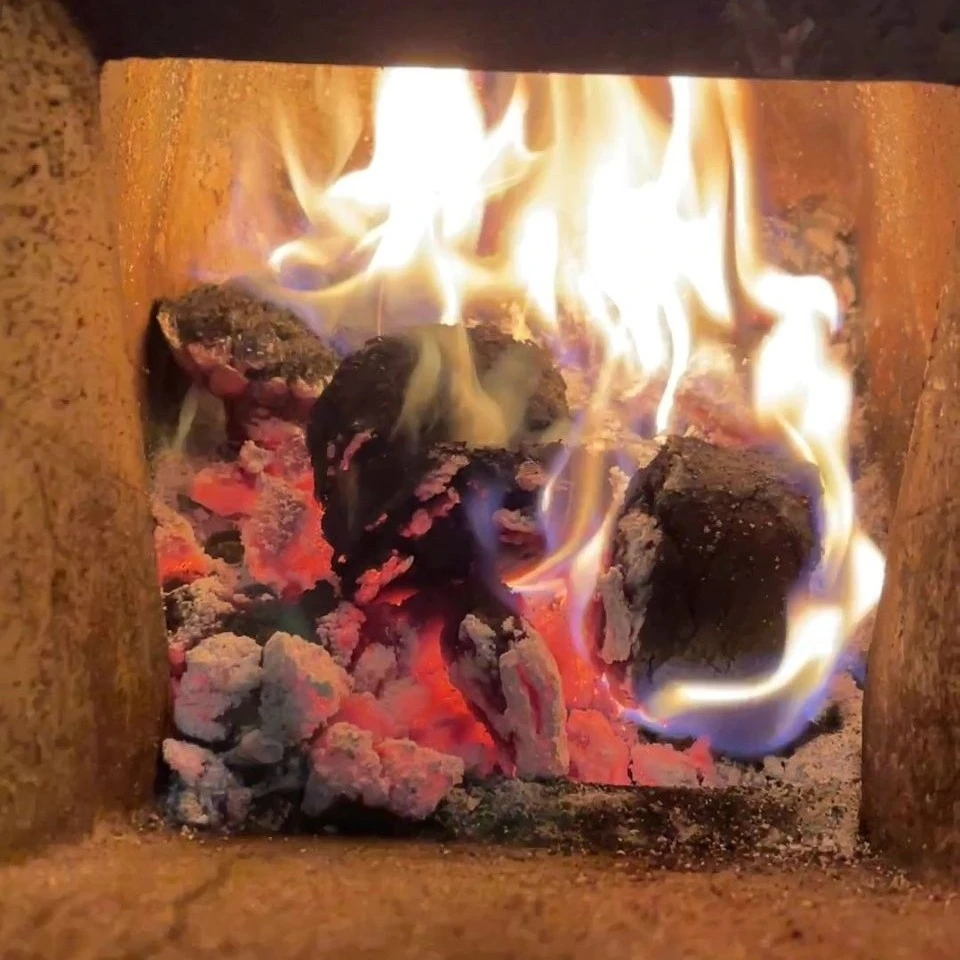
“A typical roastery that roasts around 1 ton of beans annually will emit around 1 ton of carbon dioxide,” says Aoki. “Burning coffee grounds as fuel instead simply releases the carbon dioxide that was captured by the coffee tree as it grew. We see this as achieving carbon neutrality.”
Aoki first noticed the masses of coffee grounds discarded every day while working part-time at a cafe. It seemed so wasteful to him that he began to search for a way to put those grounds to effective use instead. “The arrival of corporate coffee shop chains had made drip coffee part of people’s daily lives, and coffee consumption looked set to continue rising,” says Aoki. “I assumed that the corporate chains would lead the way in addressing the issues that accompany the disposal of coffee grounds, but after seeing no progress in that direction, I decided to take up the challenge myself.”
“A typical roastery that roasts around 1 ton of beans annually will emit around 1 ton of carbon dioxide,” says Aoki. “Burning coffee grounds as fuel instead simply releases the carbon dioxide that was captured by the coffee tree as it grew. We see this as achieving carbon neutrality.”
Aoki first noticed the masses of coffee grounds discarded every day while working part-time at a cafe. It seemed so wasteful to him that he began to search for a way to put those grounds to effective use instead. “The arrival of corporate coffee shop chains had made drip coffee part of people’s daily lives, and coffee consumption looked set to continue rising,” says Aoki. “I assumed that the corporate chains would lead the way in addressing the issues that accompany the disposal of coffee grounds, but after seeing no progress in that direction, I decided to take up the challenge myself.”
In 2019, Aoki took part in the inaugural Youth Co:Lab Social Innovation Challenge Japan. Sponsored by the United Nations Development Programme and the Citi Foundation, this event saw young entrepreneurs compete to present the best ideas for achieving the UN’s Sustainable Development Goals. Aoki’s proposal, “Bringing a Method for Secondary Use of Coffee Grounds to the World,” won the Grand Prize at the event, spurring Aoki to fully embrace the role of entrepreneur.
Looking ahead, Aoki hopes to establish a perfectly circular system in which even the ash that remains after the coffee-ground pellets are burned can be used in soil improvers or pottery glazes.
“We’re already seeing concern about the ‘2050 Problem,’ with the effects of climate change on a global scale expected to dramatically reduce the amount of beans harvested in coffee-producing regions,” says Aoki. “I hope that our initiative serves as one small step toward environmental conservation and amelioration of the greenhouse effect. I’d like to see coffee go from an everyday beverage to a vehicle for demonstrating the value of resource circulation worldwide.”
This unique initiative to find new value in the coffee grounds once discarded as worthless dregs now looks set to unlock further possibilities for reuse in the future.
* Total world coffee consumption was calculated by adding up individual statistics for both importing and exporting countries with the highest consumption. All Japan Coffee Association (data updated November 15, 2024)
https://coffee.ajca.or.jp/data/


