



Natural disasters—whether earthquakes, tsunamis, landslides, torrential rains or volcanic eruptions—often cut off lifeline utilities like gas and electricity, impacting the lives of people in affected communities. Disrupted lifelines require considerable time and effort to restore, making the supply of energy during and after disasters a formidable challenge. However, a startup venture at a Japanese university has developed a unique electric power generation system that can supply emergency energy using “materials that can be found anywhere.”
Environmental Microorganism Research Institute Co., Ltd. (EMI) is a startup venture that originated at Ishikawa Prefectural University in northwestern Japan. The company’s research on biomass energy production using weeds and vegetable waste has yielded what it calls a “weed-power generation” system. By fermenting weeds and discarded vegetables with microorganisms found in the stomachs of cattle, this unique system produces methane gas for use in electric power generation.
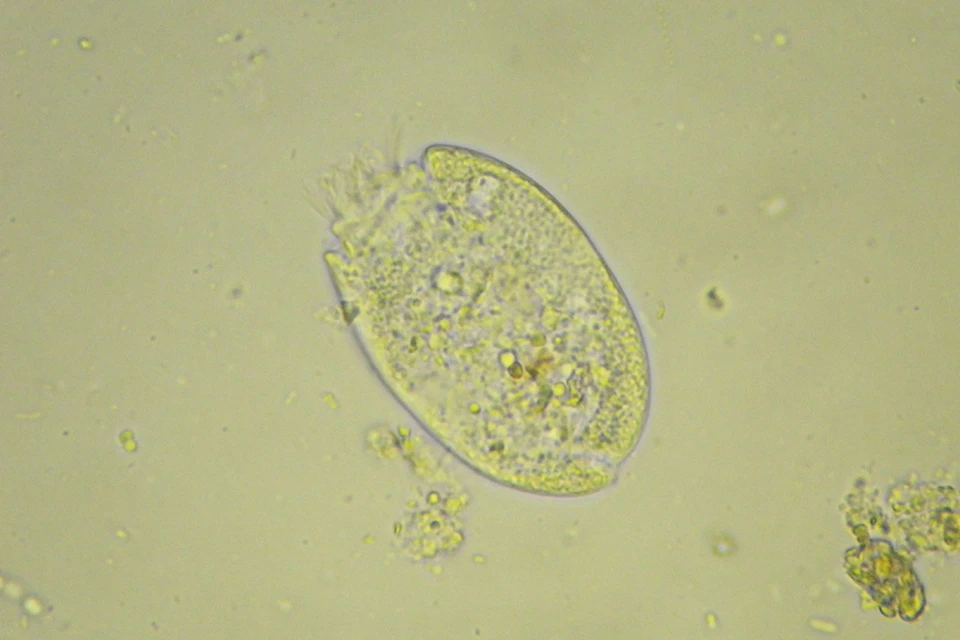
Microorganisms in the rumen of cattle.
EMI president and CEO BABA Yasunori was in Miyagi Prefecture when the Great East Japan Earthquake struck the area in 2011. At the time, he was conducting research on environmental microorganisms at Tohoku University Graduate School. “We were cut off from access to lifeline utilities such as electricity and gas. However, I noticed that weeds grew in abundance around the evacuation center amid the disruption, which led me to think about the possibilities if they could be converted into electricity or gas. That’s why I started researching power generation from weeds,” he says. Baba’s research focused on microorganisms, found in the stomachs of cattle, that have the ability to decompose plants but die immediately upon exposure to air. Baba attempted to artificially recreate a habitable environment for these microorganisms, but it took ten years of trial and error before he was able to develop a demonstration system. The apparatus uses a special tank of his own invention in which the microorganisms are cultured. Weeds and vegetable scraps are placed in the tank to produce acetic acid, which is fed to methanogenic bacteria in another tank to produce methane gas. The gas can then be converted into electricity via a special generator.
Microorganisms in the rumen of cattle.
EMI president and CEO BABA Yasunori was in Miyagi Prefecture when the Great East Japan Earthquake struck the area in 2011. At the time, he was conducting research on environmental microorganisms at Tohoku University Graduate School. “We were cut off from access to lifeline utilities such as electricity and gas. However, I noticed that weeds grew in abundance around the evacuation center amid the disruption, which led me to think about the possibilities if they could be converted into electricity or gas. That’s why I started researching power generation from weeds,” he says. Baba’s research focused on microorganisms, found in the stomachs of cattle, that have the ability to decompose plants but die immediately upon exposure to air. Baba attempted to artificially recreate a habitable environment for these microorganisms, but it took ten years of trial and error before he was able to develop a demonstration system. The apparatus uses a special tank of his own invention in which the microorganisms are cultured. Weeds and vegetable scraps are placed in the tank to produce acetic acid, which is fed to methanogenic bacteria in another tank to produce methane gas. The gas can then be converted into electricity via a special generator.
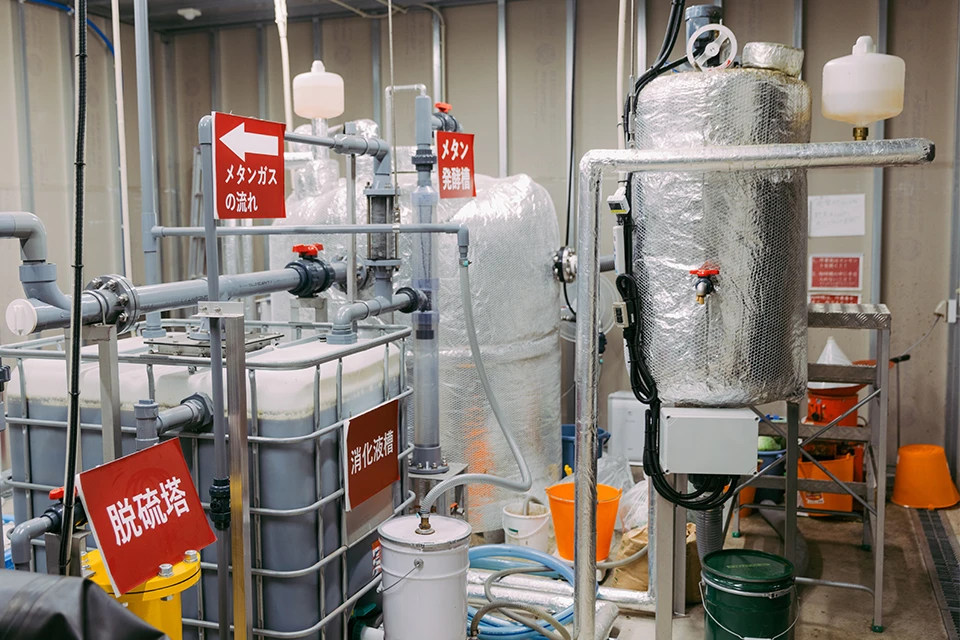
A social implementation experiment with this technology is currently underway at a supermarket in Ishikawa Prefecture. EMI’s self-sustaining methane fermentation system, which it calls Eco Standalone, is installed in a back room of the supermarket for this purpose. Every day, this large market discards massive amounts of vegetable waste that is usually disposed of through paid incineration. With EMI’s technology, however, such waste can now be put to good use as feedstock for methane fermentation, which helps reduce both incineration costs and CO2 emissions. Electricity generated from methane gas can be stored in batteries and used to charge mobile phones and other devices in supermarket offices. The system’s most significant feature is its self-sustainability, which allows it to generate electricity even during disaster-caused power blackouts. Supermarkets can thus function as disaster response centers for preparing meals and charging devices. Furthermore, the residual liquid left after methane fermentation can be recycled as fertilizer for nearby farmers. The small size of the current demonstration system means that it can produce only about 2.2 kWh/day from a daily input of 30 kg of vegetable waste. However, that’s enough to fully charge more than 150 smartphones a day. EMI is currently developing a container-style second model that is more powerful and easier to move.
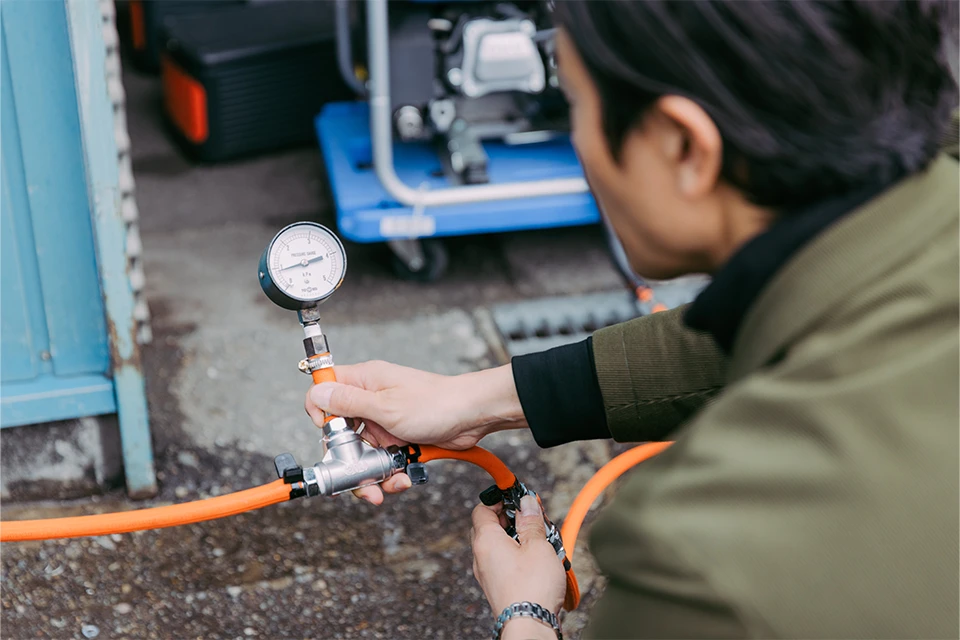
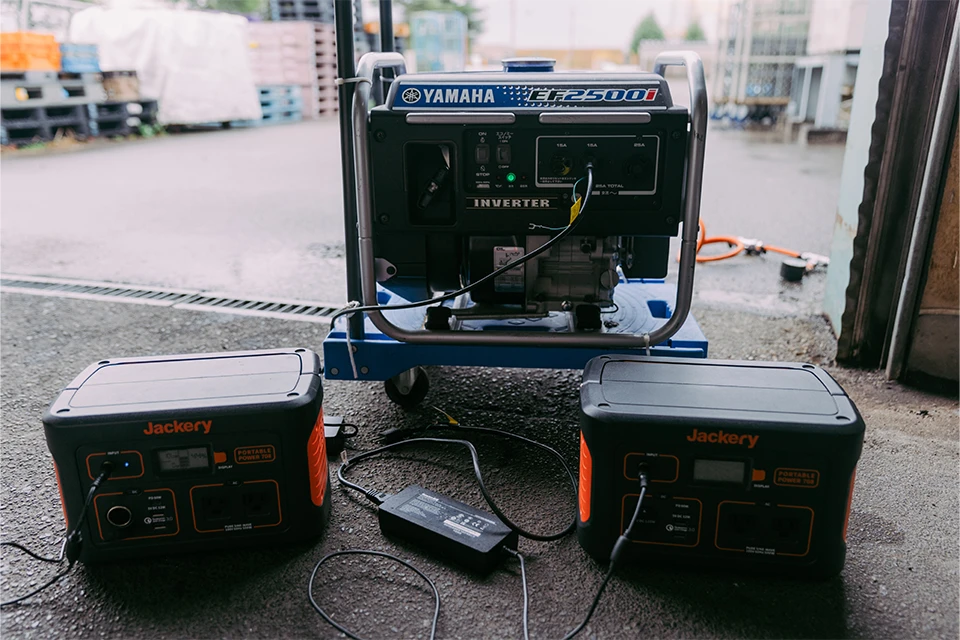
Methane gas produced from vegetable scraps is converted into electricity via a specially developed generator. Using a battery storage system, this electricity can be saved for use as energy even in times of disaster.
If Eco Standalone systems are put to use nationwide, they can be expected to play a role in providing disaster-resilient infrastructure, especially in rural areas suffering from depopulation. There are also plans to introduce Eco Standalone systems to large-scale farms in order to utilize unused crop residue for power generation.
EMI’s weed-power generation system has been selected for the Science and Technology Research Partnership for Sustainable Development (SATREPS), a Japanese government program that promotes joint research between Japan and developing countries, making it a global initiative. A project using the system is currently underway in Cambodia, where Japan’s Official Development Assistance (ODA) is supporting landmine removal to allow land to be farmed again. Farmers in Cambodia have to spend most of their rice-farming income on gasoline for pumps drawing water from rivers as well as on fertilizer, putting a strain on their livelihoods. Weed-power generation can replace gasoline as a fuel source by producing gas or electricity from banana stems and leaves discarded by farming communities. Furthermore, use of the fermentation residue as fertilizer can help reduce farmers’ economic burden and increase their revenue.
“Our weed-power generation system may have less energy yield than solar power, but it helps reduce waste volume and isn’t affected by the weather, as solar is. While we’re introducing this system worldwide as a self-sustaining means of generating electricity or gas even in times of disaster, I hope to also support agricultural development in developing countries with the same technology,” declares Baba. The day may not be far off when we take it for granted that energy can be generated from common weeds.
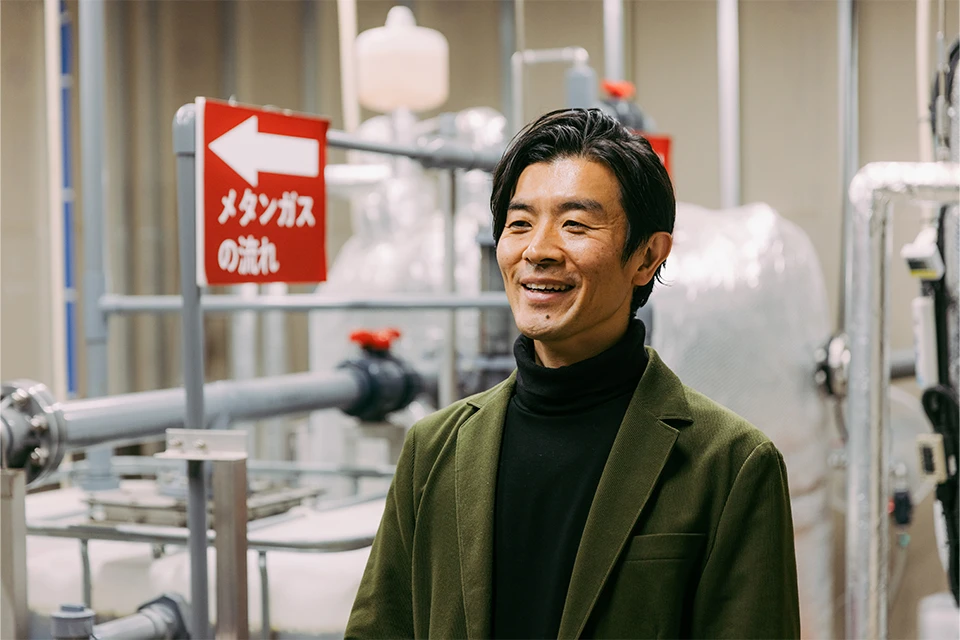
BABA Yasunori, President and CEO of Environmental Microorganism Research Institute Co., Ltd.


