



More than 500 million people around the world have diabetes. Periodic blood tests to check glucose levels are essential to treatment but a significant burden on patients. However, a new device that promises to ease that burden is under development in Japan. The key to this innovation is advanced laser technology.
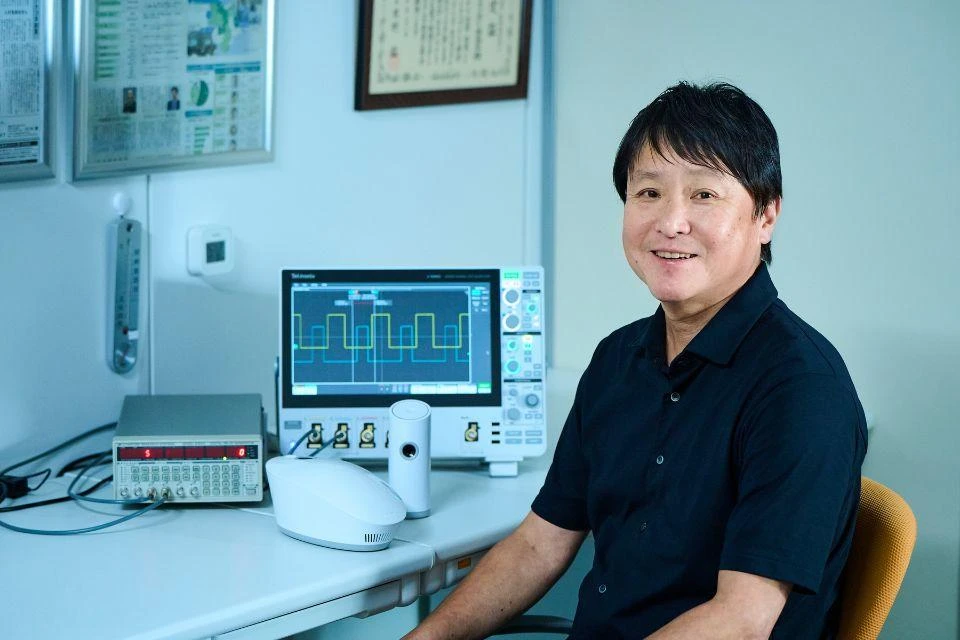
YAMAKAWA Koichi, CEO of Light Touch Technology (LTT) Inc., with two of the company’s non-invasive blood glucose sensor devices.
Diabetes is a global problem. Patient numbers are increasing around the world and are projected to reach 853 million by 2050. People with diabetes suffer from a lack of insulin, a condition that causes blood glucose levels to rise. Type 1 diabetes in particular must be treated by injections of supplementary insulin, requiring an accurate measurement of blood glucose in advance each time. The need to draw blood several times a day for this purpose is a major burden on patients.
One health tech venture firm from Osaka has come up with a solution to this issue: a non-invasive sensor that can measure blood glucose at the touch of a fingertip. That company is Light Touch Technology (LTT) Inc.
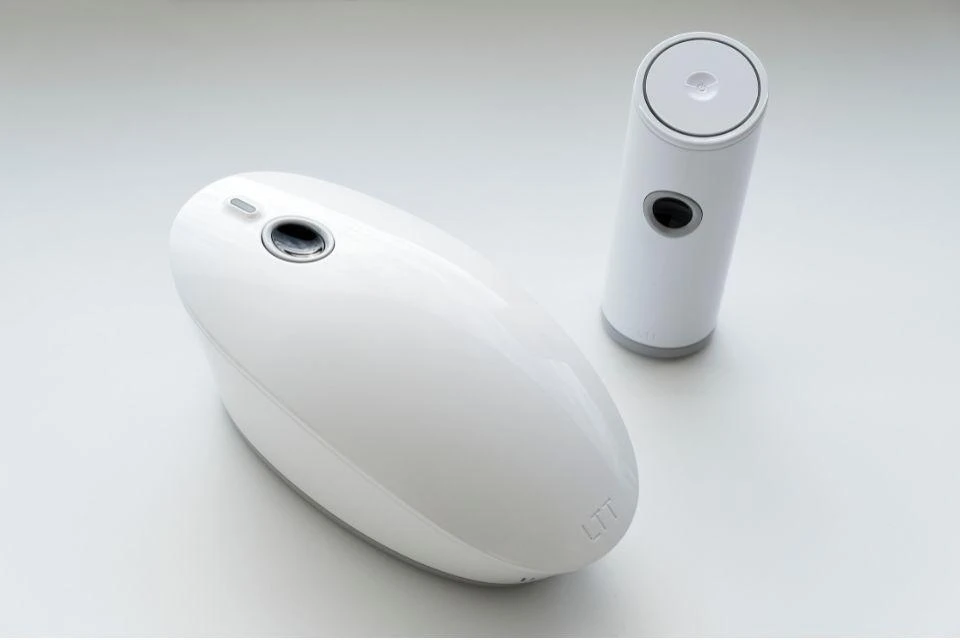
Prototype devices from LTT incorporating the non-invasive blood glucose sensor. The device in the foreground is intended for installation in a fixed location, while the cylindrical version at the rear is a mobile glucose sensor. Because the devices are meant to be used daily, LTT favors user-friendly designs with curved lines.
YAMAKAWA Koichi, CEO of Light Touch Technology, spent many years at the National Institutes for Quantum Science and Technology (QST) studying ways to analyze and alter the structure of matter with lasers, developing lasers with some of the highest output levels in the world. One day, a colleague mentioned to him that her child had Type 1 diabetes, which meant taking blood samples to measure glucose levels every day. The child cried bitterly every time, she said, which was painful for her as well. The image of children and families suffering in that way all over the world spurred Yamakawa to begin investigating whether the advanced laser technology he and his colleagues had cultivated could help in some way. In 2017, LTT was founded as the first venture by QST.
Methods for using near-infrared light to measure blood glucose levels—that is, the density of glucose in the blood—were already known to science. The drawback to this approach was that the light was also absorbed by other substances like hemoglobin and proteins, making it difficult to accurately measure glucose alone. Employing mid-infrared light, which has a history of use in molecular structure analysis, allows the wavelength to be matched precisely to a specific substance—glucose, for example. However, existing mid-infrared light sources had extremely low luminance, and could not deliver the precision needed for practical applications.
“So, we applied our knowledge of advanced laser technology to develop a mid-infrared laser with 1 billion times the output of existing light sources,” explains Yamakawa. “We believed that this would permit accurate measurement of blood glucose levels without any need to draw blood.”
When the mid-infrared laser is directed at the pad of a finger, the light travels through the skin and reaches the capillary vessels inside, where it is absorbed by glucose. Measuring how much mid-infrared light escapes absorption allows the calculation of how much was absorbed, from which blood glucose levels can be determined. The whole process from placing the finger on the sensor to completing the measurement takes just five seconds or so. Unlike traditional methods of blood sampling, no needles are used, eliminating the risk of infection and the need to discard used needlepoints. This technology, which LTT developed entirely on its own, is the first non-invasive blood glucose level measurement technology in the world to meet International Organization for Standardization (ISO) standards for measurement accuracy under certain conditions.
The non-invasive blood glucose sensor’s revolutionary potential attracted attention. It received an Innovation Award in 2022 at the Consumer Electronics Show, one of the world’s largest technology fairs. Currently, devices are under development for use at medical facilities by physicians performing diagnoses, and for use by patients at home. In the future, Yamakawa plans to develop devices for general use in drugstores and other public facilities, portable devices for private use, and smartphone apps allowing patients to manage their own blood glucose data. In 2026, full-scale clinical trials will begin, with the goal of receiving recognition as a medical device from the Ministry of Health, Labour and Welfare.
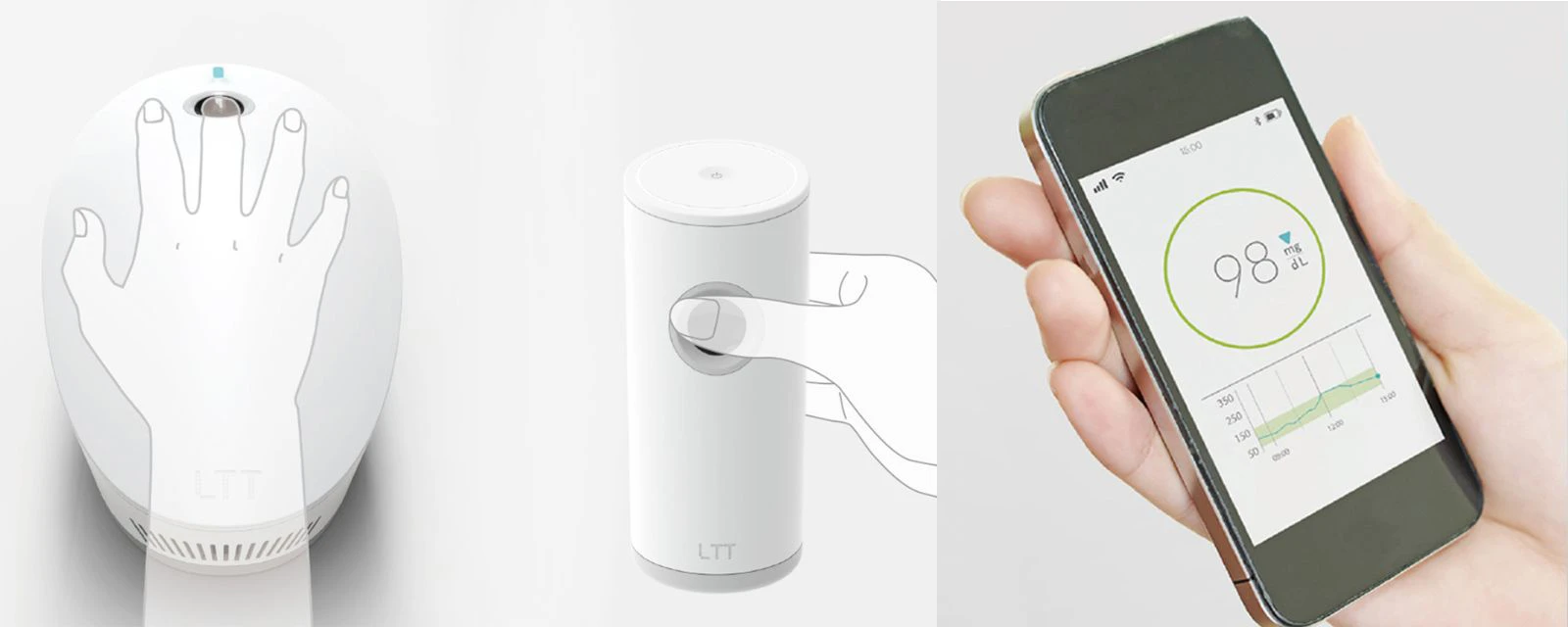
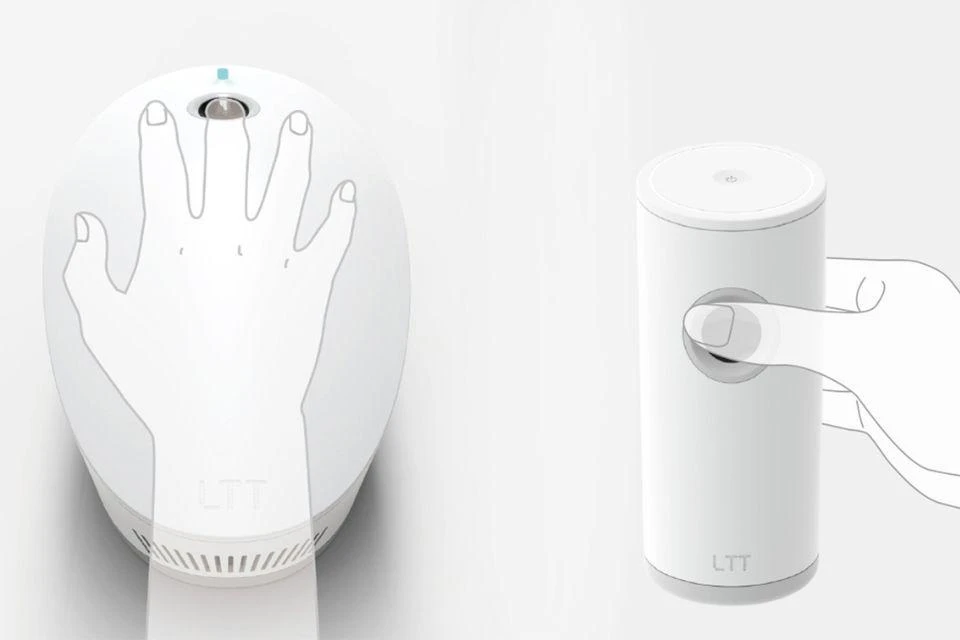
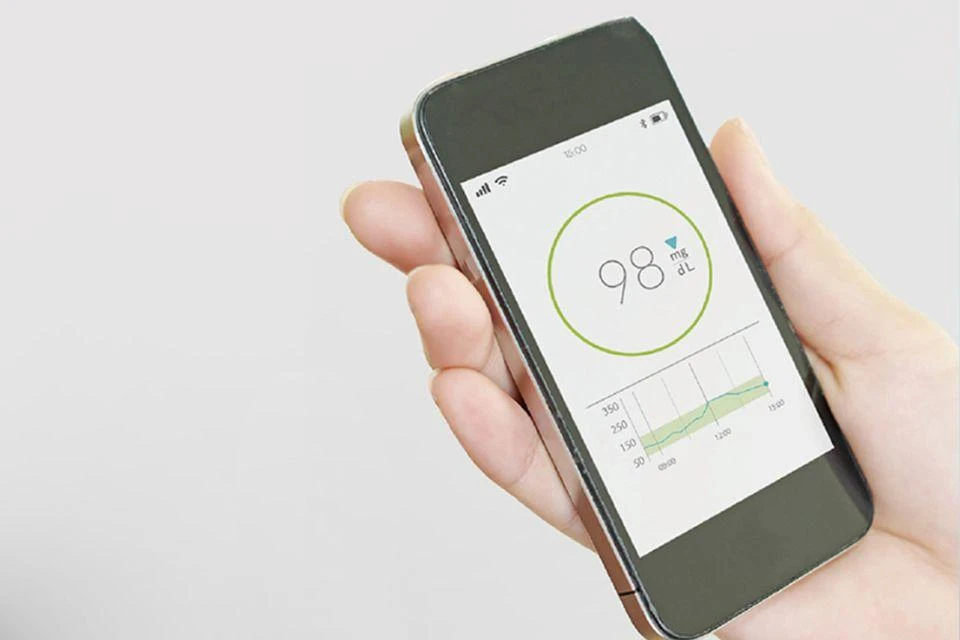
To measure their blood glucose levels, patients simply touch the pad of a finger or thumb to a sensor for roughly five seconds (left); the results can be viewed on a smartphone (right). Measurement is safe and easy, with no risk of infection, improving patients’ quality of life and potentially even extending their healthy life expectancy.
By adjusting the wavelength of the laser, the same technology could be used to measure not only glucose but also a range of other blood components. Examples include hemoglobin, which is an indicator for anemia; lactic acid, which is associated with athletic performance; and lipids related to cholesterol and neutral fats. “We would like to see our non-invasive sensor utilized not only for patients with diabetes, but to prevent and treat a range of other ailments as well,” says Yamakawa.
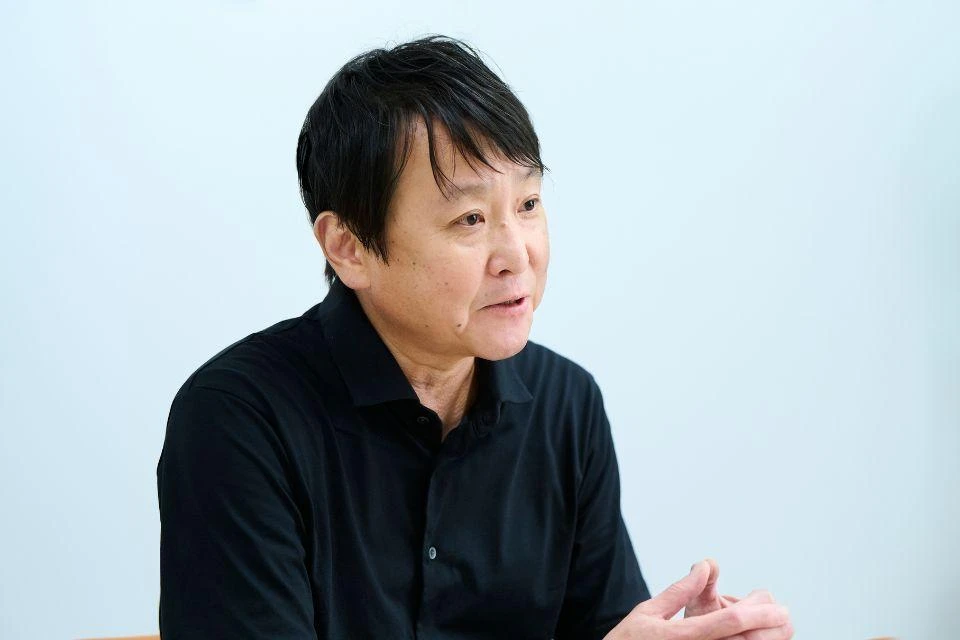
“We hope to bring our device to countries in Africa and southeast Asia, where the number of people with diabetes is rapidly rising due to the Westernization of diets,” says LTT CEO Yamakawa Koichi.


