Gondolas glide through the skies above the city—a next-generation ropeway developed by a Japanese startup is poised to transform the future of mobility technology from above.

 Skip to Main Content



November 20, 2026
Gondolas glide through the skies above the city—a next-generation ropeway developed by a Japanese startup is poised to transform the future of mobility technology from above.
For decades, Japan has laid the foundations for economic growth by building extensive transportation infrastructure, including roads and railways. Today, next-generation transportation systems incorporating advanced technologies are being developed to improve productivity and quality of life across society and help drive a new phase of economic growth in Japan.
One example is Zippar, an autonomous urban ropeway developed by Zip Infrastructure, Co., Ltd. The system holds considerable promise as a solution to challenges facing existing transportation systems, including greenhouse gas emissions and traffic congestion.
Zippar combines the low infrastructure costs of ropeway-based transportation with the flexibility required for urban transit. Because it can be installed above existing roads and is capable of navigating curves and branching routes, it offers greater route-design flexibility than has traditionally been possible for ropeway systems, enabling faster and more cost-effective deployment in urban areas.
This is made possible in part by Zippar’s vehicle design. Unlike conventional ropeways, in which gondolas are fixed to a moving cable, Zippar uses a drive unit adapted from an electric vehicle that travels along overhead cables. Each vehicle is equipped with its own motor and battery and operates autonomously. This allows services to run at high frequency, with intervals as short as 12 seconds, while increasing capacity without requiring drivers. By reducing dependence on operating personnel and easing labor constraints, Zippar offers a practical and scalable option for future urban mobility.
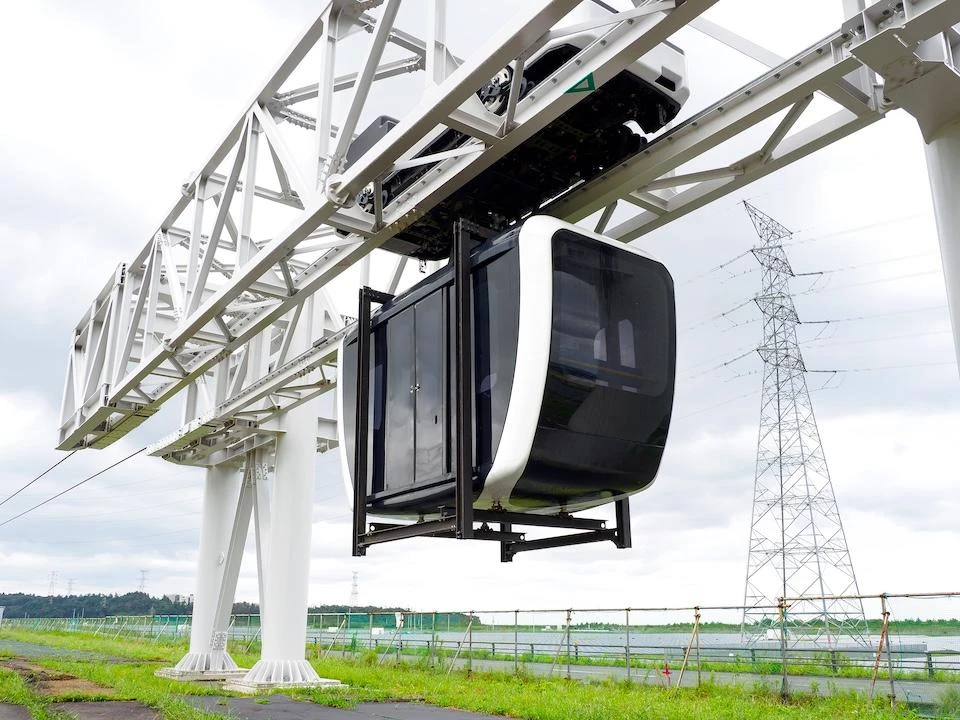
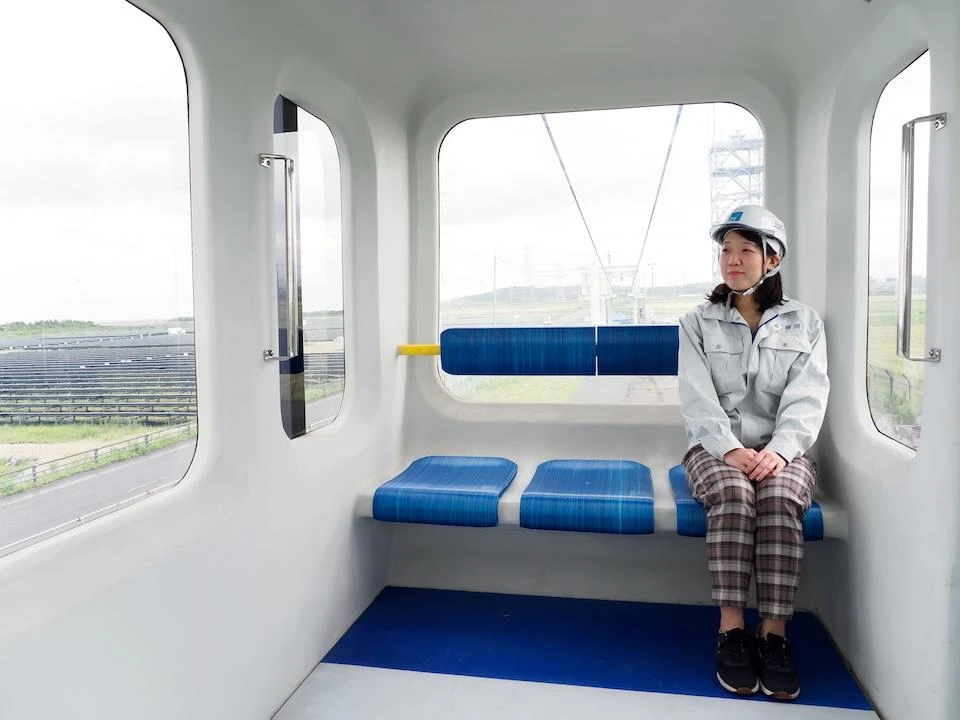
“Ropeways have been around for a long time, but I believe enabling them to run at high frequency demonstrates the true value of autonomous technology,” says SUCHI Takamasa, the company’s representative director and CEO. “Japan has developed outstanding transportation systems such as the Shinkansen. A sense of responsibility—asking ourselves what we can leave to the next generation—also motivates us to develop Zippar.”
Zip Infrastructure is currently conducting research and development on a test line it built in Minamisoma City, Fukushima Prefecture. The prefecture sees considerable promise in next-generation transportation systems that support daily life and logistics, providing a foundation for disaster-resilient communities and tourism development. It is providing various forms of assistance to help advance the project.
Able to carry large numbers of passengers without emitting CO2 during operation, Zippar holds promise as a new transportation option, particularly in countries facing severe traffic congestion. Because it requires no dedicated right-of-way, it offers a more practical option than light rail transit (LRT) and other transportation systems in densely populated Asian cities. In Baguio, a tourist destination in the Philippines, a plan to introduce the system on a trial basis in Camp John Hay is under consideration. The project is also expected to benefit the local economy by promoting tourism.
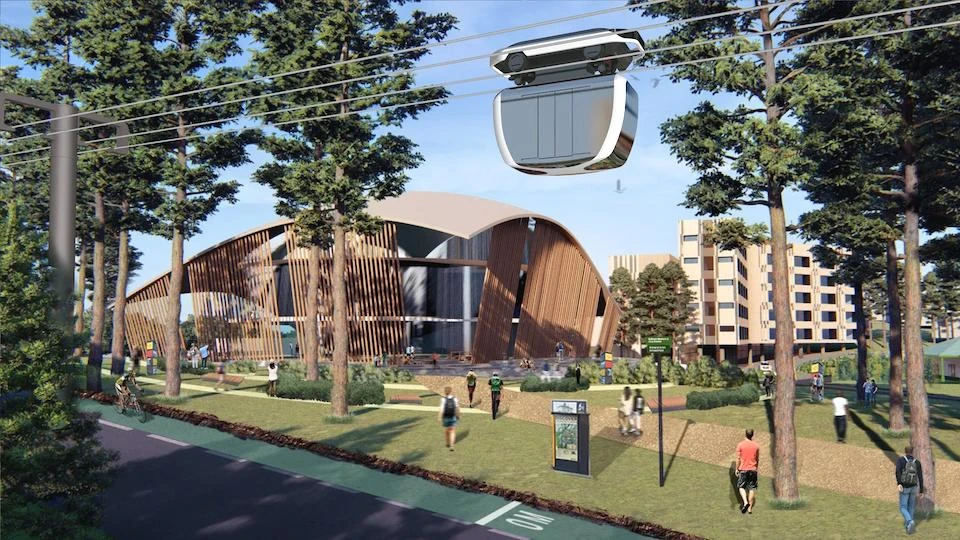
In Japan, a growing number of municipalities are considering Zippar as an alternative to bus services, which face driver shortages as the population declines. Suchi explains that slow progress in bringing autonomous buses into practical use is also fueling interest in Zippar. Beyond urban transit, plans are underway to introduce the system at large facilities such as airports and factories. The system could begin operating at domestic facilities as early as 2028.
Offering the functionality and convenience needed for passenger transportation while remaining cost-effective, Zippar also helps address a range of social challenges. The day when this next-generation mobility system from Japan becomes a familiar sight in the skies above cities worldwide may not be far away.