Imagine a technology that uses the power of light to slow deterioration and preserve the freshness of any fruit or vegetable—in an instant. We explore how it could transform the relationship between humans and food.

 Skip to Main Content



September 25, 2026
Imagine a technology that uses the power of light to slow deterioration and preserve the freshness of any fruit or vegetable—in an instant. We explore how it could transform the relationship between humans and food.
Shikoku Research Institute Inc. has conducted research and development in the electric power sector for nearly 40 years. One of its guiding principles is to contribute to regional development by applying the technologies and expertise it has accumulated. Agriculture thrives in Shikoku, the region that includes Kagawa Prefecture, where the company is based. However, its distance from major consumer markets such as Tokyo has made transporting harvested fruit and vegetables while maintaining their freshness a long-standing challenge. The researchers turned to light for a solution.
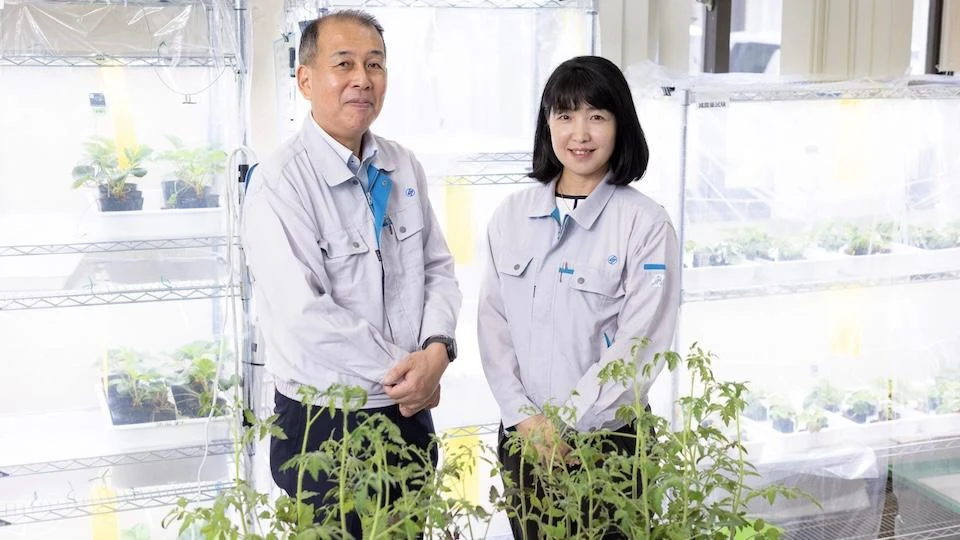
A research team comprising KAKIBUCHI Kazumasa and HADA Ayako, both of whom hold doctorates in agricultural science, conducted repeated experiments in which lettuce was exposed to light at various wavelengths. They became the first in the world to discover that exposure to one particular type of light, namely near-infrared light with a wavelength of around 850 nm, significantly reduced water loss through transpiration from lettuce leaves. Although commonly used in devices such as household remote controls and surveillance cameras, near-infrared light was previously believed to have no effect on plants. The discovery was so unexpected that even researchers in the field were initially skeptical.
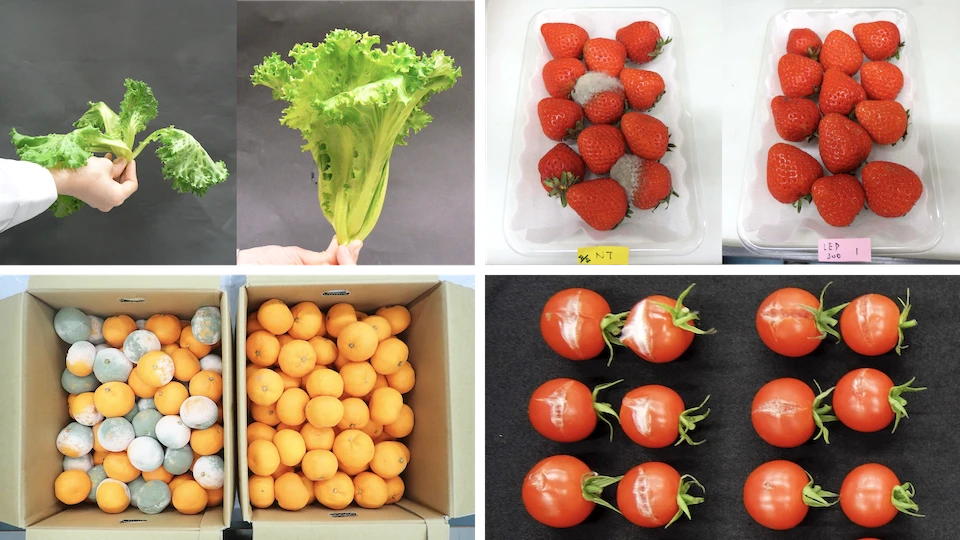
Gene analysis and other studies have revealed the mechanism at work: When fruit and vegetables are exposed to intense near-infrared light, they interpret it as a warning of possible cold or dry conditions. This activates their natural defenses and suppresses growth—in effect, placing them in a defensive state in preparation for a threat. The resulting decrease in respiration and transpiration helps preserve freshness, sugar content, color, and luster. Enhanced antimicrobial activity also inhibits mold growth and decay.
“That is precisely why it works on every kind of fruit and vegetable. I was genuinely excited when we realized that. The discovery was also highly regarded by other researchers for its potential to help reduce food loss,” explains Hada, the researcher who made the initial discovery, her voice brimming with enthusiasm.
The researchers also identified the relationship between light intensity and exposure time, finding that, with a sufficiently powerful light source, just 0.2 seconds of exposure is sufficient. Working with a manufacturer, they subsequently developed a near-infrared treatment system that can be incorporated directly into existing produce lines at sorting and collection facilities without requiring additional manual work or personnel. Kakibuchi describes it as “a technology that introduces an entirely new way of thinking.” Named iR Fresh after “infrared” (IR), the technology has already been adopted at facilities across Japan and is attracting a steady stream of inquiries from overseas.
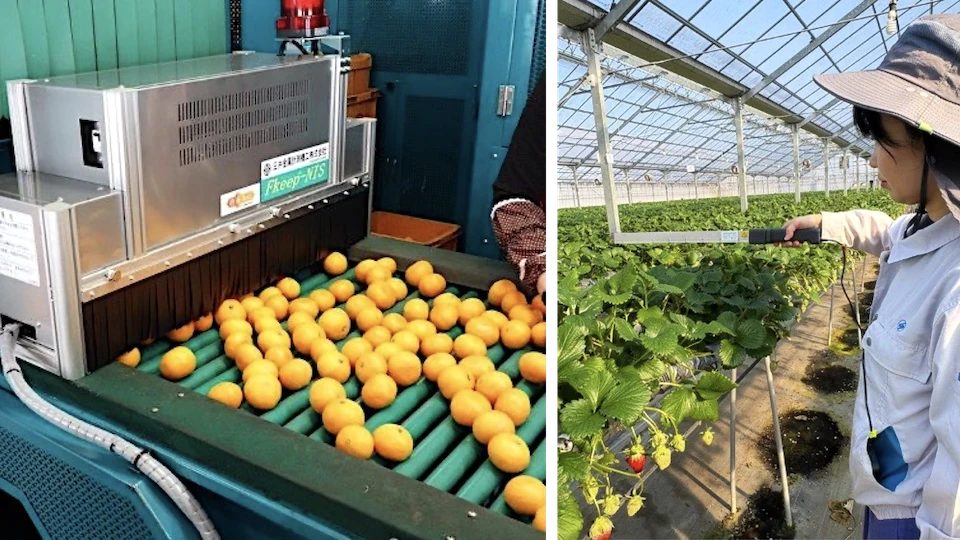
While future applications in transportation and at the point of sale are also anticipated, the company is now working to apply the technology during cultivation. Exposing growing plants to near-infrared light reportedly helps suppress disease, increases their resilience to heat and cold, and improves both quality and yields.
The ability of light to regulate plant growth almost instantaneously without the use of chemicals is attracting considerable attention for its potential to help ensure a stable food supply and greater sustainability. Kakibuchi and Hada explain, “In recent years, global warming has led to more crop diseases and more rapid deterioration of fruit. We hope this technology will reduce such damage and ensure that farmers are rewarded for their dedicated efforts.”
Food technology, or FoodTech, is an important policy area identified in the Japan Growth Strategy. Technologies like this, developed in Japan, could transform the future not only of fruit and vegetables, whose quality depends heavily on freshness, but of agriculture itself.