Making More, Emitting Less: A Japanese Innovation for Carbon-Negative Manufacturing
Making More, Emitting Less: A Japanese Innovation for Carbon-Negative Manufacturing
July 31, 2026
Read Aloud
Developed in Japan, metacol is a new technology that upcycles CO₂, unused iron, and recycled materials in a single process. Designed around the idea that manufacturing can reduce CO₂ emissions as production increases, it is helping accelerate the transition to carbon-negative future.
NAKAJIMA Tetsuya (left) and BABA Masato (right) have worked side by side to advance the development and application of metacol at Sumitomo Electric Industries, Ltd.
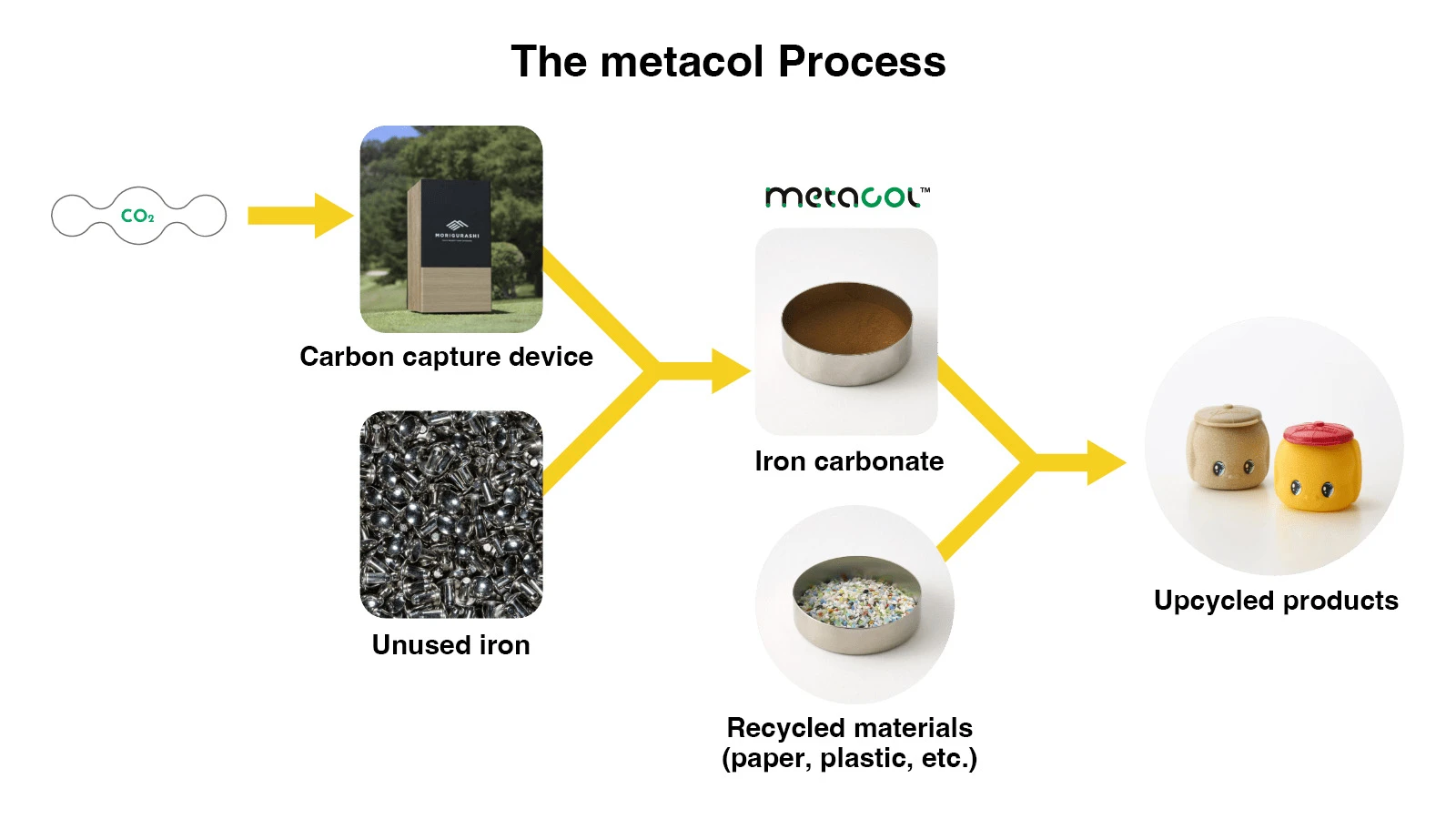
CO2 accounts for the largest share of greenhouse gas emissions worldwide. In Japan, researchers have developed the world’s first technology for industrializing iron carbonate, a material produced by capturing CO2 and reacting it with iron. Known as metacol, the patented process transforms this gas into a valuable manufacturing resource.
It can also be mixed with recycled materials such as paper and plastic. This makes it applicable to a wide range of products, from small items such as stationery to large-scale applications such as roads. By applying metacol, CO2 can be fixed inside products, helping to remove CO2 from the atmosphere.
There are other technologies that convert CO2 into different substances, but metacol has a key advantage: it can produce iron carbonate at normal temperature and pressure without requiring hydrogen, electricity, or other energy-intensive inputs to trigger the chemical reaction. This means it avoids a dilemma common in decarbonization technologies, where attempts to reduce CO2 conversely end up generating even more of it.
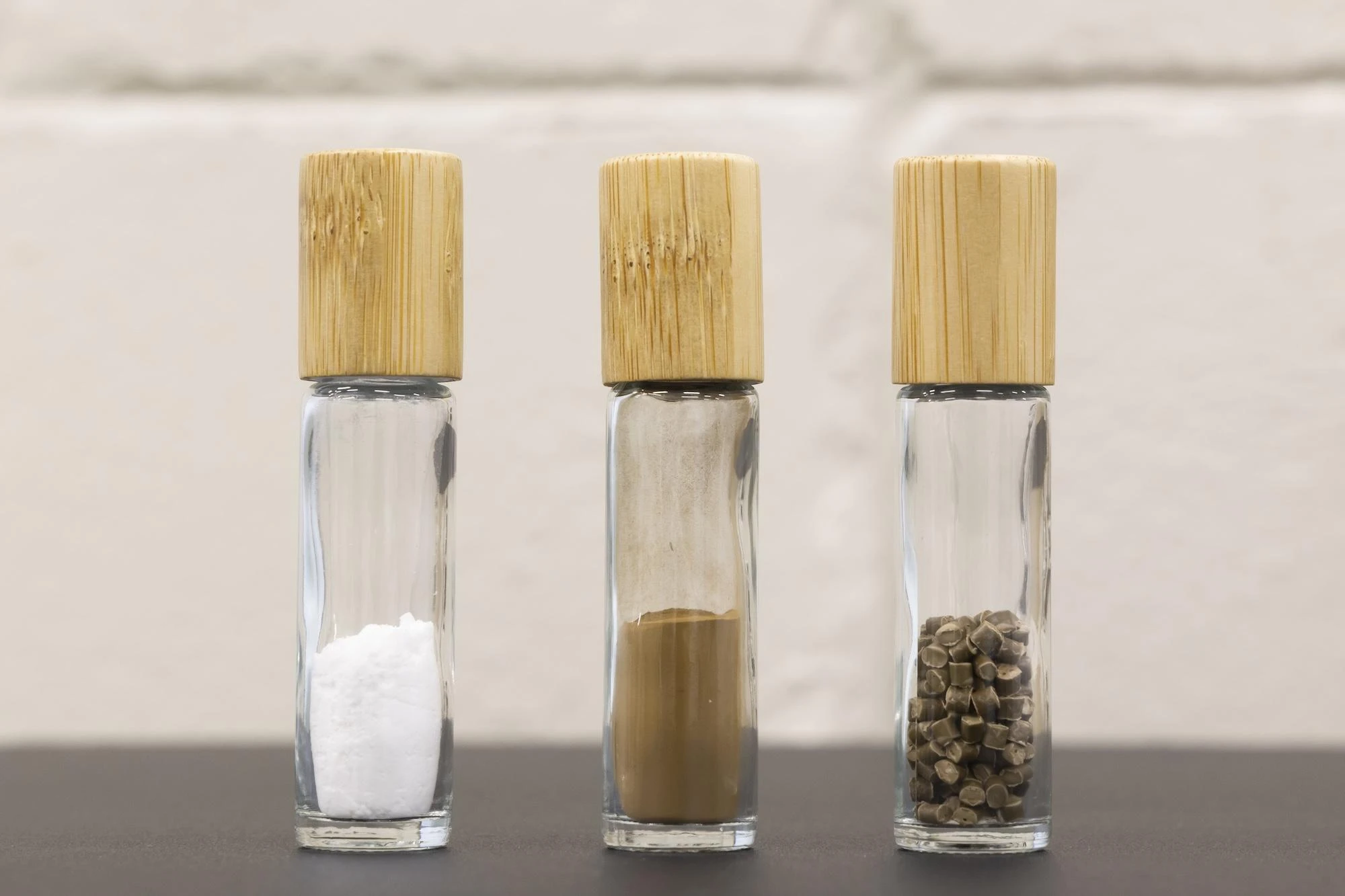
CO2 captured from the air by a carbon capture device is converted into carbonate (left), which is then reacted with iron to produce iron carbonate (center). Blending iron carbonate with plastic (right) can also reduce the amount of petroleum required.
A “Chemical Reaction” That Brought Two Researchers Together
The development of metacol began with a meeting between two researchers. One was BABA Masato, a researcher with a background in biology. Interested in environmental issues since childhood, Baba set his sights on a career in research with the goal of eliminating what he once saw as the “bad gas” CO2. While studying biomass fuels and related fields at university, he came to understand CO2 not as something harmful, but as a natural resource that could be reused in human activities. The other was NAKAJIMA Tetsuya, an engineering researcher, whom Baba met at a company workshop. Nakajima had been looking for ways to make use of unused iron generated during the company’s steel-product manufacturing process.
Baba wanted to put CO2 to use, and Nakajima wanted to put unused iron to use. As their discussions continued, they began researching a new material made from CO2 and iron. After several years of trial and error, they became the first in the world to develop a technology for producing 100% pure iron carbonate, a substance almost never found in nature, with minimal raw material loss and fine particles that can be easily mixed with other materials. They named it metacol, combining the idea of metal enclosing carbon (C) and oxygen (O).
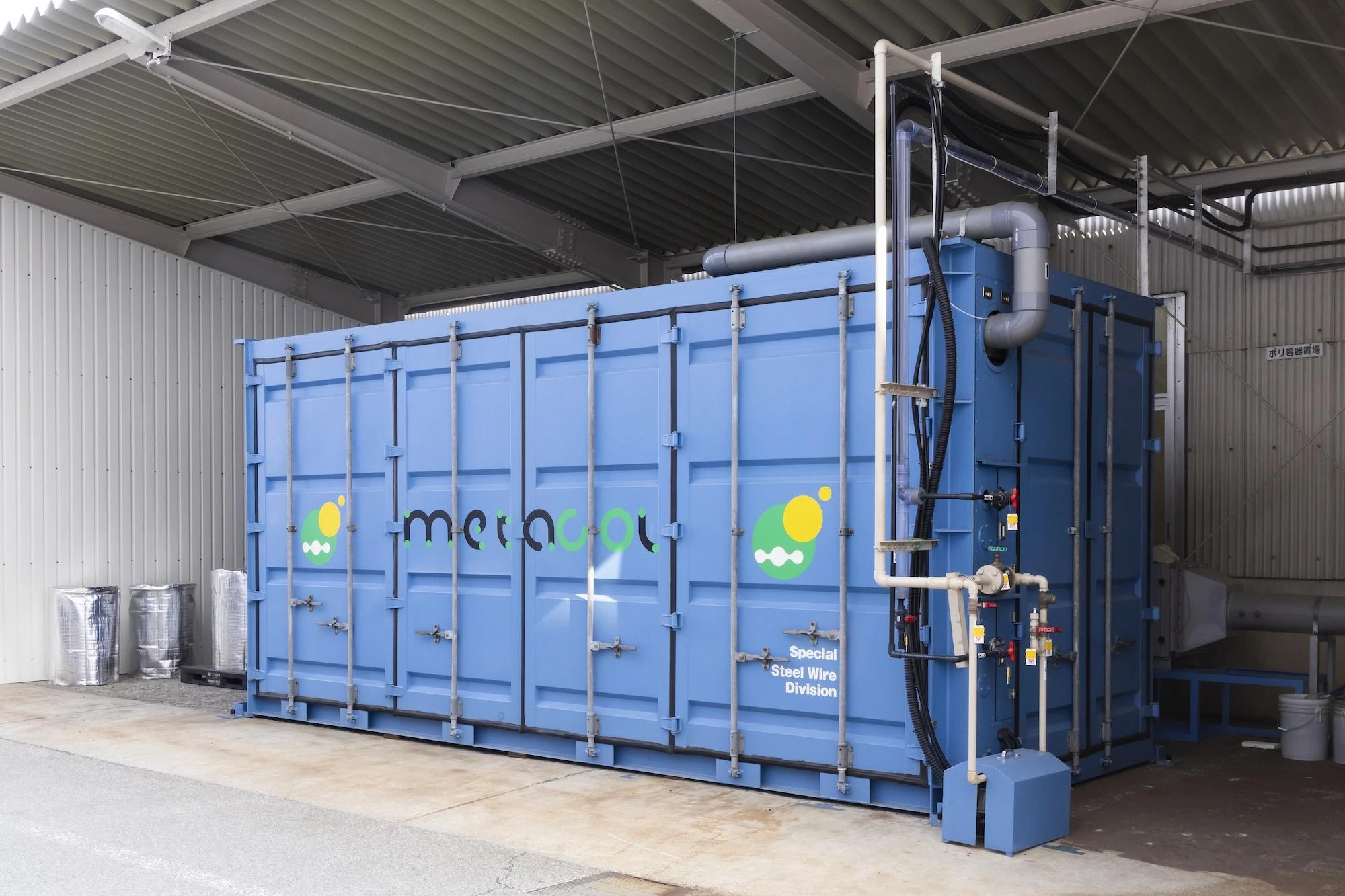
The metacol production plant at Sumitomo Electric Industries’ Itami Works. The facility produces iron carbonate on an experimental basis from CO2 and unused iron generated by the steel-products plant on the same site.
Building on Expo Success to Take metacol Global
In 2025, metacol was exhibited at Expo 2025 Osaka, Kansai, Japan where golf products made with iron carbonate blends were also sold. What Baba took away from the Expo was a clear sense that people genuinely want environmentally friendly products.
“When we explain the concept of metacol to visitors, they are delighted,” says Baba. “People often say that few citizens are interested in environmental issues and that environmentally conscious products cannot become a viable business, but that is simply not true. When I see their faces, I can tell that they truly have high expectations.”
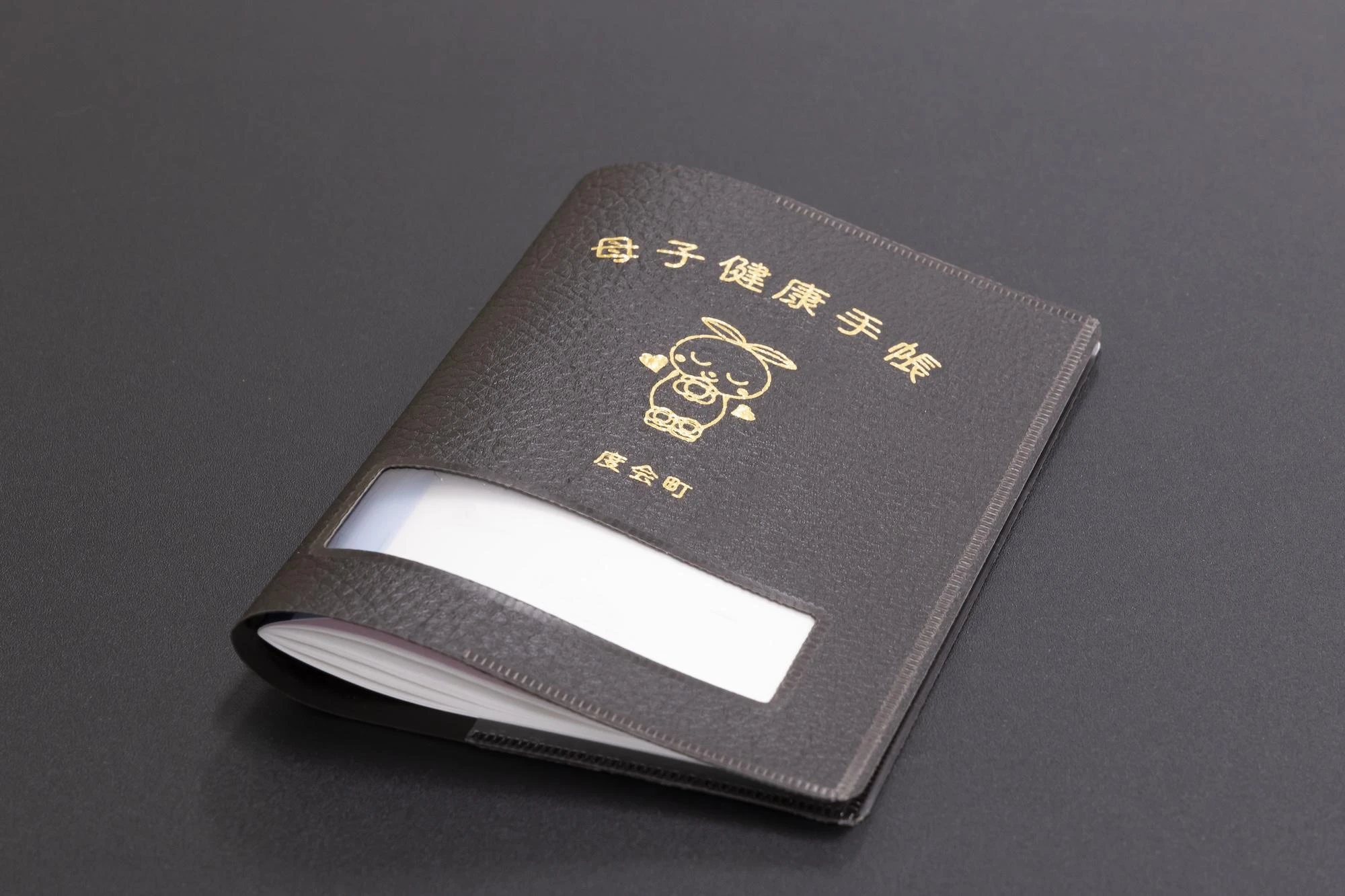
The team is also working with companies and municipalities on demonstration projects involving CO2 capture, utilization, and manufacturing with metacol. In one municipality, for example, carbon capture devices were installed in spaces used by children. The CO2 captured there was used to produce iron carbonate, which was then combined with plastic bottle caps collected by the children and their parents to make covers for maternal and child health handbooks.
A cover for a maternal and child health handbook (a booklet issued by Japanese municipalities to women who register their pregnancy, providing an ongoing record of the health of both mother and child during pregnancy and childbirth, as well as the child’s growth and development) made from iron carbonate and recycled plastic bottle caps. When blended with other materials, iron carbonate can also impart properties required for plastic products—such as UV resistance, deodorizing performance, and flame retardancy—while also conferring the inherent properties of iron and CO2.
“The long-term goal for metacol is to make it an industry standard,” says Nakajima. “To achieve that, it needs to be not only environmentally beneficial, but also durable and visually appealing. We also need to design metacol with the entire ecosystem in mind, including the collection of used products.”
“We want to create a model for collecting the raw materials for metacol, such as CO2 and iron, from citizens,” says Baba. “When that model works, those people will no longer just be consumers, but suppliers as well. That is a true circular society. We want to create a society and economy in which environmentally conscious actions directly contribute to a better quality of life.”
Going forward, the team plans to expand its network of partner companies that can help establish the supply chain and roll out metacol globally, contributing to decarbonization around the world.