The rapid evolution of AI has made AI-generated misinformation and disinformation a serious risk. An international consortium led by a major Japanese IT company is working to build a trustworthy foundation for society.

 Skip to Main Content



June 19, 2026
The rapid evolution of AI has made AI-generated misinformation and disinformation a serious risk. An international consortium led by a major Japanese IT company is working to build a trustworthy foundation for society.
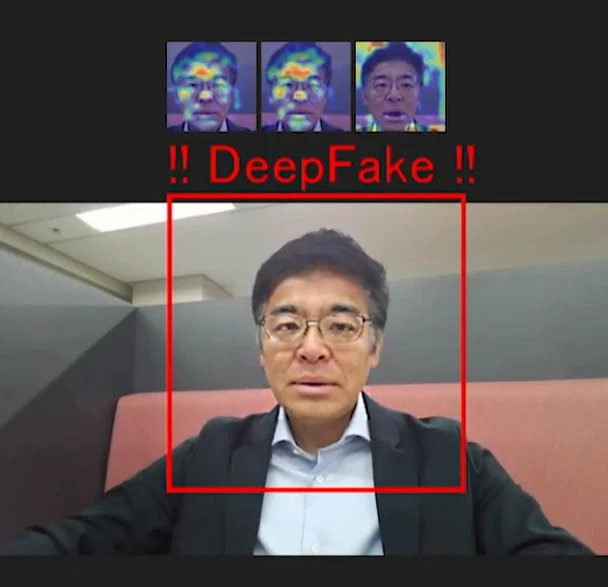
What if the information you were looking at turned out to be fake? The rapid evolution of AI has brought us into an age in which anyone can easily generate videos, images, and increasingly advanced written content. Content whose authenticity is difficult to verify is proliferating. Altered documents and images are being used in scams, while false information continues to spread, undermining trust in companies and affecting social decision-making. In the World Economic Forum’s Global Risks Report published in January 2026, misinformation and disinformation were ranked second among the risks expected over the next two years—higher than extreme weather events and state-based armed conflict, and behind only geoeconomic confrontation.
To tackle this global challenge and help restore trust in the age of AI, Fujitsu Limited has taken action. In December 2025, the company established Frontria, a consortium that brings together companies, startups, universities, and other institutions from around the world. By sharing cutting-edge technologies and insights globally, Frontria aims to build a trusted and secure foundation in the AI era.
To tackle this global challenge and help restore trust in the age of AI, Fujitsu Limited has taken action. In December 2025, the company established Frontria, a consortium that brings together companies, startups, universities, and other institutions from around the world. By sharing cutting-edge technologies and insights globally, Frontria aims to build a trusted and secure foundation in the AI era.
“AI is becoming increasingly involved in people’s decision-making and behavior. As a result, AI risks are also becoming more apparent. If left unaddressed, they could cause significant economic losses,” says NITTA Izumi, senior research manager at Fujitsu’s Security Science Laboratory. “We established Frontria to create innovative solutions that cannot be achieved by a single country or organization alone.”
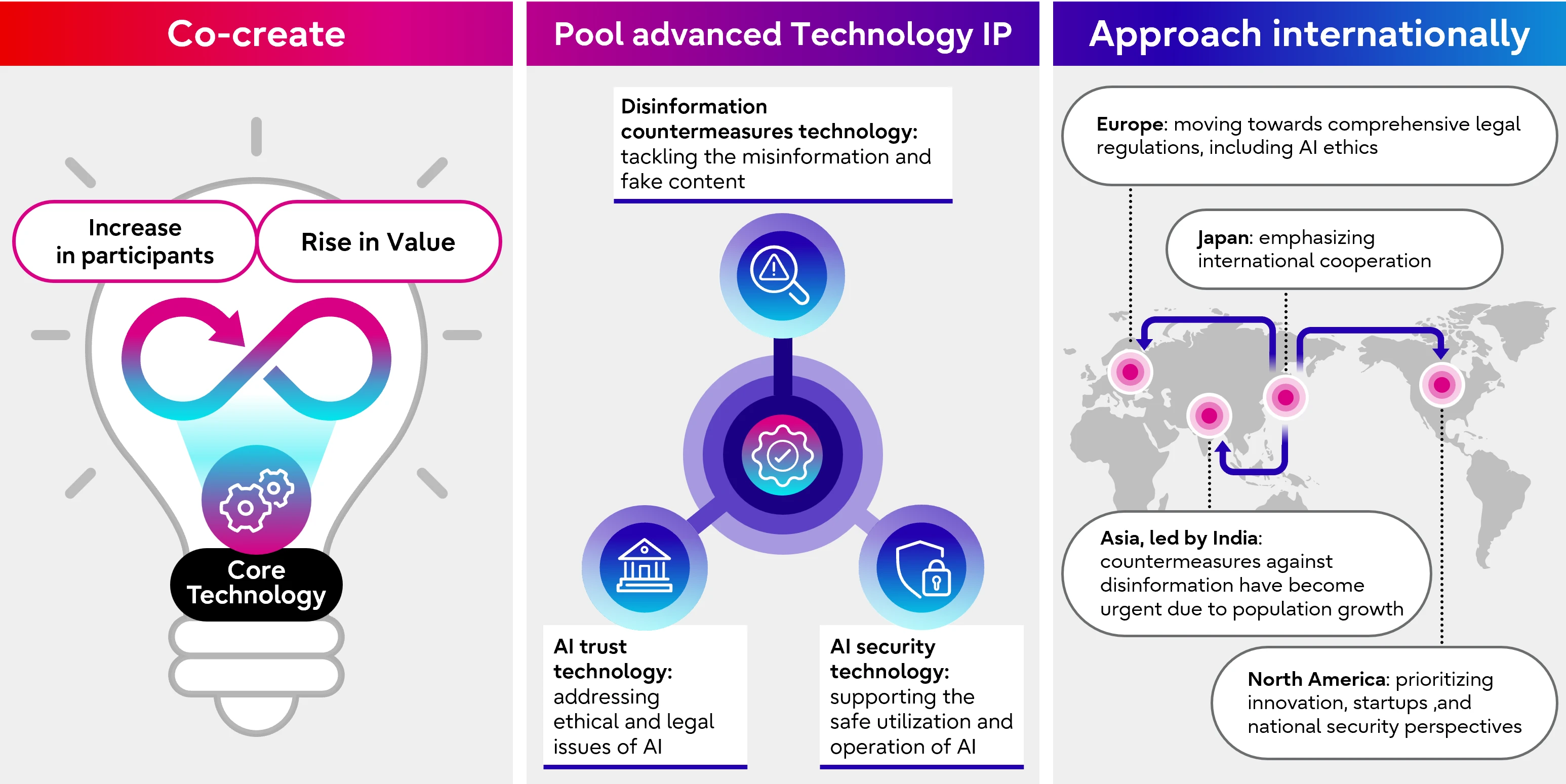
As of the end of May 2026, 76 companies and organizations from a wide range of fields, including finance, entertainment, media, and legal, had joined Frontria. Focusing on three areas—misinformation and disinformation, AI trust, and AI security—they seek to develop applications and services through dedicated working groups.
A key feature of Frontria is that its diverse members collaborate while each contributing in defined roles. Innovation partners provide practical requirements, engineering partners contribute development capabilities, technology IP providers offer intellectual property, and data providers supply training data. Incubators are expected to support funding and the operating environment.
For example, the AI-generated image fraud detection technology that Fujitsu offers as a technology IP provider is expected to be used by insurance companies facing the risk of fraudulent claims. Fujitsu also plans to make available, on a trial basis, security technology that prevents attacks on large language models (LLMs), another of the company’s strengths.
This fiscal year, the goal is to share the issues identified both in Japan and overseas, and to build a body of successful case studies. “There are not many forums where people can share their sense of the challenges in each field. In that respect, I believe Frontria has an important role to play,” says Nitta. Brainstorming sessions on themes such as deepfake detection and fact-checking technologies have already generated ideas for applications in fields such as finance and media.
Within the consortium’s initiatives, Japan is expected to play a bridging role. Drawing on its experience of emphasizing safety and trust, Japan may help foster technologies that connect the EU, which places emphasis on AI regulation, and the U.S., which prioritizes innovation.
Across borders and industries, a new infrastructure of trust for the age of AI is beginning to take shape.